
&w=3840&q=75)
&w=3840&q=75)
&w=3840&q=75)
&w=3840&q=75)
&w=3840&q=75)
&w=3840&q=75)
&w=3840&q=75)
&w=3840&q=75)


42
CLAUDE VIALLAT (né en 1936)
Vendu : 23 940 €
Les prix s'entendent commission et taxes comprises.
CLAUDE VIALLAT (né en 1936)
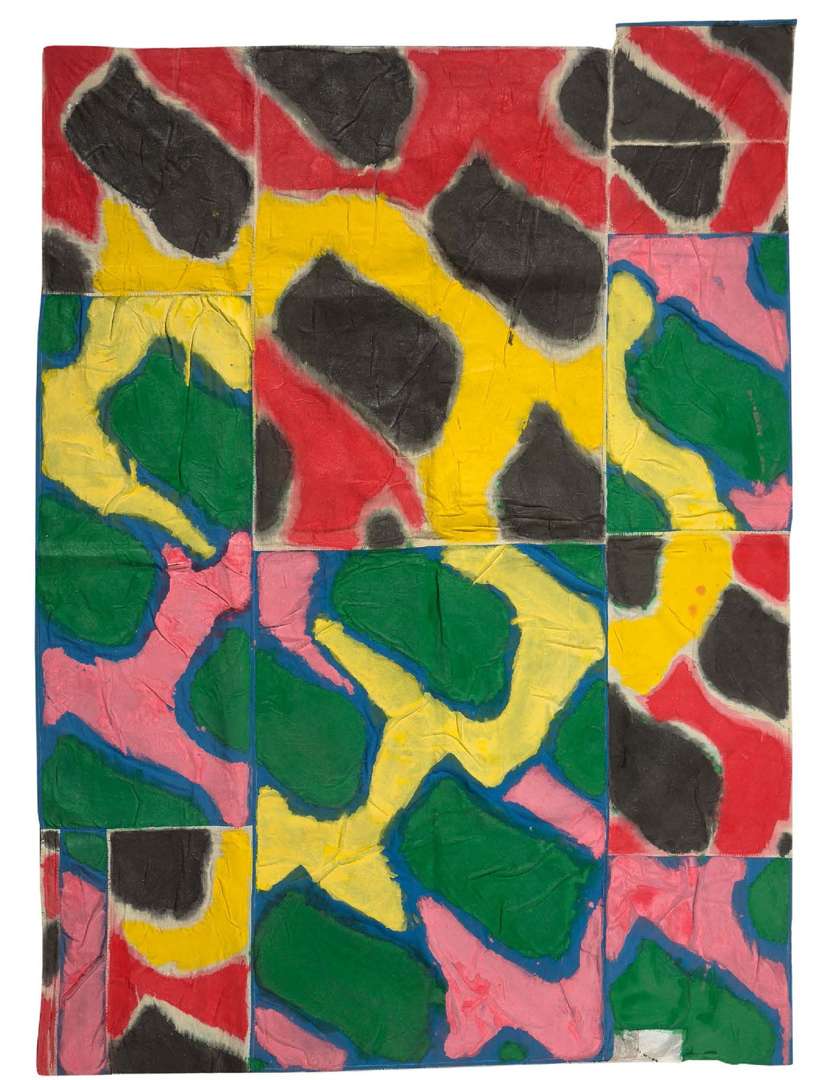
Sans titre, 1993
Acrylique sur toile
190 x 150 cm - 74 3/4 x 59 in.
Acrylic on canvas
PROVENANCE
Offerte par l'artiste, puis transmise familialement
Un certificat d'authenticité sera remis à l'acquéreur
Claude Viallat, né en 1936 à Nîmes, est un artiste français majeur et l’un des fondateurs du mouvement Supports/Surfaces. Ce mouvement, né dans les années 1960, cherche à déconstruire les conventions de la peinture traditionnelle en se concentrant sur les éléments matériels de l’oeuvre – tels que la toile, la couleur et la texture – plutôt que sur la représentation figurative. Supports/ Surfaces naît d’une volonté d’explorer la peinture comme un objet à part entière et d’interroger son rapport à l’espace. L’oeuvre de Claude Viallat se distingue par la répétition d’un motif abstrait en forme d’osselet, créant une dynamique unique. Fidèle à la démarche du mouvement, il choisit délibérément de ne pas utiliser de châssis, libérant ainsi la toile des contraintes traditionnelles de la peinture. En travaillant sur des tissus libres, il interroge la nature même du support, transformant la toile en un objet autonome, affranchi des conventions.
Claude Viallat, born in 1936 in Nîmes, is a prominent French artist and one of the founders of the Supports/Surfaces movement. This movement, which emerged in the 1960s, seeks to deconstruct the conventions of traditional painting by focusing on the material elements of the artwork – such as the canvas, color, and texture – rather than on figurative representation. Supports/Surfaces arises from a desire to explore painting as an object in its own right and to question its relationship with space. Claude Viallat’s work is characterized by the repetition of an abstract motif in the form of a bone, creating a unique dynamic. Staying true to the movement’s principles, he deliberately chooses not to use a stretcher, thus freeing the canvas from the traditional constraints of painting. By working with free fabrics, he questions the very nature
of the support, transforming the canvas into an autonomous object, liberated from conventions.
Sans titre, 1993
Acrylique sur toile
190 x 150 cm - 74 3/4 x 59 in.
Acrylic on canvas
PROVENANCE
Offerte par l'artiste, puis transmise familialement
Un certificat d'authenticité sera remis à l'acquéreur
Claude Viallat, né en 1936 à Nîmes, est un artiste français majeur et l’un des fondateurs du mouvement Supports/Surfaces. Ce mouvement, né dans les années 1960, cherche à déconstruire les conventions de la peinture traditionnelle en se concentrant sur les éléments matériels de l’oeuvre – tels que la toile, la couleur et la texture – plutôt que sur la représentation figurative. Supports/ Surfaces naît d’une volonté d’explorer la peinture comme un objet à part entière et d’interroger son rapport à l’espace. L’oeuvre de Claude Viallat se distingue par la répétition d’un motif abstrait en forme d’osselet, créant une dynamique unique. Fidèle à la démarche du mouvement, il choisit délibérément de ne pas utiliser de châssis, libérant ainsi la toile des contraintes traditionnelles de la peinture. En travaillant sur des tissus libres, il interroge la nature même du support, transformant la toile en un objet autonome, affranchi des conventions.
Claude Viallat, born in 1936 in Nîmes, is a prominent French artist and one of the founders of the Supports/Surfaces movement. This movement, which emerged in the 1960s, seeks to deconstruct the conventions of traditional painting by focusing on the material elements of the artwork – such as the canvas, color, and texture – rather than on figurative representation. Supports/Surfaces arises from a desire to explore painting as an object in its own right and to question its relationship with space. Claude Viallat’s work is characterized by the repetition of an abstract motif in the form of a bone, creating a unique dynamic. Staying true to the movement’s principles, he deliberately chooses not to use a stretcher, thus freeing the canvas from the traditional constraints of painting. By working with free fabrics, he questions the very nature
of the support, transforming the canvas into an autonomous object, liberated from conventions.