
&w=3840&q=75)
&w=3840&q=75)
&w=3840&q=75)
&w=3840&q=75)
&w=3840&q=75)
&w=3840&q=75)
&w=3840&q=75)
&w=3840&q=75)

35
EUGÈNE LEROY (1910-2000)
Vendu : 22 610 €
Les frais s'entendent commission et taxes comprises.
EUGÈNE LEROY (1910-2000)
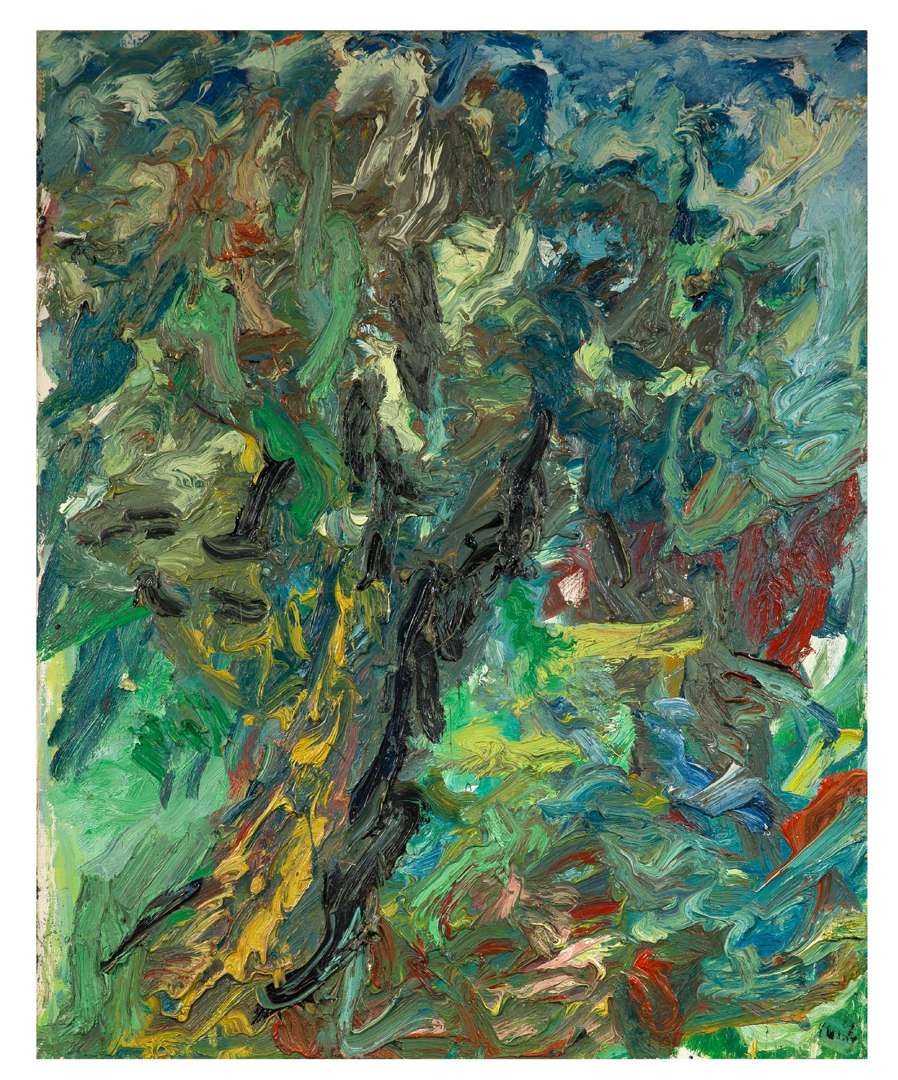
Sans titre (Arbre), 1967
Huile sur toile, datée et signée en bas à droite
100 x 81 cm (non encadrée) 39 3/8 x 31 7/8 in. (unframed)
Oil on canvas, dated and signed lower right
PROVENANCE
Collection privée, Belgique
Don de l'artiste au grand-père du propriétaire actuel
Un certificat d'authenticité sera remis à l'acquéreur.
Eugène Leroy, né à Tourcoing, consacre toute sa vie à l’exploration du dessin et de la peinture. Dès 1927, lorsqu’il découvre la peinture à l’huile, il évoque cette rencontre comme « l’accès à une volonté de bonheur ». Après un bref passage à l’École des Beaux- Arts de Lille en 1931, il poursuit sa formation à Paris.
Longtemps restée en marge des courants dominants, son oeuvre s’impose progressivement comme un territoire singulier dans l’histoire de la peinture moderne et contemporaine. Si de nombreuses expositions internationales jalonnent sa carrière, ce n’est qu’au début des années 2000 que son travail connaît une véritable relecture institutionnelle et critique. Cette reconnaissance tardive est en partie portée par des figures comme le peintre allemand Georg Baselitz, qui collectionne ses oeuvres et contribue à leur valorisation sur la scène artistique.
Parmi les présentes oeuvres, cette grande huile sur toile illustre parfaitement l’approche picturale si caractéristique d’Eugène Leroy. La matière picturale est déposée en couches épaisses, quasi sculpturales, où les touches de vert, de bleu et d’ocre s’entrelacent dans un enchevêtrement organique et vibrant. Le sujet, souvent à la limite de l’abstraction, semble émerger lentement du chaos. Les empâtements confèrent à l’oeuvre une densité matérielle rare.
Cette peinture témoigne de la quête incessante de l’artiste pour saisir l’essence même de la lumière et de la forme à travers
l’épaisseur de la matière. À la croisée du visible et de l’invisible, de la figuration et de l’abstraction, Eugène Leroy nous invite une expérience sensorielle où l’oeil plonge, scrute et découvre peu à peu la présence enfouie sous la peinture.
Eugène Leroy, born in Tourcoing, devoted his entire life to the exploration of drawing and painting. His encounter with oil painting in 1927 marked what he described as “the access to a will for happiness.” After a brief period at the École des Beaux-Arts in Lille in 1931, he continued his training in Paris. For many years, Leroy’s work remained on the fringes of dominant artistic movements, but over time, it established itself as a singular domain in the history of modern and contemporary painting. Despite numerous international exhibitions throughout his career, it was only in the early 2000s that his work began to receive a true institutional and critical reappraisal. This delayed recognition was partly driven by figures like German painter Georg Baselitz, who collected Leroy’s works and played a significant role in elevating their importance on the art scene. Among the works presented here, this large oil on canvas exemplifies Eugene Leroy’s distinctive pictorial approach. The thick, almost sculptural layers of paint interwoven with vibrant touches of green, blue, and ochre create an organic, dynamic texture. The subject, often teetering on the edge of abstraction, emerges slowly from the chaos. The impastos endow the painting with a rare material density.
This piece bears witness to Leroy’s relentless pursuit of capturing the essence of light and form through the thickness of the medium. At the intersection of the visible and the invisible, figuration and abstraction, Leroy invites us into a sensory experience where the eye plunges, searches, and gradually uncovers the presence hidden beneath the surface of the painting.
Sans titre (Arbre), 1967
Huile sur toile, datée et signée en bas à droite
100 x 81 cm (non encadrée) 39 3/8 x 31 7/8 in. (unframed)
Oil on canvas, dated and signed lower right
PROVENANCE
Collection privée, Belgique
Don de l'artiste au grand-père du propriétaire actuel
Un certificat d'authenticité sera remis à l'acquéreur.
Eugène Leroy, né à Tourcoing, consacre toute sa vie à l’exploration du dessin et de la peinture. Dès 1927, lorsqu’il découvre la peinture à l’huile, il évoque cette rencontre comme « l’accès à une volonté de bonheur ». Après un bref passage à l’École des Beaux- Arts de Lille en 1931, il poursuit sa formation à Paris.
Longtemps restée en marge des courants dominants, son oeuvre s’impose progressivement comme un territoire singulier dans l’histoire de la peinture moderne et contemporaine. Si de nombreuses expositions internationales jalonnent sa carrière, ce n’est qu’au début des années 2000 que son travail connaît une véritable relecture institutionnelle et critique. Cette reconnaissance tardive est en partie portée par des figures comme le peintre allemand Georg Baselitz, qui collectionne ses oeuvres et contribue à leur valorisation sur la scène artistique.
Parmi les présentes oeuvres, cette grande huile sur toile illustre parfaitement l’approche picturale si caractéristique d’Eugène Leroy. La matière picturale est déposée en couches épaisses, quasi sculpturales, où les touches de vert, de bleu et d’ocre s’entrelacent dans un enchevêtrement organique et vibrant. Le sujet, souvent à la limite de l’abstraction, semble émerger lentement du chaos. Les empâtements confèrent à l’oeuvre une densité matérielle rare.
Cette peinture témoigne de la quête incessante de l’artiste pour saisir l’essence même de la lumière et de la forme à travers
l’épaisseur de la matière. À la croisée du visible et de l’invisible, de la figuration et de l’abstraction, Eugène Leroy nous invite une expérience sensorielle où l’oeil plonge, scrute et découvre peu à peu la présence enfouie sous la peinture.
Eugène Leroy, born in Tourcoing, devoted his entire life to the exploration of drawing and painting. His encounter with oil painting in 1927 marked what he described as “the access to a will for happiness.” After a brief period at the École des Beaux-Arts in Lille in 1931, he continued his training in Paris. For many years, Leroy’s work remained on the fringes of dominant artistic movements, but over time, it established itself as a singular domain in the history of modern and contemporary painting. Despite numerous international exhibitions throughout his career, it was only in the early 2000s that his work began to receive a true institutional and critical reappraisal. This delayed recognition was partly driven by figures like German painter Georg Baselitz, who collected Leroy’s works and played a significant role in elevating their importance on the art scene. Among the works presented here, this large oil on canvas exemplifies Eugene Leroy’s distinctive pictorial approach. The thick, almost sculptural layers of paint interwoven with vibrant touches of green, blue, and ochre create an organic, dynamic texture. The subject, often teetering on the edge of abstraction, emerges slowly from the chaos. The impastos endow the painting with a rare material density.
This piece bears witness to Leroy’s relentless pursuit of capturing the essence of light and form through the thickness of the medium. At the intersection of the visible and the invisible, figuration and abstraction, Leroy invites us into a sensory experience where the eye plunges, searches, and gradually uncovers the presence hidden beneath the surface of the painting.