
&w=3840&q=75)
&w=3840&q=75)
&w=3840&q=75)
&w=3840&q=75)
&w=3840&q=75)
&w=3840&q=75)
&w=3840&q=75)
&w=3840&q=75)


23
GASTON CHAISSAC (1910-1964)
Vendu : 23 616 €
Les frais s'entendent commission et taxes comprises.
GASTON CHAISSAC (1910-1964)
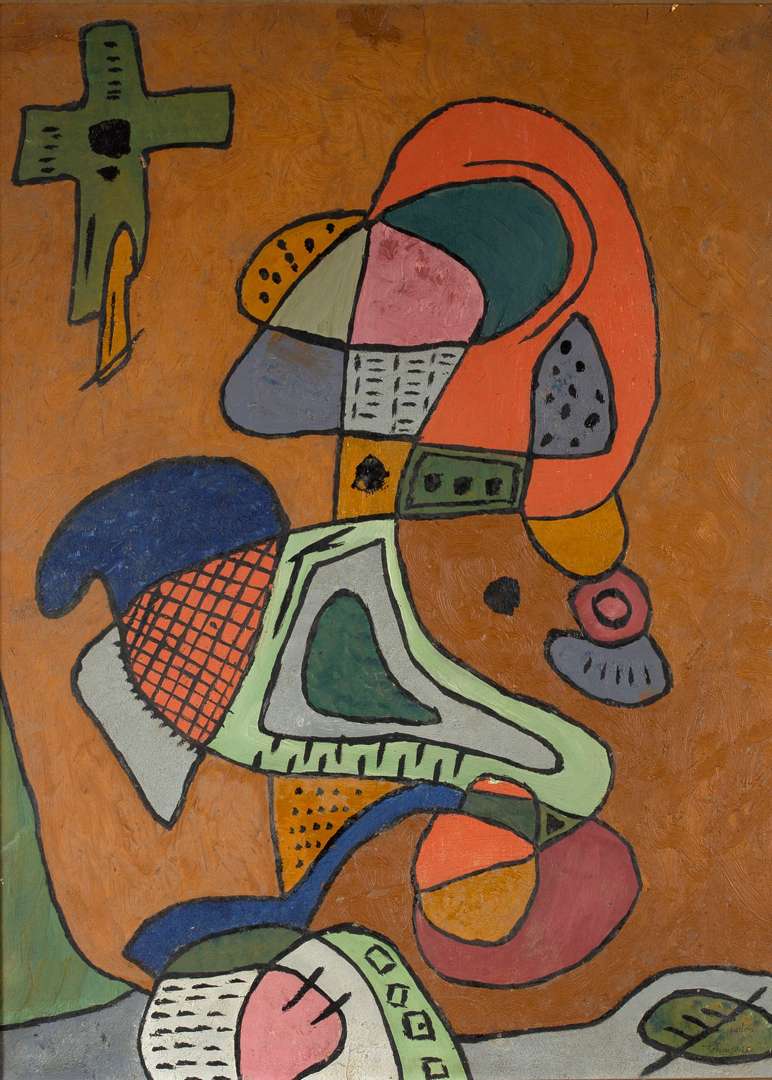
Composition, 1950
Huile sur papier marouflée sur toile, signée en bas à droite
65 x 48 cm - 25 5/8 x 18 7/8 in.
Oil on paper mounted on canvas, signed lower right
EXPOSITION
Gaston Chaissac, rétrospective, Musée Campredon, L'Isle-sur-la-Sorgue, 8 juin - 21 octobre 1990, n°52
PROVENANCE
Galerie Messine-Thomas Le Guillou Paris, acquise auprès de cette dernière par le propriétaire actuel
Gaston Chaissac occupe une place singulière dans l’art du XXe siècle, à la croisée de plusieurs courants sans jamais véritablement s’y inscrire. Autodidacte, il développe un style unique mêlant abstraction, figuration et influences populaires. Né en 1910 à Avallon, en Bourgogne, il mène une existence marquée par l’errance et des rencontres déterminantes, notamment avec le sculpteur allemand Otto Freundlich et la peintre Jeanne Kosnick- Kloss, qui l’encouragent à se consacrer pleinement à la peinture dès les années 1930. Il entretient également une correspondance féconde avec Jean Dubuffet, qui voit en lui une figure emblématique de l’Art Brut, bien que Chaissac revendique une approche plus personnelle.
À partir des années 1950, son langage artistique s’affirme. Refusant de se cantonner à une abstraction pure ou à une figuration simplifiée, il puise son inspiration dans son quotidien, la nature environnante et l’univers rural qui l’a façonné. Cette période marque un tournant où il forge une esthétique singulière, caractérisée par une liberté formelle et une palette éclatante. Son oeuvre, souvent associée à celle des artistes du groupe CoBrA, a notamment été mise en dialogue avec eux lors d’une exposition au musée Soulages en 2021, soulignant ainsi son inscription dans les questionnements artistiques de son époque.
Dans notre oeuvre de 1950, Chaissac se distingue par l’emploi de couleurs vives et contrastées, insufflant une énergie dynamique à la composition. Les formes géométriques, délimitées par d’épais cernes noirs, instaurent une tension entre la rigueur du trait et la fluidité des couleurs. Présentée lors de la rétrospective de 1990 au Musée Campredon, cette oeuvre s’inscrit dans une série explorant l’essence de l’art populaire. Cette exposition, qui retraçait l’évolution de son travail, a permis de révéler toute la richesse de son univers pictural, empreint d’humour, de spontanéité et d’une poésie naïve. À travers son art, Chaissac s’affranchit des conventions, traduisant une vision du monde foisonnante d’énergie et de fantaisie.
Gaston Chaissac is standing at the crossroads of several movements without ever fully belonging to any of them. A self-taught artist, he developed a unique style blending abstraction, figuration, and popular influences. Born in 1910 in Avallon, Burgundy, he led a life marked by wandering and decisive encounters, notably with the German sculptor Otto Freundlich and the painter Jeanne Kosnick-Kloss, who encouraged him to devote himself entirely to painting in the 1930s. He also maintained a prolific correspondence with Jean Dubuffet, who considered him a key figure of Art Brut, although Chaissac claimed a more personal approach. From the 1950s onwards, his artistic language became more assertive. Refusing to adhere strictly to pure abstraction or simplified figuration, he drew inspiration from his everyday life, the surrounding nature, and the rural world that shaped him. This period marked a turning point in which he developed a distinctive aesthetic, characterized by formal freedom and a vibrant color palette. His work, often linked to that of the CoBrA group artists, was notably placed in dialogue with theirs during an exhibition at the Soulages Museum in 2021, highlighting his engagement with the artistic concerns of his time.
In our 1950 artwork, Chaissac stands out for his use of vivid, contrasting colors that infuse the composition with dynamic energy. The geometric forms, outlined with thick black contours, create a tension between the precision of the lines and the fluidity of the colors. Presented during the 1990 retrospective at the Campredon Museum, this piece belongs to a series exploring the essence of popular art. This exhibition, which traced the evolution of his work, revealed the richness of his pictorial universe, imbued with humor, spontaneity, and a certain naïve poetry. Through his art, Chaissac broke away from conventions, striving to convey a vision of the world brimming with energy and imagination.
Composition, 1950
Huile sur papier marouflée sur toile, signée en bas à droite
65 x 48 cm - 25 5/8 x 18 7/8 in.
Oil on paper mounted on canvas, signed lower right
EXPOSITION
Gaston Chaissac, rétrospective, Musée Campredon, L'Isle-sur-la-Sorgue, 8 juin - 21 octobre 1990, n°52
PROVENANCE
Galerie Messine-Thomas Le Guillou Paris, acquise auprès de cette dernière par le propriétaire actuel
Gaston Chaissac occupe une place singulière dans l’art du XXe siècle, à la croisée de plusieurs courants sans jamais véritablement s’y inscrire. Autodidacte, il développe un style unique mêlant abstraction, figuration et influences populaires. Né en 1910 à Avallon, en Bourgogne, il mène une existence marquée par l’errance et des rencontres déterminantes, notamment avec le sculpteur allemand Otto Freundlich et la peintre Jeanne Kosnick- Kloss, qui l’encouragent à se consacrer pleinement à la peinture dès les années 1930. Il entretient également une correspondance féconde avec Jean Dubuffet, qui voit en lui une figure emblématique de l’Art Brut, bien que Chaissac revendique une approche plus personnelle.
À partir des années 1950, son langage artistique s’affirme. Refusant de se cantonner à une abstraction pure ou à une figuration simplifiée, il puise son inspiration dans son quotidien, la nature environnante et l’univers rural qui l’a façonné. Cette période marque un tournant où il forge une esthétique singulière, caractérisée par une liberté formelle et une palette éclatante. Son oeuvre, souvent associée à celle des artistes du groupe CoBrA, a notamment été mise en dialogue avec eux lors d’une exposition au musée Soulages en 2021, soulignant ainsi son inscription dans les questionnements artistiques de son époque.
Dans notre oeuvre de 1950, Chaissac se distingue par l’emploi de couleurs vives et contrastées, insufflant une énergie dynamique à la composition. Les formes géométriques, délimitées par d’épais cernes noirs, instaurent une tension entre la rigueur du trait et la fluidité des couleurs. Présentée lors de la rétrospective de 1990 au Musée Campredon, cette oeuvre s’inscrit dans une série explorant l’essence de l’art populaire. Cette exposition, qui retraçait l’évolution de son travail, a permis de révéler toute la richesse de son univers pictural, empreint d’humour, de spontanéité et d’une poésie naïve. À travers son art, Chaissac s’affranchit des conventions, traduisant une vision du monde foisonnante d’énergie et de fantaisie.
Gaston Chaissac is standing at the crossroads of several movements without ever fully belonging to any of them. A self-taught artist, he developed a unique style blending abstraction, figuration, and popular influences. Born in 1910 in Avallon, Burgundy, he led a life marked by wandering and decisive encounters, notably with the German sculptor Otto Freundlich and the painter Jeanne Kosnick-Kloss, who encouraged him to devote himself entirely to painting in the 1930s. He also maintained a prolific correspondence with Jean Dubuffet, who considered him a key figure of Art Brut, although Chaissac claimed a more personal approach. From the 1950s onwards, his artistic language became more assertive. Refusing to adhere strictly to pure abstraction or simplified figuration, he drew inspiration from his everyday life, the surrounding nature, and the rural world that shaped him. This period marked a turning point in which he developed a distinctive aesthetic, characterized by formal freedom and a vibrant color palette. His work, often linked to that of the CoBrA group artists, was notably placed in dialogue with theirs during an exhibition at the Soulages Museum in 2021, highlighting his engagement with the artistic concerns of his time.
In our 1950 artwork, Chaissac stands out for his use of vivid, contrasting colors that infuse the composition with dynamic energy. The geometric forms, outlined with thick black contours, create a tension between the precision of the lines and the fluidity of the colors. Presented during the 1990 retrospective at the Campredon Museum, this piece belongs to a series exploring the essence of popular art. This exhibition, which traced the evolution of his work, revealed the richness of his pictorial universe, imbued with humor, spontaneity, and a certain naïve poetry. Through his art, Chaissac broke away from conventions, striving to convey a vision of the world brimming with energy and imagination.