
&w=3840&q=75)
&w=3840&q=75)
&w=3840&q=75)
&w=3840&q=75)
&w=3840&q=75)
&w=3840&q=75)
&w=3840&q=75)
&w=3840&q=75)

4
VICTOR TARDIEU (1870-1937)
Vendu : 3 936 €
Les prix s'entendent commission et taxes comprises.
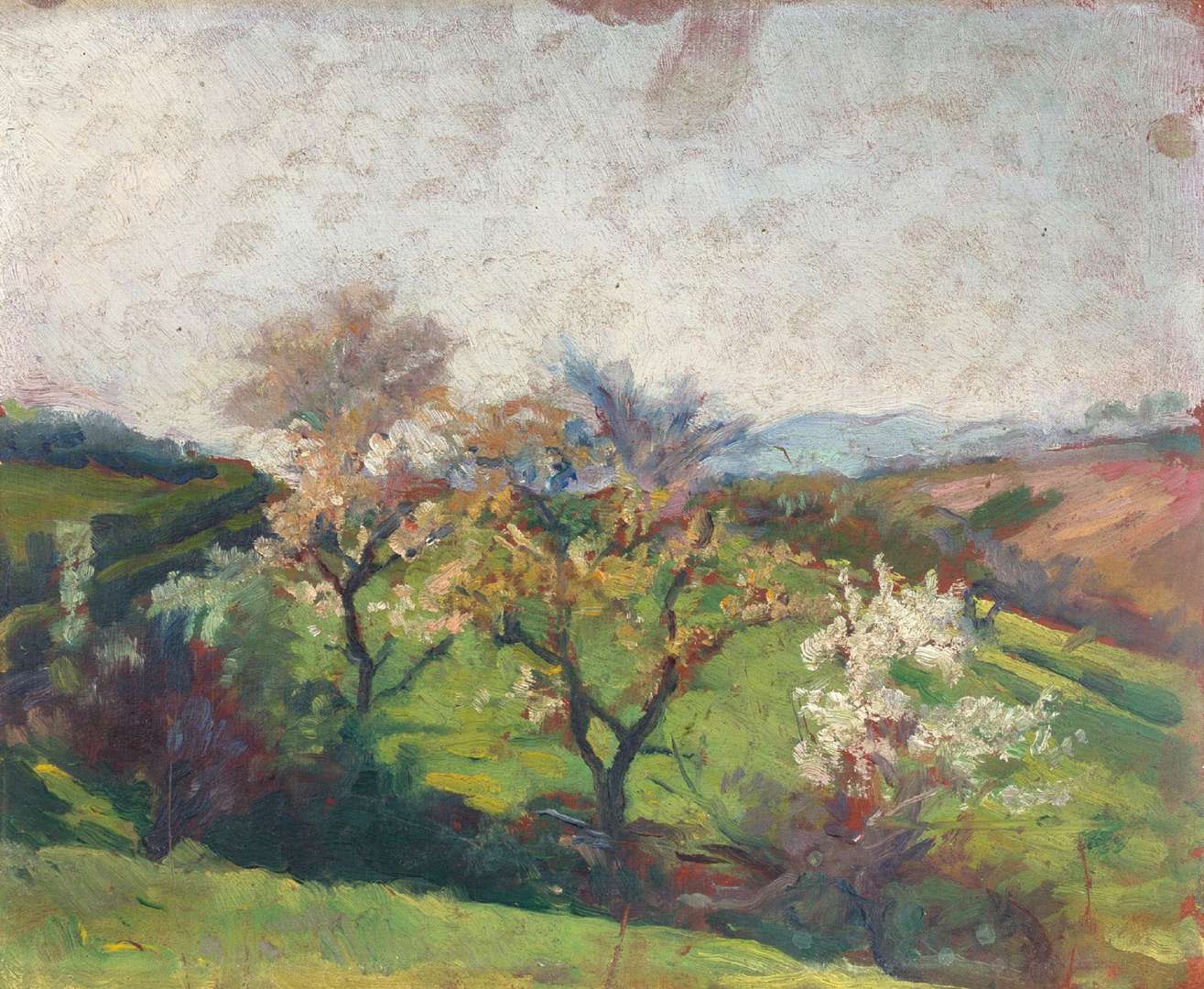
VICTOR TARDIEU (1870-1937)
Paysage
Huile sur panneau
21,5 x 27 cm - 8 1/2 x 10 5/8 in.
Oil on panel
PROVENANCE
Collection Jacques Lebas, Hanoï(offert par Victor Tardieu à Hanoï dans les années 1930)
Collection particulière, France (par descendance du précédent)
VICTOR TARDIEU
Victor Tardieu offre à son ami Jacques Lebas ces deux panneaux à Hanoï, au cours des années 30, tel un témoignage de la première partie de sa carrière artistique, en France.
Les deux oeuvres sont peintes sur le vif, la première à Sourdun, au sud-est de Paris tandis que la seconde n’est pas localisée mais représente assurément la campagne française.
La Seine près de Sourdun est datée de 1918. Tandis qu’à la sortie de la Première Guerre mondiale, l’artiste s’affairait de nouveau au plafond de la salle du conseil municipal de l’hôtel de ville de Montrouge, il profitait vraisemblablement de son temps libre pour aller peindre en plein-air.
Ces deux huiles sur panneau illustrent également le goût de l’artiste pour, dès le début de sa carrière, aller peindre à l’extérieur. C’est une leçon qu’il transmettra à ses élèves de l’École des beaux-arts de l’Indochine et que Joseph Inguimberty, professeur à l’École de 1925 à 1945, s’attachera également à inculquer.
Victor Tardieu đã tặng cho người bạn Jacques Lebas hai bức tranh vào những năm 1930 tại Hà Nội, như một minh chứng cho giai đoạn đầu trong sự nghiệp nghệ thuật của ông tại Pháp.
Hai tác phẩm được vẽ trực hoạ, bức đầu tiên ở Sourdun, phía đông nam Paris, bức thứ hai không xác định được địa điểm nhưng có thể thấy đây là khung cảnh vùng nông thôn nước Pháp.
Victor Tardieu dans son bureau à Hanoï ©INHA
Victor Tardieu tại phòng làm việc của ông ở Hà Nội ©INHA
Tác phẩm Sông Seine gần Sourdun được ghi ngày tháng năm 1918. Trong giai đoạn sau Chiến tranh Thế giới thứ nhất, khi Victor Tardieu đang làm việc để hoàn thiện trần nhà phòng họp của tòa thị chính Montrouge, dường như ông đã tranh thủ thời gian rảnh để ra ngoài vẽ tranh phong cảnh.
Hai bức tranh sơn dầu này cũng phản ánh sở thích của Victor Tardieu ngay từ đầu sự nghiệp:
trực hoạ. Đây cũng là bài học mà ông đã truyền lại cho các học sinh của Trường Cao đẳng Mỹ thuật Đông Dương, một truyền thống mà Joseph Inguimberty, giáo viên của trường từ năm 1925 đến năm 1945, đặc biệt chú trọng giảng dạy.
Victor Tardieu presented his friend Jacques Lebas with these two panels in Hanoi in the 1930s, as a token of the first part of his artistic career in France.
Both works were painted on the spot, the first in Sourdun, south-east of Paris, while the second is unlocated but certainly depicts the French countryside.
La Seine près de Sourdun is dated 1918. While the artist was once again working on the ceiling of the municipal council room at Montrouge town hall after the First World War, he probably took advantage of his free time to paint in the open air.
These two oils on panel also illustrate the artist's penchant for painting outdoors from the very start of his career. It's a lesson he would pass on to his students at the Indochina School of Fine Arts, and one that Joseph Inguimberty, who taught at the School from 1925 to 1945, was also keen to inculcate.
Paysage
Huile sur panneau
21,5 x 27 cm - 8 1/2 x 10 5/8 in.
Oil on panel
PROVENANCE
Collection Jacques Lebas, Hanoï(offert par Victor Tardieu à Hanoï dans les années 1930)
Collection particulière, France (par descendance du précédent)
VICTOR TARDIEU
Victor Tardieu offre à son ami Jacques Lebas ces deux panneaux à Hanoï, au cours des années 30, tel un témoignage de la première partie de sa carrière artistique, en France.
Les deux oeuvres sont peintes sur le vif, la première à Sourdun, au sud-est de Paris tandis que la seconde n’est pas localisée mais représente assurément la campagne française.
La Seine près de Sourdun est datée de 1918. Tandis qu’à la sortie de la Première Guerre mondiale, l’artiste s’affairait de nouveau au plafond de la salle du conseil municipal de l’hôtel de ville de Montrouge, il profitait vraisemblablement de son temps libre pour aller peindre en plein-air.
Ces deux huiles sur panneau illustrent également le goût de l’artiste pour, dès le début de sa carrière, aller peindre à l’extérieur. C’est une leçon qu’il transmettra à ses élèves de l’École des beaux-arts de l’Indochine et que Joseph Inguimberty, professeur à l’École de 1925 à 1945, s’attachera également à inculquer.
Victor Tardieu đã tặng cho người bạn Jacques Lebas hai bức tranh vào những năm 1930 tại Hà Nội, như một minh chứng cho giai đoạn đầu trong sự nghiệp nghệ thuật của ông tại Pháp.
Hai tác phẩm được vẽ trực hoạ, bức đầu tiên ở Sourdun, phía đông nam Paris, bức thứ hai không xác định được địa điểm nhưng có thể thấy đây là khung cảnh vùng nông thôn nước Pháp.
Victor Tardieu dans son bureau à Hanoï ©INHA
Victor Tardieu tại phòng làm việc của ông ở Hà Nội ©INHA
Tác phẩm Sông Seine gần Sourdun được ghi ngày tháng năm 1918. Trong giai đoạn sau Chiến tranh Thế giới thứ nhất, khi Victor Tardieu đang làm việc để hoàn thiện trần nhà phòng họp của tòa thị chính Montrouge, dường như ông đã tranh thủ thời gian rảnh để ra ngoài vẽ tranh phong cảnh.
Hai bức tranh sơn dầu này cũng phản ánh sở thích của Victor Tardieu ngay từ đầu sự nghiệp:
trực hoạ. Đây cũng là bài học mà ông đã truyền lại cho các học sinh của Trường Cao đẳng Mỹ thuật Đông Dương, một truyền thống mà Joseph Inguimberty, giáo viên của trường từ năm 1925 đến năm 1945, đặc biệt chú trọng giảng dạy.
Victor Tardieu presented his friend Jacques Lebas with these two panels in Hanoi in the 1930s, as a token of the first part of his artistic career in France.
Both works were painted on the spot, the first in Sourdun, south-east of Paris, while the second is unlocated but certainly depicts the French countryside.
La Seine près de Sourdun is dated 1918. While the artist was once again working on the ceiling of the municipal council room at Montrouge town hall after the First World War, he probably took advantage of his free time to paint in the open air.
These two oils on panel also illustrate the artist's penchant for painting outdoors from the very start of his career. It's a lesson he would pass on to his students at the Indochina School of Fine Arts, and one that Joseph Inguimberty, who taught at the School from 1925 to 1945, was also keen to inculcate.