
&w=3840&q=75)
&w=3840&q=75)
&w=3840&q=75)
&w=3840&q=75)
&w=3840&q=75)
&w=3840&q=75)
&w=3840&q=75)
&w=3840&q=75)


5
ANTONIO BLANCO (1911-1999)
Vendu : 34 112 €
Les prix s'entendent commission et taxes comprises.
ANTONIO BLANCO (1911-1999)
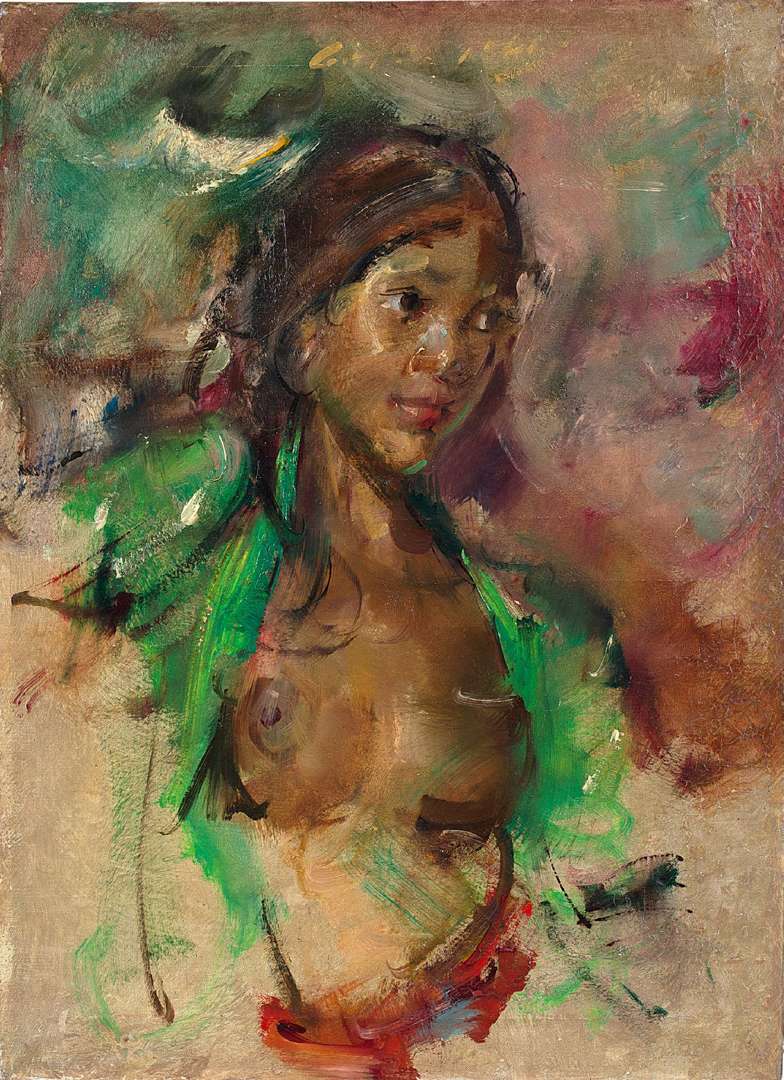
Portrait présumé de la fille du peintre
Huile sur toile, signée en haut au milieu
60 x 43,5 cm - 23 5/8 x 43 1/2 in.
Oil on canvas, signed upper middle
PROVENANCE
Exposition Antonio Blanco, Jatiluhur, Java, mars 1962
Collection particulière (acquis à l'occasion de l'exposition précédente)
Collection particulière (transmis familialement dans les années 1990)
Antonio Blanco ou le « Fabuleux Blanco » est né le 15 septembre 1912 à Manille (Philippines) et mort en 1999 à Ubud (Bali). D’origines catalanes, ses parents s’étaient installés à Manille en 1898. Il étudie à l’American Central School de Manille puis il part pour New York où il entre à la National Academy of Art auprès de Sidney Dickinson (1890 - 1908). C’est au cours
de ses premières années qu’il se consacre à la représentation des corps en mouvement, notamment féminins. Il rentre à Bali en 1952, après quelques années de voyages, et se fait offrir un terrain par le Roi d’Ubud, sa réputation l’ayant précédée. À la fin de sa vie, Antonio Blanco décide de construire un musée afin d’exposer ses oeuvres, aujourd’hui devenu le Blanco Renaissance Museum. Il fonde également dans les années 1960 la Blanco Art Foundation.
Notre toile montre une jeune fille en buste, probablement la fille du peintre, le regard tourné vers sa gauche. Son visage et son corps se détachent sur un fond esquissé à l’aide de vifs coups de pinceau. Il s’agit d’un mode de représentation typique chez Blanco qui semble principalement intéressé par la figure humaine et son mouvement, n’accordant qu’une importance secondaire au fond de ses toiles.
Antonio Blanco or the “Fabulous Blanco” was born on September 15, 1912 in Manila (Philippines) and died in 1999 in Ubud (Bali). Of Catalan origin, his parents settled in Manila in 1898. He studied at the American Central School in Manila, where he discovered the arts. After graduating, he moved to New York, where he was accepted into the National Academy of Art under Sidney Dickinson (1890-1908). It was during these early years that he devoted himself to depicting the body in motion, particularly the female form. He returned to Bali in 1952, after several years of travel, and was offered a plot of
land by the King of Ubud, his reputation having preceded him. At the end of his life, Antonio Blanco decided to build a museum to exhibit his work, which has now become the Blanco Renaissance Museum. In the 1960s, he also founded the Blanco Art Foundation.
Our painting shows a bust of a young girl, probably the painter's daughter, looking to the left. Her face and body stand out against a background sketched out with lively brushstrokes. This is a typical mode of representation for Blanco, who seems primarily interested in the human figure and its movement, giving only secondary importance to the background of his canvases.
Antonio Blanco hay còn gọi là « Fabuleux Blanco » (tạm dịch: « Blanco xuất chúng ») sinh ngày 15 tháng 9 năm 1912 tại Manila (Philippines) và qua đời vào năm 1999 tại Ubud (Bali). Là người gốc Catalonia, cha mẹ ông đã định cư tại Manila
từ năm 1898. Ông học tại Trường Trung học Mỹ ở Manila, nơi ông phát hiện ra tình yêu đối với nghệ thuật. Sau khi tốt nghiệp, ông đến New York và theo học tại Học viện Nghệ thuật Quốc gia dưới sự hướng dẫn của hoạ sĩ Sidney Dickinson
(1890 - 1908). Trong những năm đầu học tập, ông tập trung vào việc thể hiện các chuyển động của cơ thể, đặc biệt là chuyển động của cơ thể người phụ nữ. Sau nhiều năm du ngoạn, ông trở về Bali vào năm 1952 và được Vua Ubud phong
tặng một mảnh đất nhờ danh tiếng vang xa của mình. Cuối đời, Antonio Blanco quyết định xây dựng một bảo tàng để trưng bày các tác phẩm của mình. Bảo tàng hiện nay mang tên Bảo tàng Phục hưng Blanco. Vào những năm 1960, ông cũng đã thành lập Quỹ Nghệ thuật Blanco.
Bức tranh mà chúng tôi giới thiệu ở đây thể hiện một thiếu nữ trong tư thế bán thân, có thể là con gái của họa sĩ, đang hướng ánh nhìn về phía bên trái. Khuôn mặt và cơ thể của cô gái nổi bật trên phông nền được phác hoạ bằng những nét cọ mạnh mẽ. Đây là một phong cách biểu hiện điển hình của Blanco, người dành sự quan tâm chủ yếu đến hình dáng và chuyển động của cơ thể con người nhiều hơn là đến phông nền của tác phẩm.
Portrait présumé de la fille du peintre
Huile sur toile, signée en haut au milieu
60 x 43,5 cm - 23 5/8 x 43 1/2 in.
Oil on canvas, signed upper middle
PROVENANCE
Exposition Antonio Blanco, Jatiluhur, Java, mars 1962
Collection particulière (acquis à l'occasion de l'exposition précédente)
Collection particulière (transmis familialement dans les années 1990)
Antonio Blanco ou le « Fabuleux Blanco » est né le 15 septembre 1912 à Manille (Philippines) et mort en 1999 à Ubud (Bali). D’origines catalanes, ses parents s’étaient installés à Manille en 1898. Il étudie à l’American Central School de Manille puis il part pour New York où il entre à la National Academy of Art auprès de Sidney Dickinson (1890 - 1908). C’est au cours
de ses premières années qu’il se consacre à la représentation des corps en mouvement, notamment féminins. Il rentre à Bali en 1952, après quelques années de voyages, et se fait offrir un terrain par le Roi d’Ubud, sa réputation l’ayant précédée. À la fin de sa vie, Antonio Blanco décide de construire un musée afin d’exposer ses oeuvres, aujourd’hui devenu le Blanco Renaissance Museum. Il fonde également dans les années 1960 la Blanco Art Foundation.
Notre toile montre une jeune fille en buste, probablement la fille du peintre, le regard tourné vers sa gauche. Son visage et son corps se détachent sur un fond esquissé à l’aide de vifs coups de pinceau. Il s’agit d’un mode de représentation typique chez Blanco qui semble principalement intéressé par la figure humaine et son mouvement, n’accordant qu’une importance secondaire au fond de ses toiles.
Antonio Blanco or the “Fabulous Blanco” was born on September 15, 1912 in Manila (Philippines) and died in 1999 in Ubud (Bali). Of Catalan origin, his parents settled in Manila in 1898. He studied at the American Central School in Manila, where he discovered the arts. After graduating, he moved to New York, where he was accepted into the National Academy of Art under Sidney Dickinson (1890-1908). It was during these early years that he devoted himself to depicting the body in motion, particularly the female form. He returned to Bali in 1952, after several years of travel, and was offered a plot of
land by the King of Ubud, his reputation having preceded him. At the end of his life, Antonio Blanco decided to build a museum to exhibit his work, which has now become the Blanco Renaissance Museum. In the 1960s, he also founded the Blanco Art Foundation.
Our painting shows a bust of a young girl, probably the painter's daughter, looking to the left. Her face and body stand out against a background sketched out with lively brushstrokes. This is a typical mode of representation for Blanco, who seems primarily interested in the human figure and its movement, giving only secondary importance to the background of his canvases.
Antonio Blanco hay còn gọi là « Fabuleux Blanco » (tạm dịch: « Blanco xuất chúng ») sinh ngày 15 tháng 9 năm 1912 tại Manila (Philippines) và qua đời vào năm 1999 tại Ubud (Bali). Là người gốc Catalonia, cha mẹ ông đã định cư tại Manila
từ năm 1898. Ông học tại Trường Trung học Mỹ ở Manila, nơi ông phát hiện ra tình yêu đối với nghệ thuật. Sau khi tốt nghiệp, ông đến New York và theo học tại Học viện Nghệ thuật Quốc gia dưới sự hướng dẫn của hoạ sĩ Sidney Dickinson
(1890 - 1908). Trong những năm đầu học tập, ông tập trung vào việc thể hiện các chuyển động của cơ thể, đặc biệt là chuyển động của cơ thể người phụ nữ. Sau nhiều năm du ngoạn, ông trở về Bali vào năm 1952 và được Vua Ubud phong
tặng một mảnh đất nhờ danh tiếng vang xa của mình. Cuối đời, Antonio Blanco quyết định xây dựng một bảo tàng để trưng bày các tác phẩm của mình. Bảo tàng hiện nay mang tên Bảo tàng Phục hưng Blanco. Vào những năm 1960, ông cũng đã thành lập Quỹ Nghệ thuật Blanco.
Bức tranh mà chúng tôi giới thiệu ở đây thể hiện một thiếu nữ trong tư thế bán thân, có thể là con gái của họa sĩ, đang hướng ánh nhìn về phía bên trái. Khuôn mặt và cơ thể của cô gái nổi bật trên phông nền được phác hoạ bằng những nét cọ mạnh mẽ. Đây là một phong cách biểu hiện điển hình của Blanco, người dành sự quan tâm chủ yếu đến hình dáng và chuyển động của cơ thể con người nhiều hơn là đến phông nền của tác phẩm.