
&w=3840&q=75)
&w=3840&q=75)
&w=3840&q=75)
&w=3840&q=75)
&w=3840&q=75)
&w=3840&q=75)
&w=3840&q=75)
&w=3840&q=75)


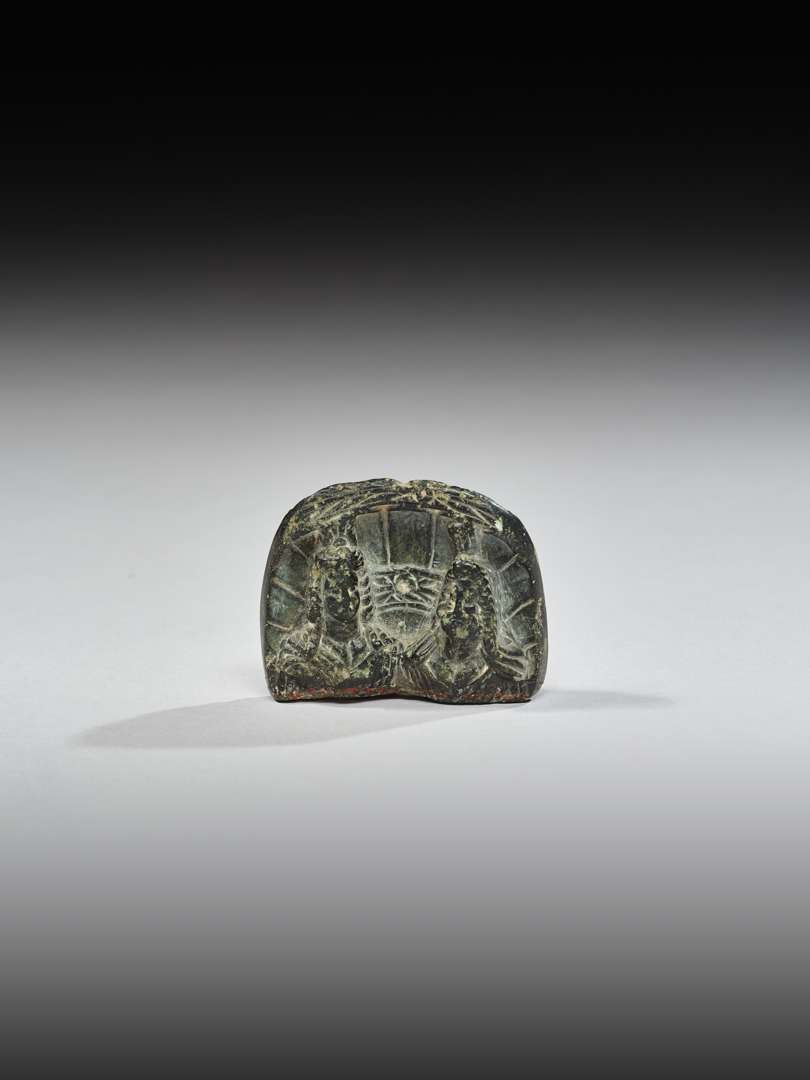
A concave-shaped piece of soapstone, carved on both sides. On one side, in high relief, are two busts of deities, one male and the other female, probably Isis and Serapis. The inner surface is decorated with fluting and a circular garland. The other side, with a fluted border, is adorned with a rosette at its centre, set within a wreath of acanthus leaves and bordered by sinuous vine tendrils. Egyptian art, Roman period, 2nd century AD.
Height: 4 cm – Width: 6 cm
(Fragment, wear and tear, minor visible damage)
Small bowls of this type were particularly popular in Upper Egypt during the Roman period. A very similar example is held at the Louvre Museum [Inv. No. MG16811].