
&w=3840&q=75)
&w=3840&q=75)
&w=3840&q=75)
&w=3840&q=75)
&w=3840&q=75)
&w=3840&q=75)
&w=3840&q=75)
&w=3840&q=75)


49
Alix AYMÉ (1894-1989)
The item was sold for 182 000 €
Fees include commission and taxes.
Alix AYMÉ (1894-1989)
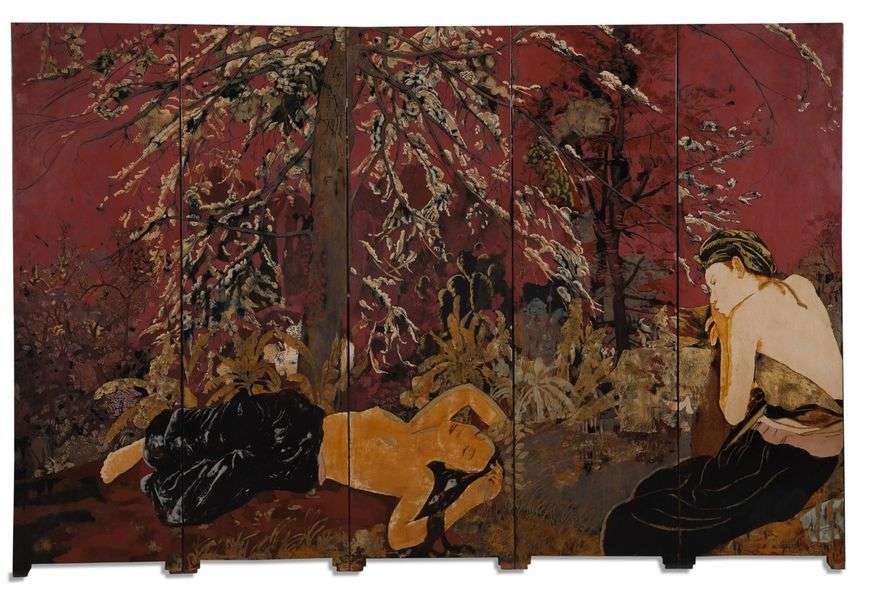
Lying women
Lacquered screen, signed lower right
102 x 157 cm - 40 1/8 x 61 13/16 in.
Lacquered screen, signed lower right
It was during her stay in Japan in 1928 that the artist, who had been living in Hanoi for seven years, discovered such a love for lacquer that she would never give it up. When, with Inguimberty, she reintroduced the art of lacquer in 1934 at the School, the Art Deco influence to which she was subject was felt in her productions. From the Japanese lacquers, she borrows the backgrounds or the large golden flat tints. From Indochinese lacquerware, the traditional subjects, and finally from the West the modernity, to make a symbiosis as perfect as sublime. She had always prized subjects that touched the intimacy of her models (interior scenes, maternity, children at play...), but now she painted graceful young women languishing in lacquer, among flowers, in dreamy landscapes that she suggested.
While visiting Japan in 1928 the artist, who had lived in Hanoi for seven years, the artist developed a love for lacquerwork that lasted the rest of her life. When, with Inguimberty, she reintroduced the art of lacquering to the College in 1934, her work had strong echoes of Art Deco. She combined the gold backgrounds and broad solid tints of Japanese lacquers, the traditional subjects of Indochinese lacquers and the modernism of the West in a symbiosis as sublime as it was perfect. The artist who favoured subjects reflecting the intimate lives of her models (indoor scenes, mothers and infants, children playing, and so on) now used lacquer to depict graceful, languid young women among flowers in subtle, dreamlike landscapes.
Trong thời gian lưu trú tại Nhật Bản vào năm 1928, nữ họa sĩ Aymé, người đã sống ở Hà Nội từ năm bảy tuổi, đã khám phá ra tình yêu của mình dành cho sơn mài mà sẽ không bao giờ rũ bỏ được. Khi bà cùng với Inguimberty đưa nghệ thuật sơn mài trở lại Trường vào năm 1934, sự ảnh hưởng của trường phái Art Deco, vốn chinh phục Aymé, là điều được người xem cảm nhận thấy trong các sáng tác của bà. Ở sơn mài Nhật Bản, bà vay mượn yếu tố độ sâu hoặc bề mặt rộng phẳng nhẵn dát vàng, ở sơn mài Đông Dương là các đề tài truyền thống, và cuối cùng là sự hiện đại của hội họa phương Tây, để từ đó làm nên một sự cộng sinh vừa hoàn hảo vừa thăng hoa tuyệt vời. Là người ưa chuộng các đề tài chạm đến những cảm xúc sâu kín của người mẫu (cảnh sinh hoạt gia đình, tình mẫu tử, trẻ em vui chơi...), bà tạo ra trên sơn mài hình ảnh những thiếu phụ mảnh khảnh uể oải, giữa những bông hoa, trong những khung cảnh đẹp như cõi mộng.
Alix Aymé
A student of Maurice Denis, with whom she maintained a sustained correspondence throughout her career, Alix Aymé became fascinated with the Asian continent during a first trip when she accompanied her husband on a mission to China by the French government. She travelled through Laos, Cambodia and Vietnam for over twenty years. Appointed professor at the Hanoi School of Fine Arts, she contributed with Inguimberty to the return of lacquerware. Her works are the meeting point between the style of the Nabis and traditional Vietnamese painting.
A pupil of Maurice Denis, with whom she corresponded throughout her career, Alix Aymé conceived a passion for the Asian continent on her first trip there with her husband, when he was sent on a mission to China by the French government. She then spent over twenty years travelling in Laos, Cambodia and Vietnam. Appointed professor at the College of Fine Arts of Hanoi, she contributed to the revival of lacquer work with Inguimberty. Her works reflect the style of both the Nabis and traditional Vietnamese painting.
Là học sinh của Maurice Denis và là người thường xuyên trao đổi thư từ trong suốt sự nghiệp của mình, Alix Aymé say mê Châu Á kể từ chuyến công tác cùng chồng ở Trung Quốc do chính phủ Pháp bổ nhiệm. Cô đã du lịch qua Lào, Cam-pu-chia và cả Việt Nam trong suốt hơn 20 năm. Được bổ nhiệm làm giáo sư tại Trường Cao đẳng Mỹ thuật ở Hà Nội, cùng với Inguimberty, cô đã góp phần vào sự hồi sinh của sơn mài. Các tác phẩm của cô là nơi gặp gỡ giữa phong cách Nabi mà cô bị ảnh hưởng và của cái mà cô yêu thích là hội họa truyền thống Việt Nam.
Lying women
Lacquered screen, signed lower right
102 x 157 cm - 40 1/8 x 61 13/16 in.
Lacquered screen, signed lower right
It was during her stay in Japan in 1928 that the artist, who had been living in Hanoi for seven years, discovered such a love for lacquer that she would never give it up. When, with Inguimberty, she reintroduced the art of lacquer in 1934 at the School, the Art Deco influence to which she was subject was felt in her productions. From the Japanese lacquers, she borrows the backgrounds or the large golden flat tints. From Indochinese lacquerware, the traditional subjects, and finally from the West the modernity, to make a symbiosis as perfect as sublime. She had always prized subjects that touched the intimacy of her models (interior scenes, maternity, children at play...), but now she painted graceful young women languishing in lacquer, among flowers, in dreamy landscapes that she suggested.
While visiting Japan in 1928 the artist, who had lived in Hanoi for seven years, the artist developed a love for lacquerwork that lasted the rest of her life. When, with Inguimberty, she reintroduced the art of lacquering to the College in 1934, her work had strong echoes of Art Deco. She combined the gold backgrounds and broad solid tints of Japanese lacquers, the traditional subjects of Indochinese lacquers and the modernism of the West in a symbiosis as sublime as it was perfect. The artist who favoured subjects reflecting the intimate lives of her models (indoor scenes, mothers and infants, children playing, and so on) now used lacquer to depict graceful, languid young women among flowers in subtle, dreamlike landscapes.
Trong thời gian lưu trú tại Nhật Bản vào năm 1928, nữ họa sĩ Aymé, người đã sống ở Hà Nội từ năm bảy tuổi, đã khám phá ra tình yêu của mình dành cho sơn mài mà sẽ không bao giờ rũ bỏ được. Khi bà cùng với Inguimberty đưa nghệ thuật sơn mài trở lại Trường vào năm 1934, sự ảnh hưởng của trường phái Art Deco, vốn chinh phục Aymé, là điều được người xem cảm nhận thấy trong các sáng tác của bà. Ở sơn mài Nhật Bản, bà vay mượn yếu tố độ sâu hoặc bề mặt rộng phẳng nhẵn dát vàng, ở sơn mài Đông Dương là các đề tài truyền thống, và cuối cùng là sự hiện đại của hội họa phương Tây, để từ đó làm nên một sự cộng sinh vừa hoàn hảo vừa thăng hoa tuyệt vời. Là người ưa chuộng các đề tài chạm đến những cảm xúc sâu kín của người mẫu (cảnh sinh hoạt gia đình, tình mẫu tử, trẻ em vui chơi...), bà tạo ra trên sơn mài hình ảnh những thiếu phụ mảnh khảnh uể oải, giữa những bông hoa, trong những khung cảnh đẹp như cõi mộng.
Alix Aymé
A student of Maurice Denis, with whom she maintained a sustained correspondence throughout her career, Alix Aymé became fascinated with the Asian continent during a first trip when she accompanied her husband on a mission to China by the French government. She travelled through Laos, Cambodia and Vietnam for over twenty years. Appointed professor at the Hanoi School of Fine Arts, she contributed with Inguimberty to the return of lacquerware. Her works are the meeting point between the style of the Nabis and traditional Vietnamese painting.
A pupil of Maurice Denis, with whom she corresponded throughout her career, Alix Aymé conceived a passion for the Asian continent on her first trip there with her husband, when he was sent on a mission to China by the French government. She then spent over twenty years travelling in Laos, Cambodia and Vietnam. Appointed professor at the College of Fine Arts of Hanoi, she contributed to the revival of lacquer work with Inguimberty. Her works reflect the style of both the Nabis and traditional Vietnamese painting.
Là học sinh của Maurice Denis và là người thường xuyên trao đổi thư từ trong suốt sự nghiệp của mình, Alix Aymé say mê Châu Á kể từ chuyến công tác cùng chồng ở Trung Quốc do chính phủ Pháp bổ nhiệm. Cô đã du lịch qua Lào, Cam-pu-chia và cả Việt Nam trong suốt hơn 20 năm. Được bổ nhiệm làm giáo sư tại Trường Cao đẳng Mỹ thuật ở Hà Nội, cùng với Inguimberty, cô đã góp phần vào sự hồi sinh của sơn mài. Các tác phẩm của cô là nơi gặp gỡ giữa phong cách Nabi mà cô bị ảnh hưởng và của cái mà cô yêu thích là hội họa truyền thống Việt Nam.