
&w=3840&q=75)
&w=3840&q=75)
&w=3840&q=75)
&w=3840&q=75)
&w=3840&q=75)
&w=3840&q=75)
&w=3840&q=75)
&w=3840&q=75)


29
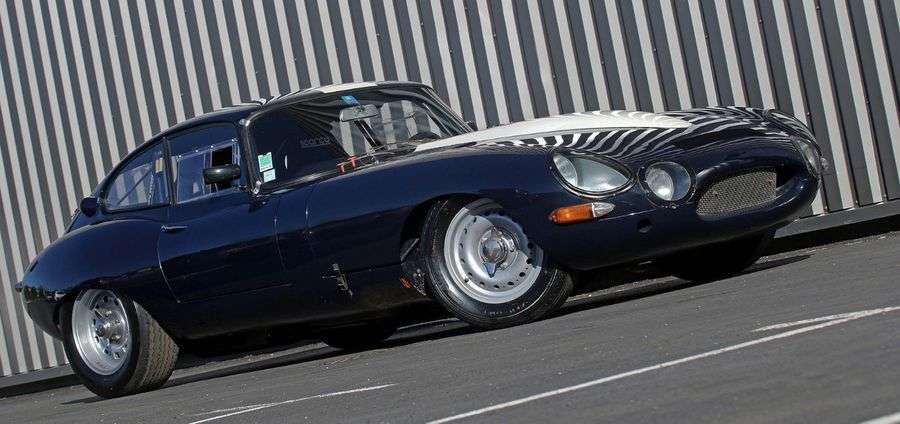
Jaguar Type E 3,8 COUPÉ Compétition 1962
The item was sold for 141 600 €
Fees include commission and taxes.
Jaguar Type E 3,8 COUPÉ Compétition 1962
Eligible for historic motorsport events
Attractive price estimate
Registered for the road
French registration papers
Chassis no. 887157
Since the end of the war, Jaguar’s cars had come to epitomise Grand Touring. The generation of XK 120, 140 and 150 roadsters had made a major contribution to the marque’s sporting image through their successes in motorsport. But time had moved on and Jaguar needed to find a distinguished successor to continue its glorious history.
The Coventry firm therefore worked in the utmost secrecy on the model it would name the E-Type, in reference to the C-Type and D-Type models which had won the Le Mans 24 Hours race and many other international events …
As with the XK 120, the E-Type’s first official victory came at Oulton Park in 1961, when Graham Hill won ahead of Innes Ireland’s Aston Martin DB4 GT. The following year, the brilliant sports car achieved an excellent 4th place overall at the 24 Hours of Le Mans, driven by Salvadori and Cunningham. The E-Type was at the front of the grid and proved a fierce competitor to the Ferraris and Aston Martins which were its main rivals. While the standard models enjoyed considerable success in national races, the lightweight versions performed better in international events. Built in tiny numbers by the factory, the lightweight versions were fitted with an aluminium engine block and all-aluminium body. As these were too expensive for many private teams, semi lightweight versions appeared, which kept the cast-iron XK engine block, which was considered more reliable, but were fitted with aluminium body panels (bonnet, doors and boot lid).
The model presented here is a 3.8-litre Jaguar E-Type which has been fully prepared to take part in the most prestigious historic motorsport events on the calendar.
Fitted with a cast-iron 6-cylinder block and all-steel body, this car obtained its Historic Technical Passport in 2010, issued by
Eligible for historic motorsport events
Attractive price estimate
Registered for the road
French registration papers
Chassis no. 887157
Since the end of the war, Jaguar’s cars had come to epitomise Grand Touring. The generation of XK 120, 140 and 150 roadsters had made a major contribution to the marque’s sporting image through their successes in motorsport. But time had moved on and Jaguar needed to find a distinguished successor to continue its glorious history.
The Coventry firm therefore worked in the utmost secrecy on the model it would name the E-Type, in reference to the C-Type and D-Type models which had won the Le Mans 24 Hours race and many other international events …
As with the XK 120, the E-Type’s first official victory came at Oulton Park in 1961, when Graham Hill won ahead of Innes Ireland’s Aston Martin DB4 GT. The following year, the brilliant sports car achieved an excellent 4th place overall at the 24 Hours of Le Mans, driven by Salvadori and Cunningham. The E-Type was at the front of the grid and proved a fierce competitor to the Ferraris and Aston Martins which were its main rivals. While the standard models enjoyed considerable success in national races, the lightweight versions performed better in international events. Built in tiny numbers by the factory, the lightweight versions were fitted with an aluminium engine block and all-aluminium body. As these were too expensive for many private teams, semi lightweight versions appeared, which kept the cast-iron XK engine block, which was considered more reliable, but were fitted with aluminium body panels (bonnet, doors and boot lid).
The model presented here is a 3.8-litre Jaguar E-Type which has been fully prepared to take part in the most prestigious historic motorsport events on the calendar.
Fitted with a cast-iron 6-cylinder block and all-steel body, this car obtained its Historic Technical Passport in 2010, issued by