
&w=3840&q=75)
&w=3840&q=75)
&w=3840&q=75)
&w=3840&q=75)
&w=3840&q=75)
&w=3840&q=75)
&w=3840&q=75)
&w=3840&q=75)


GE BA
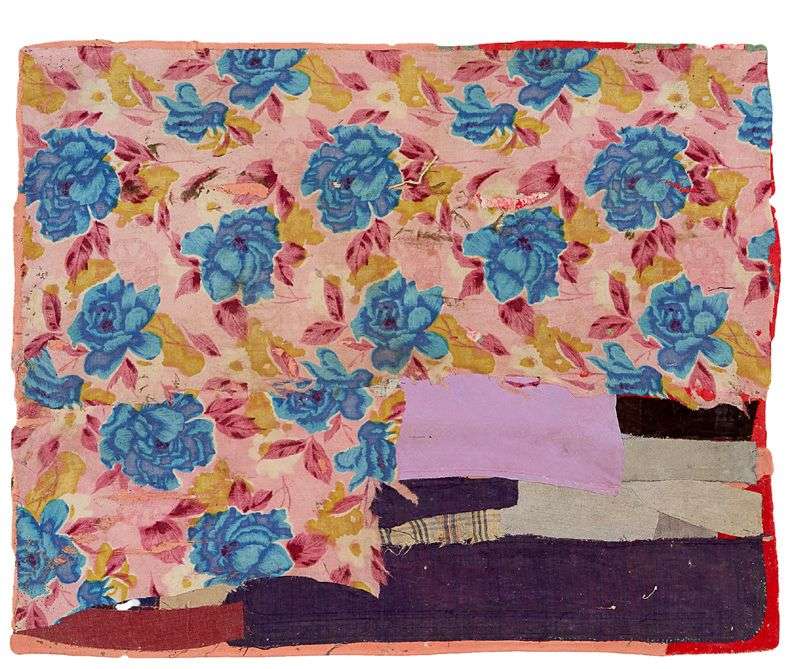
Collage of fabric fragments, China, circa 1950-1970
Unique piece
60 x 50 cm - 23 5/8 x 19 11/16 in.
PROVENANCE
Purchased from Francois Dautresme in the 1990s, kept in the family ever since
Ge Ba
Lots 106 to 118 are reproduced in this catalog
Lots 119 to 181 can be viewed on aguttes.com
Ge Ba, literally "fabric collages", are handcrafted compositions created from textile scraps or
garments, patiently assembled with rice glue.
Originally intended for purely utilitarian uses - reinforcing soles, lining garments or supporting embroidery - these pieces from everyday peasant life are now revealed in all their plastic power, striking in their formal intuition and chromatic harmony.
These fabrics reflect the emblematic colors of daily life in China: indigo, brown and black, worn by the common people| rigorously sown floral motifs, exclusively intended for children| block-printed hemp| silk with a "sharkskin" appearance| or fragments of calligraphy rescued from the Cultural Revolution.
It is striking to note that women workers in southwest China have transcended their traditional patchwork skills to create, through bold compositions, works with the same aesthetic qualities as those of Western avant-garde artists of the same period.
Entirely conceived without any conscious aesthetic purpose, the Ge Ba works fascinate by their visual proximity to the great names of Western abstraction: the material evokes Nicolas de Staël, the flat tints recall Serge Poliakoff, while the visual rhythms evoke the dreamlike compositions of Paul Klee. Mostly produced by women workers in rural China in the 1950s, they bear witness to an intuitive, anonymous creation rooted in collective memory and recycling.
The present collection brings together 76 Ge Ba, all acquired by the collector's father from François Dautresme (1925 - 2002), founder of the CFOC (Compagnie Française de l'Orient et de la Chine) and a pioneering figure with a passion for Chinese folk art. A great aesthete and tireless collector, Dautresme was one of the first to reveal to Western audiences the richness of these everyday objects, exhibiting them not as ethnographic artifacts, but as genuine works of art.
With estimates ranging from €500 to €800, these Ge Ba are a remarkable selection of a little-known part of China's textile heritage, on the borderline between art brut, ethnography and modern pictorial art. Silent witnesses to an art without an artist, these fragments of fabric, humbly sewn or glued together, become compositions of profound visual poetry under our contemporary gaze.
Ge Ba, literally meaning "fabric collages", are handcrafted compositions made from scraps of textiles or worn clothing, patiently assembled using rice glue. Originally intended for strictly utilitarian purposes - such as reinforcing soles, lining garments, or serving as a base for embroidery - these humble creations from rural daily life now reveal their full visual power, marked by formal intuition and chromatic harmony.
These fabrics reflect the emblematic colors of everyday life in China: indigo, brown, and black, traditionally worn by the working class| meticulously patterned floral prints reserved exclusively for children| block-printed hemp| silk with a "sharkskin" texture| and even fragments of calligraphy that survived the Cultural Revolution. It is striking to observe how female workers from southwestern China were able to transcend the traditional craft of patchwork, creating bold compositions that share the same aesthetic qualities as the works of Western avant-garde artists from the same era.
Created without any conscious aesthetic intent, the Ge Ba fascinate with their visual proximity to major names in Western abstraction: their materiality evokes Nicolas de Staël, their color fields recall Serge Poliakoff, and their visual rhythms echo the dreamlike compositions of Paul Klee. Mostly made by rural women in the 1950s, they reflect an intuitive, anonymous form of creation, rooted in collective memory and resourcefulness.
The present collection brings together 76 Ge Ba, all acquired by the collector's father from François Dautresme (1925 - 2002), founder of the CFOC (Compagnie Française de l'Orient et de la Chine), a pioneering and passionate figure of Chinese folk art.
Collage of fabric fragments, China, circa 1950-1970
Unique piece
60 x 50 cm - 23 5/8 x 19 11/16 in.
PROVENANCE
Purchased from Francois Dautresme in the 1990s, kept in the family ever since
Ge Ba
Lots 106 to 118 are reproduced in this catalog
Lots 119 to 181 can be viewed on aguttes.com
Ge Ba, literally "fabric collages", are handcrafted compositions created from textile scraps or
garments, patiently assembled with rice glue.
Originally intended for purely utilitarian uses - reinforcing soles, lining garments or supporting embroidery - these pieces from everyday peasant life are now revealed in all their plastic power, striking in their formal intuition and chromatic harmony.
These fabrics reflect the emblematic colors of daily life in China: indigo, brown and black, worn by the common people| rigorously sown floral motifs, exclusively intended for children| block-printed hemp| silk with a "sharkskin" appearance| or fragments of calligraphy rescued from the Cultural Revolution.
It is striking to note that women workers in southwest China have transcended their traditional patchwork skills to create, through bold compositions, works with the same aesthetic qualities as those of Western avant-garde artists of the same period.
Entirely conceived without any conscious aesthetic purpose, the Ge Ba works fascinate by their visual proximity to the great names of Western abstraction: the material evokes Nicolas de Staël, the flat tints recall Serge Poliakoff, while the visual rhythms evoke the dreamlike compositions of Paul Klee. Mostly produced by women workers in rural China in the 1950s, they bear witness to an intuitive, anonymous creation rooted in collective memory and recycling.
The present collection brings together 76 Ge Ba, all acquired by the collector's father from François Dautresme (1925 - 2002), founder of the CFOC (Compagnie Française de l'Orient et de la Chine) and a pioneering figure with a passion for Chinese folk art. A great aesthete and tireless collector, Dautresme was one of the first to reveal to Western audiences the richness of these everyday objects, exhibiting them not as ethnographic artifacts, but as genuine works of art.
With estimates ranging from €500 to €800, these Ge Ba are a remarkable selection of a little-known part of China's textile heritage, on the borderline between art brut, ethnography and modern pictorial art. Silent witnesses to an art without an artist, these fragments of fabric, humbly sewn or glued together, become compositions of profound visual poetry under our contemporary gaze.
Ge Ba, literally meaning "fabric collages", are handcrafted compositions made from scraps of textiles or worn clothing, patiently assembled using rice glue. Originally intended for strictly utilitarian purposes - such as reinforcing soles, lining garments, or serving as a base for embroidery - these humble creations from rural daily life now reveal their full visual power, marked by formal intuition and chromatic harmony.
These fabrics reflect the emblematic colors of everyday life in China: indigo, brown, and black, traditionally worn by the working class| meticulously patterned floral prints reserved exclusively for children| block-printed hemp| silk with a "sharkskin" texture| and even fragments of calligraphy that survived the Cultural Revolution. It is striking to observe how female workers from southwestern China were able to transcend the traditional craft of patchwork, creating bold compositions that share the same aesthetic qualities as the works of Western avant-garde artists from the same era.
Created without any conscious aesthetic intent, the Ge Ba fascinate with their visual proximity to major names in Western abstraction: their materiality evokes Nicolas de Staël, their color fields recall Serge Poliakoff, and their visual rhythms echo the dreamlike compositions of Paul Klee. Mostly made by rural women in the 1950s, they reflect an intuitive, anonymous form of creation, rooted in collective memory and resourcefulness.
The present collection brings together 76 Ge Ba, all acquired by the collector's father from François Dautresme (1925 - 2002), founder of the CFOC (Compagnie Française de l'Orient et de la Chine), a pioneering and passionate figure of Chinese folk art.