
&w=3840&q=75)
&w=3840&q=75)
&w=3840&q=75)
&w=3840&q=75)
&w=3840&q=75)
&w=3840&q=75)
&w=3840&q=75)
&w=3840&q=75)


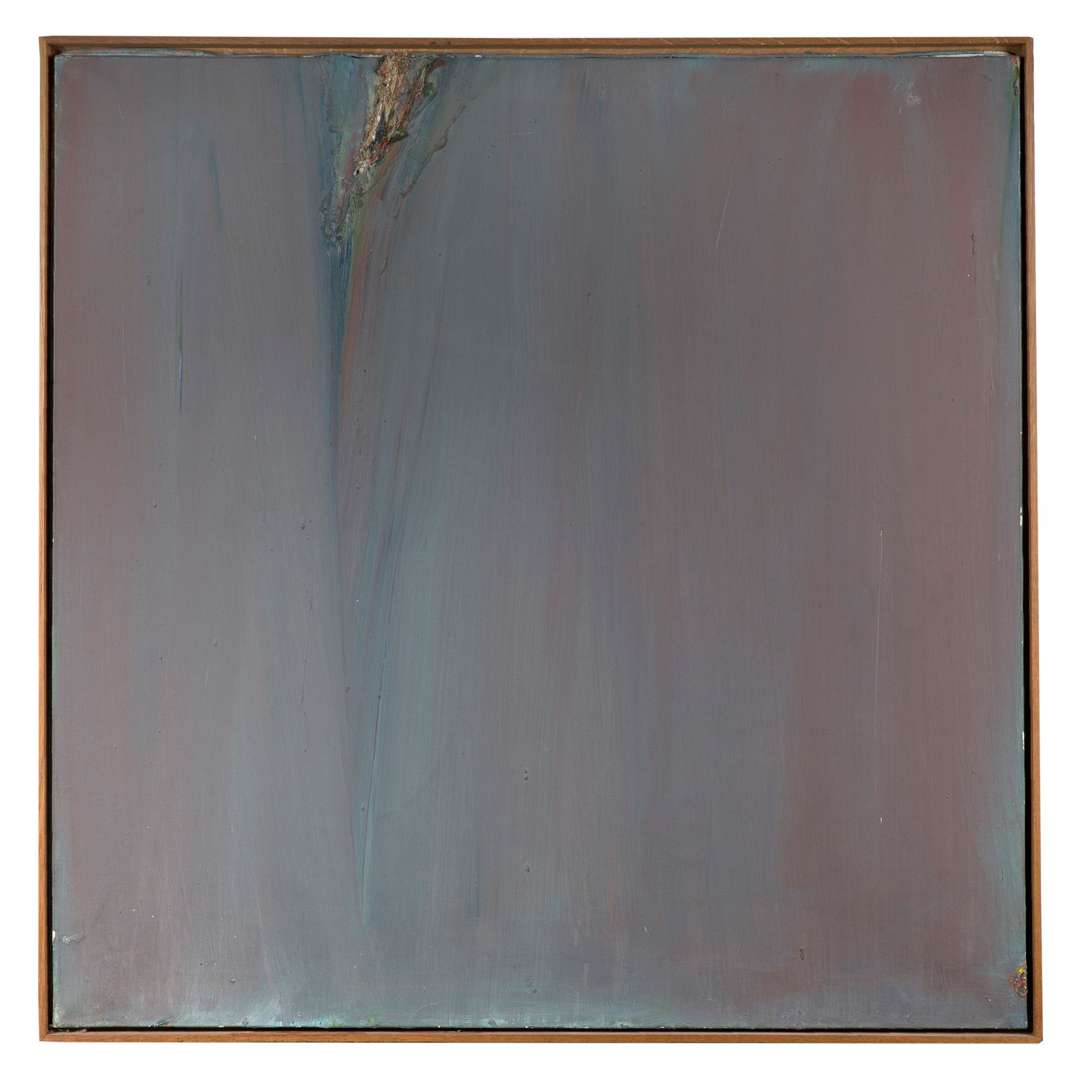
OLIVIER DEBRÉ (1920-1999)
Touraine Sombre, 1982
Oil on canvas, signed, titled and dated on the back
100 x 100 cm - 39 23/64 x 39 23/64 in.
Oil on canvas, signed, titled and dated on the reverse
A certificate of authenticity may be requested from the Comité Debré at the buyer's expense.
PROVENANCE
Donated by the artist in the 1980s to the current owner, and kept ever since
One of the leading figures of lyrical abstraction, Olivier Debré is a painter who cannot be ignored. Grandson of Édouard Debat-Ponsan, he was profoundly affected by the discovery of Picasso's Guernica in 1937, an artistic shock that led him away from figurative painting and towards abstraction. After graduating from the École des Beaux-Arts in Paris, he abandoned a career in architecture to devote himself to painting, developing a unique plastic language in which the sign becomes a vector of emotion. His canvases, vast expanses of color with subtle nuances, convey an impression rather than a representation. His art, often compared to that of Rothko, oscillates between powerful gesture and delicate chromatic variations, creating emotional landscapes where space and light merge. His palette, dominated by cool tones of blue and gray, intensifies the depth and serenity of his compositions. Debré doesn't paint a subject, but a felt moment,
a vibration, transporting the viewer into immersive contemplation.
Among the major figures of Lyrical Abstraction, Olivier Debré stands out as a pivotal painter. The grandson of Édouard Debat-Ponsan, he was profoundly influenced by his discovery of Picasso's Guernica in 1937 an artistic shock that led him away from figuration toward abstraction. A graduate of the École des beaux-arts in Paris, he abandoned a career in architecture to devote himself to painting, developing a unique visual language where the sign becomes a vector of emotion. His canvases, vast expanses of color with subtle nuances, convey an impression rather than a representation. Often
compared to Rothko, his art oscillates between powerful gestures and delicate chromatic variations, creating landscapes of emotion where space and light merge. His palette, dominated by cool shades of blue and gray, enhances the depth and serenity of his compositions.
Debré does not paint a subject, but rather a felt moment, a vibration, drawing the viewer into an immersive contemplation.
Touraine Sombre, 1982
Oil on canvas, signed, titled and dated on the back
100 x 100 cm - 39 23/64 x 39 23/64 in.
Oil on canvas, signed, titled and dated on the reverse
A certificate of authenticity may be requested from the Comité Debré at the buyer's expense.
PROVENANCE
Donated by the artist in the 1980s to the current owner, and kept ever since
One of the leading figures of lyrical abstraction, Olivier Debré is a painter who cannot be ignored. Grandson of Édouard Debat-Ponsan, he was profoundly affected by the discovery of Picasso's Guernica in 1937, an artistic shock that led him away from figurative painting and towards abstraction. After graduating from the École des Beaux-Arts in Paris, he abandoned a career in architecture to devote himself to painting, developing a unique plastic language in which the sign becomes a vector of emotion. His canvases, vast expanses of color with subtle nuances, convey an impression rather than a representation. His art, often compared to that of Rothko, oscillates between powerful gesture and delicate chromatic variations, creating emotional landscapes where space and light merge. His palette, dominated by cool tones of blue and gray, intensifies the depth and serenity of his compositions. Debré doesn't paint a subject, but a felt moment,
a vibration, transporting the viewer into immersive contemplation.
Among the major figures of Lyrical Abstraction, Olivier Debré stands out as a pivotal painter. The grandson of Édouard Debat-Ponsan, he was profoundly influenced by his discovery of Picasso's Guernica in 1937 an artistic shock that led him away from figuration toward abstraction. A graduate of the École des beaux-arts in Paris, he abandoned a career in architecture to devote himself to painting, developing a unique visual language where the sign becomes a vector of emotion. His canvases, vast expanses of color with subtle nuances, convey an impression rather than a representation. Often
compared to Rothko, his art oscillates between powerful gestures and delicate chromatic variations, creating landscapes of emotion where space and light merge. His palette, dominated by cool shades of blue and gray, enhances the depth and serenity of his compositions.
Debré does not paint a subject, but rather a felt moment, a vibration, drawing the viewer into an immersive contemplation.