
&w=3840&q=75)
&w=3840&q=75)
&w=3840&q=75)
&w=3840&q=75)
&w=3840&q=75)
&w=3840&q=75)
&w=3840&q=75)
&w=3840&q=75)

81
JEAN MESSAGIER (1920-1999)
The item was sold for 17 056 €
Fees include commission and taxes.
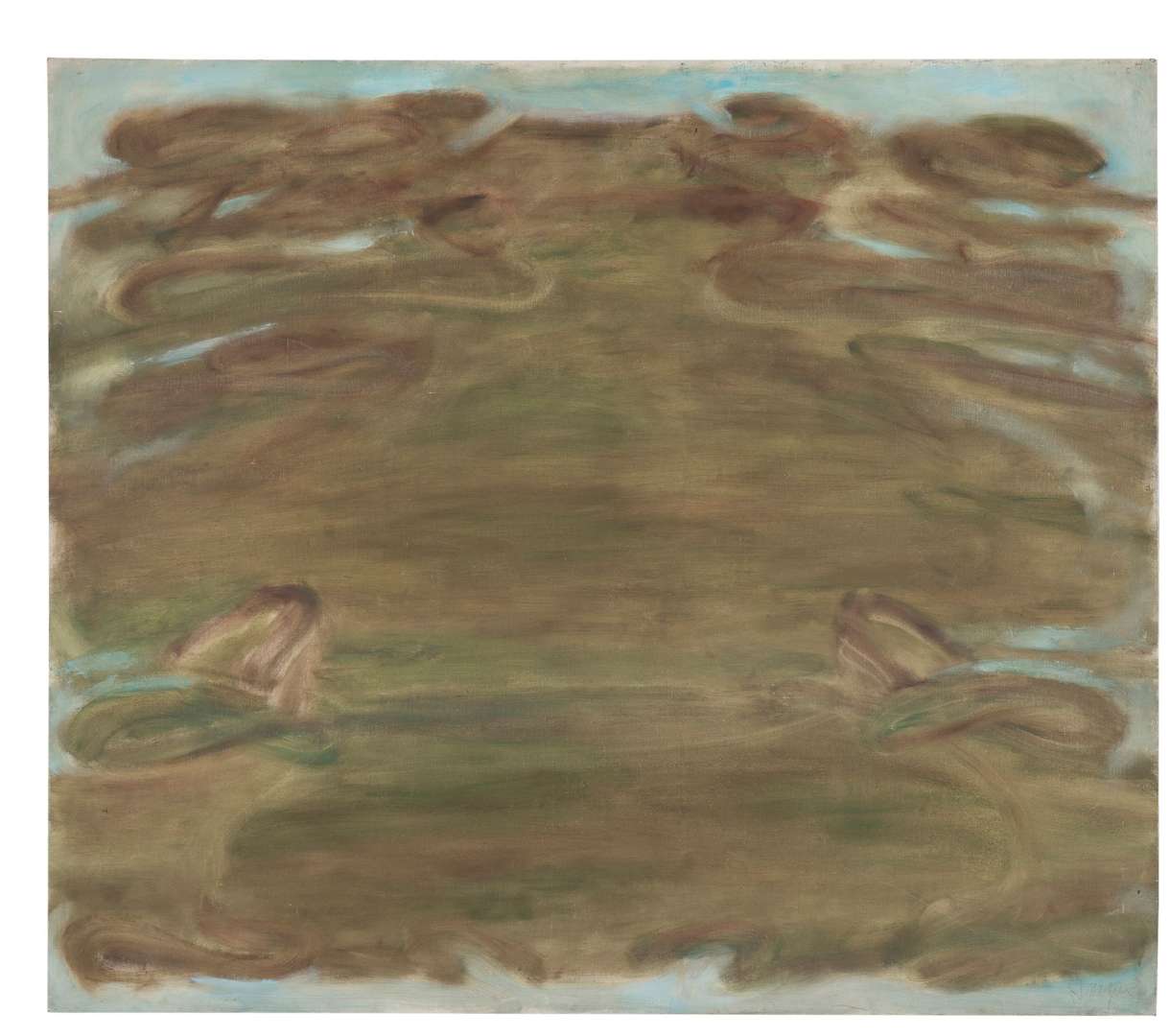
JEAN MESSAGIER (1920-1999)
Partage d'Avril, 1958
Oil on canvas, signed, titled and dated on the stretcher
190 x 221 cm - 74 3/4 x 87 in.
Oil on canvas, signed, titled and dated on the stretcher
PROVENANCE
Private collection, Paris
We are pleased to present a unique selection of works by Jean Messagier, an undisputed master of lyrical abstraction, whose work has profoundly marked the history of contemporary painting. His canvases captivate the eye and nourish the imagination, with a raw energy that seems to break free with each burst of color.
Born in 1920 in Paris, Jean Messagier grew up in an era of upheaval and the quest for artistic renewal. His career began in the 1940s, after training at the École Nationale Supérieure des Arts Décoratifs in Paris. However, it was in the aftermath of the Second World War that he really came into his own, committing himself fully to lyrical abstraction. Following in the footsteps of contemporaries such as Georges Mathieu
or Hans Hartung, he freed himself from academic rules in favor of impulsive painting, charged with spontaneity and emotion.
Far from merely representing, his painting seeks to express what escapes the rational forms of the visible. He is deeply influenced by his travels and his reflections on light, matter and color. This quest for meaning translates into a totally liberated abstraction, in which the artist uses color and matter to "write" states of mind, almost mystical atmospheres, through exalted gestures.
Spontaneous, living abstract writing Through a vibrant palette of colors, Messagier seeks to unleash boundless energy, transforming the canvas into a living space, a veritable field of experimentation. Like Pierre
Soulages, Messagier explores the role of light, but instead of modeling it through layers of black like his elder, he releases it in bursts of color, lending his works an almost magical luminosity. He creates textures and thicknesses of paint that allow light to seep through the layers of color, creating plays of light and shadow that bring his canvases to life.
Spending many months in the countryside during his youth, Messagier immersed himself in the landscapes and atmospheres
that nourished his work. He has often said that his first artistic memories came from observing the natural elements: the light on the water, the wind blowing through the trees, or the play of light and shadow on the hills.
These sensory impressions profoundly influenced his approach to painting, enabling him to capture the fleeting beauty
natural elements and transcribe them into abstract works.
We are delighted to present a unique selection of works by Jean Messagier, an undisputed master of lyrical abstraction whose oeuvre has left a lasting mark on contemporary painting. His canvases captivate the eye and fuel the imagination, radiating a raw energy that seems to burst from each stroke of color. An Artist Between Tradition and Innovation
Born in 1920 in Paris, Jean Messagier grew up in a time of upheaval and artistic renewal. His career began in the 1940s after training at the École nationale supérieure des arts décoratifs in Paris. However, it was in the post-war period that he truly made his mark, fully embracing lyrical abstraction. Like his contemporaries Georges Mathieu and Hans Hartung, he broke away from academic constraints, favoring an impulsive, emotionally charged form of painting driven by spontaneity.
Far from mere representation, his work seeks to express what eludes rational forms of the visible. Deeply influenced by his travels and reflections on light, matter, and color, Messagier pursued a liberated form of abstraction. His paintings translate inner states and almost mystical atmospheres through an exuberant, gestural approach where color and texture become a language of emotion. A Spontaneous, Living Abstract Language Through a vibrant palette, Messagier unleashes an overflowing energy, transforming the canvas into a dynamic space of experimentation. Like Pierre Soulages, he explores the role of light but instead of sculpting it through layers of black, he releases it in bursts of color, infusing his works with an almost magical luminosity.
The textures and layers of paint allow light to weave through, creating striking plays of shadow and brilliance that bring his
compositions to life. Having spent much of his youth in the countryside, Messagier was profoundly inspired by landscapes and natural atmospheres. He often recalled that his earliest artistic memories stemmed from observing the elem
Partage d'Avril, 1958
Oil on canvas, signed, titled and dated on the stretcher
190 x 221 cm - 74 3/4 x 87 in.
Oil on canvas, signed, titled and dated on the stretcher
PROVENANCE
Private collection, Paris
We are pleased to present a unique selection of works by Jean Messagier, an undisputed master of lyrical abstraction, whose work has profoundly marked the history of contemporary painting. His canvases captivate the eye and nourish the imagination, with a raw energy that seems to break free with each burst of color.
Born in 1920 in Paris, Jean Messagier grew up in an era of upheaval and the quest for artistic renewal. His career began in the 1940s, after training at the École Nationale Supérieure des Arts Décoratifs in Paris. However, it was in the aftermath of the Second World War that he really came into his own, committing himself fully to lyrical abstraction. Following in the footsteps of contemporaries such as Georges Mathieu
or Hans Hartung, he freed himself from academic rules in favor of impulsive painting, charged with spontaneity and emotion.
Far from merely representing, his painting seeks to express what escapes the rational forms of the visible. He is deeply influenced by his travels and his reflections on light, matter and color. This quest for meaning translates into a totally liberated abstraction, in which the artist uses color and matter to "write" states of mind, almost mystical atmospheres, through exalted gestures.
Spontaneous, living abstract writing Through a vibrant palette of colors, Messagier seeks to unleash boundless energy, transforming the canvas into a living space, a veritable field of experimentation. Like Pierre
Soulages, Messagier explores the role of light, but instead of modeling it through layers of black like his elder, he releases it in bursts of color, lending his works an almost magical luminosity. He creates textures and thicknesses of paint that allow light to seep through the layers of color, creating plays of light and shadow that bring his canvases to life.
Spending many months in the countryside during his youth, Messagier immersed himself in the landscapes and atmospheres
that nourished his work. He has often said that his first artistic memories came from observing the natural elements: the light on the water, the wind blowing through the trees, or the play of light and shadow on the hills.
These sensory impressions profoundly influenced his approach to painting, enabling him to capture the fleeting beauty
natural elements and transcribe them into abstract works.
We are delighted to present a unique selection of works by Jean Messagier, an undisputed master of lyrical abstraction whose oeuvre has left a lasting mark on contemporary painting. His canvases captivate the eye and fuel the imagination, radiating a raw energy that seems to burst from each stroke of color. An Artist Between Tradition and Innovation
Born in 1920 in Paris, Jean Messagier grew up in a time of upheaval and artistic renewal. His career began in the 1940s after training at the École nationale supérieure des arts décoratifs in Paris. However, it was in the post-war period that he truly made his mark, fully embracing lyrical abstraction. Like his contemporaries Georges Mathieu and Hans Hartung, he broke away from academic constraints, favoring an impulsive, emotionally charged form of painting driven by spontaneity.
Far from mere representation, his work seeks to express what eludes rational forms of the visible. Deeply influenced by his travels and reflections on light, matter, and color, Messagier pursued a liberated form of abstraction. His paintings translate inner states and almost mystical atmospheres through an exuberant, gestural approach where color and texture become a language of emotion. A Spontaneous, Living Abstract Language Through a vibrant palette, Messagier unleashes an overflowing energy, transforming the canvas into a dynamic space of experimentation. Like Pierre Soulages, he explores the role of light but instead of sculpting it through layers of black, he releases it in bursts of color, infusing his works with an almost magical luminosity.
The textures and layers of paint allow light to weave through, creating striking plays of shadow and brilliance that bring his
compositions to life. Having spent much of his youth in the countryside, Messagier was profoundly inspired by landscapes and natural atmospheres. He often recalled that his earliest artistic memories stemmed from observing the elem