
&w=3840&q=75)
&w=3840&q=75)
&w=3840&q=75)
&w=3840&q=75)
&w=3840&q=75)
&w=3840&q=75)
&w=3840&q=75)
&w=3840&q=75)

55
MARIA ELENA VIEIRA DA SILVA (1908 - 1992)
The item was sold for 931 €
Fees include commission and taxes.
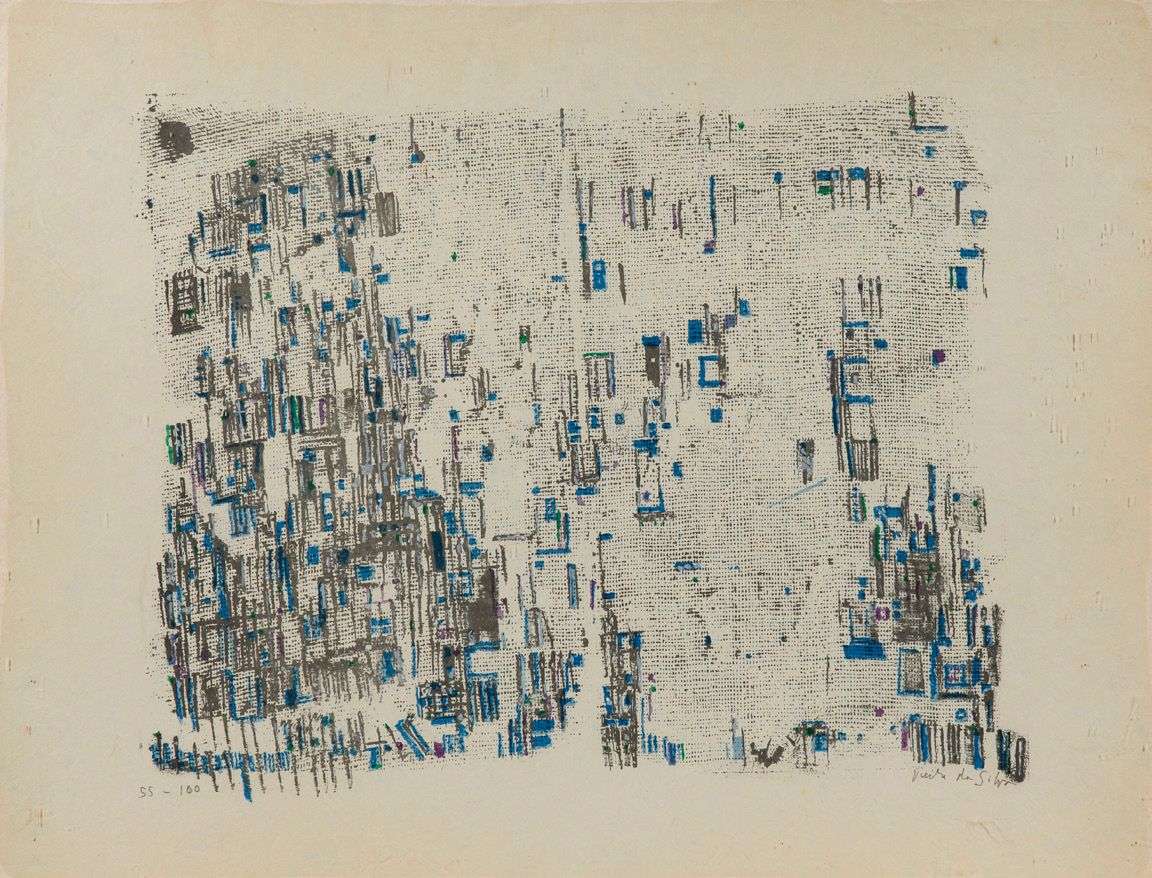
MARIA ELENA VIEIRA DA SILVA (1908 - 1992)
Variations on a theme, 1975
Lithograph in 10 colors on Japon nacré signed in pencil lower right and numbered 55-100 lower left
50 x 65.5 cm - 19 11/16 x 25 9/16 in.
Lithograph in 10 colors on Japan paper, signed in pencil lower right and numbered 55-100 lower left
PROVENANCE
Collection of the couple Simone and Pierre Ursault, then passed down through the family
BIBLIOGRAPHY
Vieira da Silva, Catalogue raisonné, Guy Weelen, Jean-François Jaeger, éditions Skira, reproduced under number 2882 on page 574
Highlighting women's artistic creation
The history of art has long relegated women to the background, often confining them to the role of muses rather than creators.
Yet some pioneering women have managed to make their mark despite the obstacles. Artemisia Gentileschi, a protégé of European sovereigns in the 17th century, and Berthe Morisot, a major figure in Impressionism, paved the way, but it took centuries for women artists to achieve real recognition on the world art scene.
The debate surrounding their visibility intensified with Virginia Woolf's seminal essay, A Room of One's Own (1929), which explored the barriers preventing women from flourishing in artistic creation. This questioning has continued to grow, particularly with the emergence of feminist art at the end of the 20th century. In 1985, the activist collective Guerrilla Girls challenged the public with a provocative question: "Do women have to be naked to enter the Metropolitan Museum?" - thus denouncing inequalities in the representation of women artists in museum collections.
Many women artists, who have long remained in the shadow of their male counterparts, are now seeing their work
reappraised. Anna-Eva Bergman, Maria Helena Vieira da Silva and Joan Mitchell, for example, have been slow to gain recognition for their work, overshadowed by their famous counterparts. Fortunately, today's art market is undergoing a profound transformation: women artists are making a name for themselves.
In 2023, record sales were recorded for Joan Mitchell and Louise Bourgeois, while major figures such as Marlene Dumas
such as Marlene Dumas and Cecily Brown continue to gain visibility. Leading institutions are also participating in this dynamic: the Centre Pompidou, with its Elles exhibition, marked a turning point in the spotlight on female creators.
In response to this trend, Aguttes is committed to promoting women's creativity, and has devoted a Women in Art chapter to the artists who have shaped and enriched the history of art. This selection features emblematic figures such as Etel Adnan, two of whose works we will be presenting. Renowned for her abstract landscapes inspired by the Mediterranean, she is now collected by the Whitney Museum and the Tate Modern, and is attracting growing interest on the international market. Another key figure, Maria Elena Vieira da Silva, one of the great exponents of lyrical abstraction, will also be honored with two major works. Her labyrinthine, immersive compositions, where lines and perspectives mingle, captivate with their strength and poetry. His work, regularly acclaimed by record-breaking bids, testifies to his importance in the history of modern art.
This sale offers a unique opportunity to celebrate the diversity and richness of women's art across the ages. Whether you're a collector or a seller, Aguttes can help you make the most of these works that continue to make their mark on the art market.
Showcasing Female Artistic Creation
The history of art has long relegated women to the background, often confining them to the role of muse rather than creator. However, some pioneers managed to break through despite the obstacles. Artemisia Gentileschi, a 17th-century artist patronized by European sovereigns, and Berthe Morisot, a key figure of Impressionism, paved the way, but it took centuries for women artists to gain true recognition on the global art scene. The debate over their visibility gained momentum with Virginia Woolf's seminal essay, A Room of One's Own (1929), which explored the barriers preventing women from thriving in artistic creation. This discussion has only grown over time, particularly with the rise of
feminist art in the late 20th century. In 1985, the activist collective Guerrilla Girls challenged the public with a provocative question: "Do women have to be naked to get into the Met Museum?"- highlighting the stark inequality in the representation of female artists in museum collections.
Many women who long remained in the shadow of their
Variations on a theme, 1975
Lithograph in 10 colors on Japon nacré signed in pencil lower right and numbered 55-100 lower left
50 x 65.5 cm - 19 11/16 x 25 9/16 in.
Lithograph in 10 colors on Japan paper, signed in pencil lower right and numbered 55-100 lower left
PROVENANCE
Collection of the couple Simone and Pierre Ursault, then passed down through the family
BIBLIOGRAPHY
Vieira da Silva, Catalogue raisonné, Guy Weelen, Jean-François Jaeger, éditions Skira, reproduced under number 2882 on page 574
Highlighting women's artistic creation
The history of art has long relegated women to the background, often confining them to the role of muses rather than creators.
Yet some pioneering women have managed to make their mark despite the obstacles. Artemisia Gentileschi, a protégé of European sovereigns in the 17th century, and Berthe Morisot, a major figure in Impressionism, paved the way, but it took centuries for women artists to achieve real recognition on the world art scene.
The debate surrounding their visibility intensified with Virginia Woolf's seminal essay, A Room of One's Own (1929), which explored the barriers preventing women from flourishing in artistic creation. This questioning has continued to grow, particularly with the emergence of feminist art at the end of the 20th century. In 1985, the activist collective Guerrilla Girls challenged the public with a provocative question: "Do women have to be naked to enter the Metropolitan Museum?" - thus denouncing inequalities in the representation of women artists in museum collections.
Many women artists, who have long remained in the shadow of their male counterparts, are now seeing their work
reappraised. Anna-Eva Bergman, Maria Helena Vieira da Silva and Joan Mitchell, for example, have been slow to gain recognition for their work, overshadowed by their famous counterparts. Fortunately, today's art market is undergoing a profound transformation: women artists are making a name for themselves.
In 2023, record sales were recorded for Joan Mitchell and Louise Bourgeois, while major figures such as Marlene Dumas
such as Marlene Dumas and Cecily Brown continue to gain visibility. Leading institutions are also participating in this dynamic: the Centre Pompidou, with its Elles exhibition, marked a turning point in the spotlight on female creators.
In response to this trend, Aguttes is committed to promoting women's creativity, and has devoted a Women in Art chapter to the artists who have shaped and enriched the history of art. This selection features emblematic figures such as Etel Adnan, two of whose works we will be presenting. Renowned for her abstract landscapes inspired by the Mediterranean, she is now collected by the Whitney Museum and the Tate Modern, and is attracting growing interest on the international market. Another key figure, Maria Elena Vieira da Silva, one of the great exponents of lyrical abstraction, will also be honored with two major works. Her labyrinthine, immersive compositions, where lines and perspectives mingle, captivate with their strength and poetry. His work, regularly acclaimed by record-breaking bids, testifies to his importance in the history of modern art.
This sale offers a unique opportunity to celebrate the diversity and richness of women's art across the ages. Whether you're a collector or a seller, Aguttes can help you make the most of these works that continue to make their mark on the art market.
Showcasing Female Artistic Creation
The history of art has long relegated women to the background, often confining them to the role of muse rather than creator. However, some pioneers managed to break through despite the obstacles. Artemisia Gentileschi, a 17th-century artist patronized by European sovereigns, and Berthe Morisot, a key figure of Impressionism, paved the way, but it took centuries for women artists to gain true recognition on the global art scene. The debate over their visibility gained momentum with Virginia Woolf's seminal essay, A Room of One's Own (1929), which explored the barriers preventing women from thriving in artistic creation. This discussion has only grown over time, particularly with the rise of
feminist art in the late 20th century. In 1985, the activist collective Guerrilla Girls challenged the public with a provocative question: "Do women have to be naked to get into the Met Museum?"- highlighting the stark inequality in the representation of female artists in museum collections.
Many women who long remained in the shadow of their