
&w=3840&q=75)
&w=3840&q=75)
&w=3840&q=75)
&w=3840&q=75)
&w=3840&q=75)
&w=3840&q=75)
&w=3840&q=75)
&w=3840&q=75)


14
SAYED HAIDER RAZA (1922 - 2016)
The item was sold for 74 784 €
Fees include commission and taxes.
SAYED HAIDER RAZA (1922 - 2016)
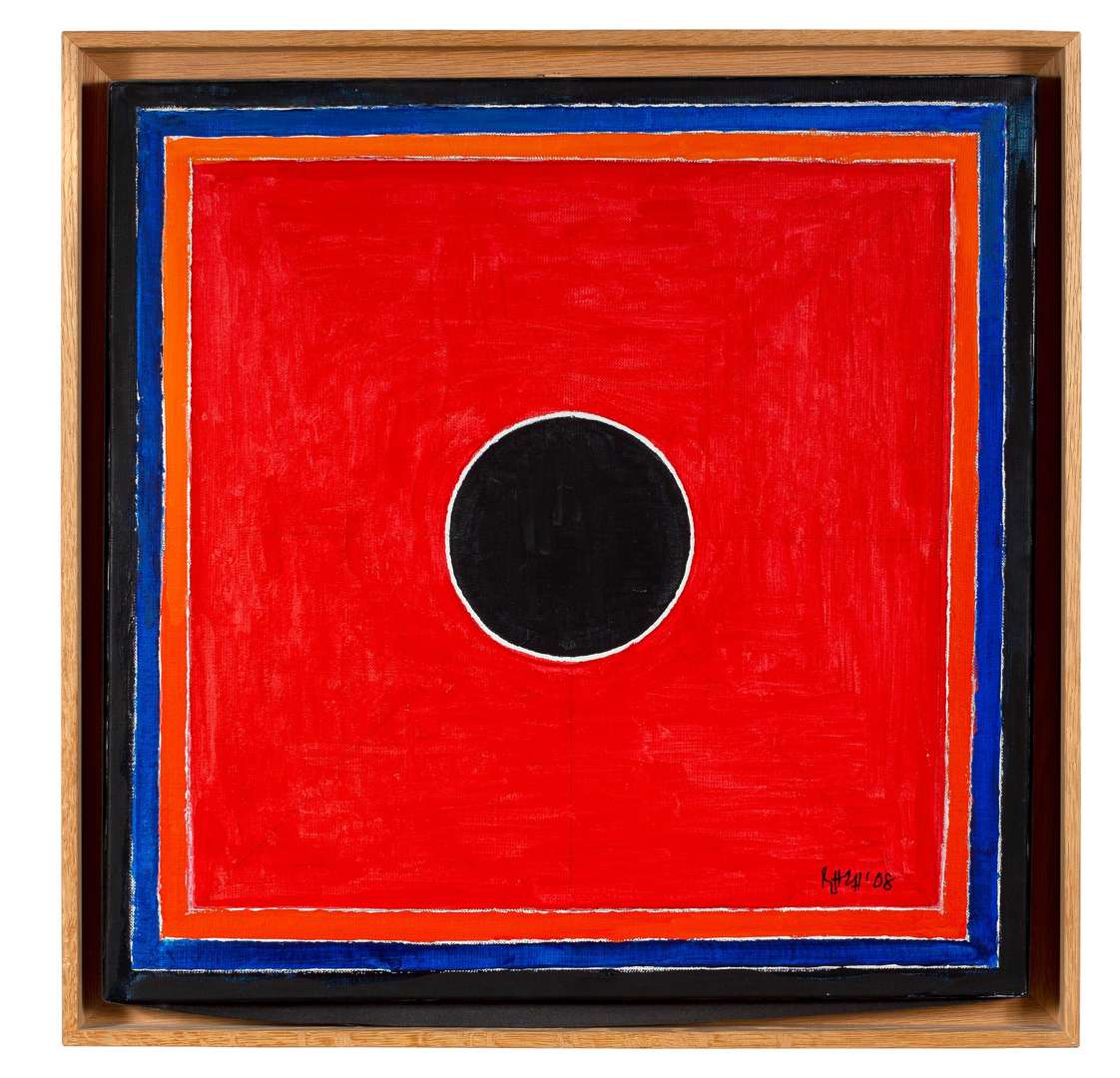
Prem-Bindu, 2008
Acrylic on canvas, signed and dated lower right.
Titled, dated and countersigned on the back.
50 x 50 cm - 19 3/4 x 19 3/4 in.
Acrylic on canvas, signed and dated lower right, titled, dated and signed again on the reverse
PROVENANCE
Sale, Boisgirard, Paris, June 24, 2009, lot 72
Acquired at this sale by the current owner
Our warmest thanks to the Raza Foundation, New Delhi, for confirming the inclusion of this work in Volume IV of Anne Macklin's catalog raisonné of the artist.
A pioneer of contemporary Indian art who studied and worked in France, where he explored many of the major influences
A pioneer of contemporary Indian art who studied and worked in France, where he explored many of the major influences of the 50s, Raza has left a remarkable pictorial legacy| he is now a benchmark on the art scene, bringing the colors, myths and singular forms, the shocks and disruptions of his native India to which he will offer a symphony of iconic paintings, expressing the soul of Rajasthan as much as the symbols of Hinduism that no one better than he was able to express and make accessible to us. The recognition he now enjoys, as well as the international exhibitions that have consecrated him, make him unquestionably one of the masters of the entry of Indian genius into the world of modern art.
Sayed Haider RAZA is a modern Indian painter, born in 1922 in Barbaria in the state of Madhya Pradesh (Middle Country).
spent his childhood in the valley of a sacred river, the Narmada in Mandala.
Raza attended the Nagpur School of Fine Arts before continuing his training at the Sir J.J School of Art in Mumbai (Bombay). His meeting with Henri Cartier-Bresson during a trip was to prove decisive.
In 1947-1948, India's independence gave him exceptional energy. As a founding member of the Progressive
of the Progressive Artist's Group, which brought together the leading local artists after India's independence, and exhibited his work there on several occasions. With his group, he took part in the aesthetic debates of his time and developed a modernist language.
He gradually moved away from figurative painting towards more abstract compositions. After studying at the Alliance Française in Mumbai (Bombay) for two years, he obtained a grant from the French government to study in France and joined the École de Paris movement. The works of Nicolas de Staël and his knife painting technique were to have a major influence on his work in the 1950s. Bernard Buffet, Marc Rothko and Zao Wou-Ki also inspired him. For three years, he studied at the Ecole Nationale des Beaux-Arts in Paris, where he was influenced by German Expressionist painting, the Americans, Van Gogh, Gauguin and Cézanne. Their use of color exerted a remarkable influence on his painting and his eye.
In 1956, he was awarded the Prix de la Critique. He took part in numerous solo and group exhibitions in France and abroad.
Venice, São Paolo, Menton and the New Dehli Triennial.
In 1959, he married French artist Janine Mongillat, who gave him considerable support. He returned to India every year from 1984 onwards, when his work began to take a more spiritual turn. In the 1970s, he returned to the sources of Indian aesthetic philosophy. From 1947 to 2004, he exhibited his work in over fifty solo shows in India, Europe and America, and received numerous awards. Retrospectives of his work have been held in New Delhi, Mumbai (Bombay), Bhopal and Cannes.
In 1981, he was awarded the honorary title of Padma Shri by the President of the Republic of India. In 2022, he was promoted to the rank of Officer in the Order of Arts and Letters.
He dedicated the rest of his life to the restoration of the Château-Musée Lascaris in Gorbio (Alpes-Maritimes), which he and his wife transformed into an art center.
into an art center. He died in 2016. To pay tribute to him, in 2023 the Centre Pompidou organized the first monographic presentation devoted to his work, exhibiting some one hundred of his works.
The influence of mandalas: Born in India and developed within Jainism, Hinduism and Buddhism, mandalas had a major influence on Raza's work. The concentric circles, interlocking triangles, squares and energy points on his canvases derive directly from them. Mandalas are a representation of the cosmos and divine figures arranged according to a precise code. A sacred surface with a magical function, the mandala serves as a support for meditation. Its value is universal, and tends to establish relationships between the human body and the cosmos. Contemplation
Prem-Bindu, 2008
Acrylic on canvas, signed and dated lower right.
Titled, dated and countersigned on the back.
50 x 50 cm - 19 3/4 x 19 3/4 in.
Acrylic on canvas, signed and dated lower right, titled, dated and signed again on the reverse
PROVENANCE
Sale, Boisgirard, Paris, June 24, 2009, lot 72
Acquired at this sale by the current owner
Our warmest thanks to the Raza Foundation, New Delhi, for confirming the inclusion of this work in Volume IV of Anne Macklin's catalog raisonné of the artist.
A pioneer of contemporary Indian art who studied and worked in France, where he explored many of the major influences
A pioneer of contemporary Indian art who studied and worked in France, where he explored many of the major influences of the 50s, Raza has left a remarkable pictorial legacy| he is now a benchmark on the art scene, bringing the colors, myths and singular forms, the shocks and disruptions of his native India to which he will offer a symphony of iconic paintings, expressing the soul of Rajasthan as much as the symbols of Hinduism that no one better than he was able to express and make accessible to us. The recognition he now enjoys, as well as the international exhibitions that have consecrated him, make him unquestionably one of the masters of the entry of Indian genius into the world of modern art.
Sayed Haider RAZA is a modern Indian painter, born in 1922 in Barbaria in the state of Madhya Pradesh (Middle Country).
spent his childhood in the valley of a sacred river, the Narmada in Mandala.
Raza attended the Nagpur School of Fine Arts before continuing his training at the Sir J.J School of Art in Mumbai (Bombay). His meeting with Henri Cartier-Bresson during a trip was to prove decisive.
In 1947-1948, India's independence gave him exceptional energy. As a founding member of the Progressive
of the Progressive Artist's Group, which brought together the leading local artists after India's independence, and exhibited his work there on several occasions. With his group, he took part in the aesthetic debates of his time and developed a modernist language.
He gradually moved away from figurative painting towards more abstract compositions. After studying at the Alliance Française in Mumbai (Bombay) for two years, he obtained a grant from the French government to study in France and joined the École de Paris movement. The works of Nicolas de Staël and his knife painting technique were to have a major influence on his work in the 1950s. Bernard Buffet, Marc Rothko and Zao Wou-Ki also inspired him. For three years, he studied at the Ecole Nationale des Beaux-Arts in Paris, where he was influenced by German Expressionist painting, the Americans, Van Gogh, Gauguin and Cézanne. Their use of color exerted a remarkable influence on his painting and his eye.
In 1956, he was awarded the Prix de la Critique. He took part in numerous solo and group exhibitions in France and abroad.
Venice, São Paolo, Menton and the New Dehli Triennial.
In 1959, he married French artist Janine Mongillat, who gave him considerable support. He returned to India every year from 1984 onwards, when his work began to take a more spiritual turn. In the 1970s, he returned to the sources of Indian aesthetic philosophy. From 1947 to 2004, he exhibited his work in over fifty solo shows in India, Europe and America, and received numerous awards. Retrospectives of his work have been held in New Delhi, Mumbai (Bombay), Bhopal and Cannes.
In 1981, he was awarded the honorary title of Padma Shri by the President of the Republic of India. In 2022, he was promoted to the rank of Officer in the Order of Arts and Letters.
He dedicated the rest of his life to the restoration of the Château-Musée Lascaris in Gorbio (Alpes-Maritimes), which he and his wife transformed into an art center.
into an art center. He died in 2016. To pay tribute to him, in 2023 the Centre Pompidou organized the first monographic presentation devoted to his work, exhibiting some one hundred of his works.
The influence of mandalas: Born in India and developed within Jainism, Hinduism and Buddhism, mandalas had a major influence on Raza's work. The concentric circles, interlocking triangles, squares and energy points on his canvases derive directly from them. Mandalas are a representation of the cosmos and divine figures arranged according to a precise code. A sacred surface with a magical function, the mandala serves as a support for meditation. Its value is universal, and tends to establish relationships between the human body and the cosmos. Contemplation