
&w=3840&q=75)
&w=3840&q=75)
&w=3840&q=75)
&w=3840&q=75)
&w=3840&q=75)
&w=3840&q=75)
&w=3840&q=75)
&w=3840&q=75)


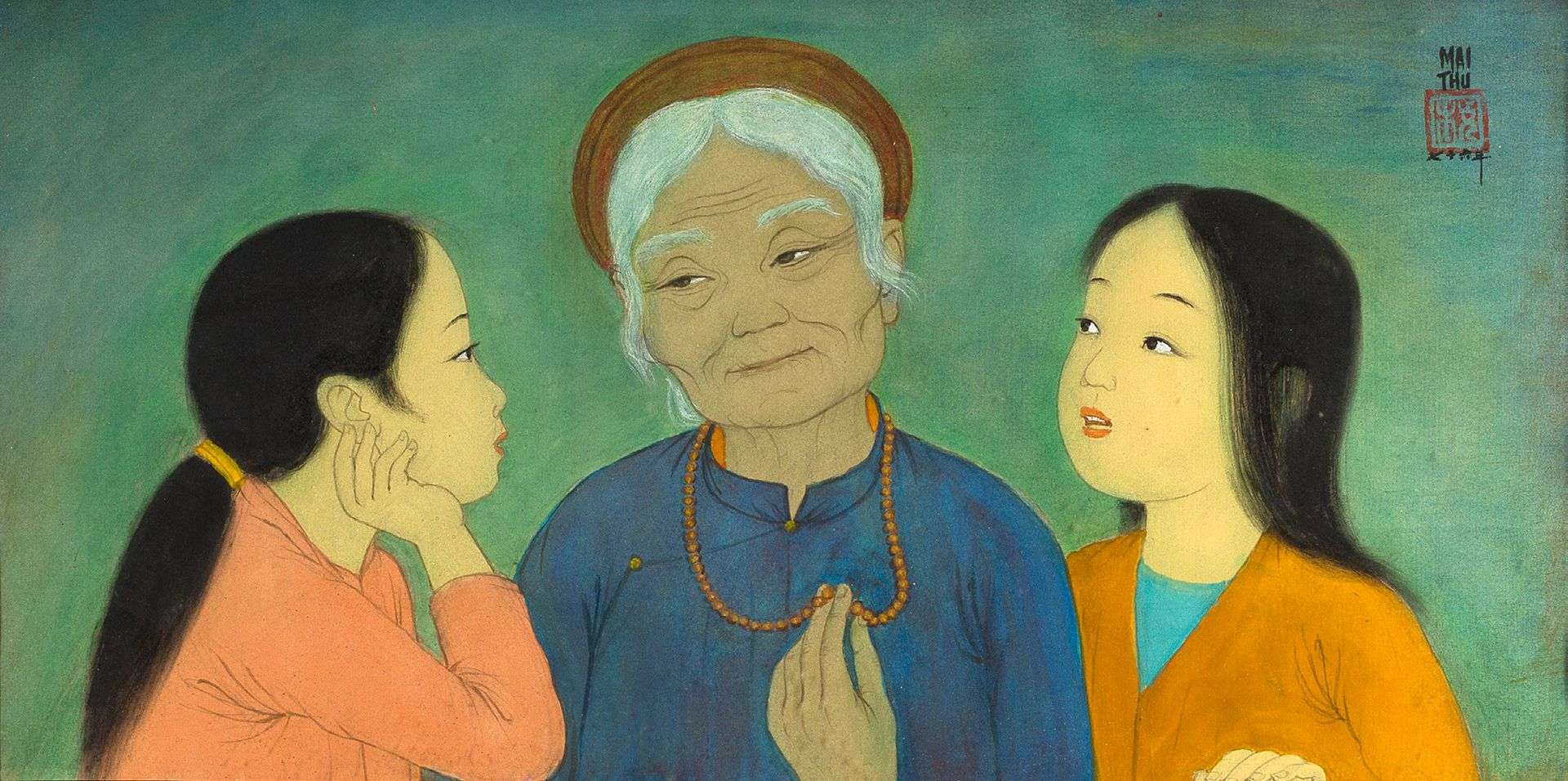
MAI TRUNG THỨ (1906-1980)
Grandmother, 1976
Ink and colors on silk, signed and dated upper right. In the original frame made by the artist.
22 x 47 cm - 8 5/8 x 18 1/2 in.
Ink and color on silk, signed and dated upper right. In its original frame, made by the artist.
A certificate of inclusion in the artist's catalog raisonné currently being prepared by Charlotte Aguttes-Reynier for the Association des Artistes d'Asie à Paris will be given to the purchaser.
BIBLIOGRAPHY
"L'art moderne en Indochine", Charlotte Aguttes-Reynier, In Fine éditions d'art, 2023, repr. p. 281
PROVENANCE
Private collection, Paris
Sale [34] Aguttes, June 2, 2022, lot 225
French collection
MAI TRUNG THỨ
Born in 1906 near Haïphong, Mai Trung Thứ completed his schooling at the Lycée Français in Hanoi.
Like Lê Phổ, Vũ Cao Đàm and Lê Văn Đệ, he was part of the first graduating class of the École des Beaux-Arts de l'Indochine, founded and directed by Victor Tardieu. Invited to attend the 1931 Colonial Exhibition, Mai Trung Thứ discovered France. Fallen under its spell, he settled there in the late 30s and remained for the rest of his life. Although
strongly influenced by the artistic education he received from Victor Tardieu and Joseph Inguimberty, he was the one of his comrades who retained the deepest Vietnamese identity. Mai Trung Thứ devoted himself to gouache or ink on silk, typically Asian processes that enabled him to develop an art rich in reminiscence of Chinese and Vietnamese art.
Chinese and Vietnamese art. An independent artist, he is no less committed to his country's future. Mai Trung Thứ was an emblematic student of the first graduating class of the École des Beaux-Arts d'Indochine, one of only six successful candidates out of 266 entered. During his training, he learns a special technique halfway between Asian tradition and European taste: silk painting. Although Mai Trung Thứ also learned oil on canvas, which he practiced at the start of his career, he soon abandoned it in favor of silk painting.
Sinh năm 1906 gần Hải Phòng, Mai Trung Thứ theo học tại trường trung học Pháp ở Hà Nội. Giống như Lê Phổ, Vũ Cao Đàm hay Lê Văn Đệ, ông thuộc khóa đầu tiên của Trường Mỹ thuật Đông Dương do Victor Tardieu sáng lập và quản lý.
Được mời tham dự Triển lãm Thuộc địa năm 1931, Mai Trung Thứ đã có cơ hội khám phá nước Pháp. Bị quyến rũ bởi vẻ đẹp nơi đây, ông quyết định sang Pháp định cư vào cuối những năm 1930 và sống ở đó cho đến cuối đời. Mặc dù chịu ảnh hưởng sâu sắc từ sự giảng dạy của Victor Tardieu và Joseph Inguimberty, ông là người giữ gìn bản sắc Việt Nam sâu đậm nhất trong số các bạn đồng môn. Mai Trung Thứ chuyên sáng tác bằng bột màu và mực trên lụa - những chất liệu đặc trưng của châu Á, giúp ông phát triển một phong cách nghệ thuật giàu tính hoài niệm về nghệ thuật truyền thống Trung Quốc và Việt Nam. Là một nghệ sĩ độc lập, ông vẫn luôn quan tâm tới tương lai của quê hương mình. Là sinh viên tiêu biểu cho khóa đầu tiên Trường Mỹ thuật Đông Dương, Mai Trung Thứ nằm trong số sáu thí sinh trúng tuyển trên tổng số 266 người dự thi. Trong thời gian học, ông đã làm quen với một kỹ thuật độc đáo, kết hợp giữa truyền thống Á Đông và thẩm
mỹ châu Âu: tranh lụa. Mặc dù từng học tập và sáng tác các tác phẩm sơn dầu trên toan ở giai đoạn đầu sự nghiệp, ông đã nhanh chóng từ bỏ để tập trung vào tranh lụa.
Born in 1906 near Haïphong, Mai Trung Thứ completed his schooling at the French high school in Hanoi. Like Lê Phổ, Vũ Cao Đàm and Lê Văn Đệ, he was part of the first graduating class of the Indochina School of Fine Arts, founded and directed by Victor Tardieu. Invited to attend the 1931 Colonial Exhibition, Mai Trung Thứ discovered France. Fallen under its spell, he settled there in the late 30s and remained for the rest of his life. Although strongly influenced by the artistic education he received from Victor Tardieu and Joseph Inguimberty, he was the one of his comrades who retained the deepest Vietnamese identity. Mai Trung Thứ devoted himself to gouache or ink on silk, typically Asian processes that enabled him to develop an art rich in reminiscence of traditional Chinese and Vietnamese art. An independent artist, he is no less committed to his country's future. Mai Trung Thứ was an emblematic student of the first graduating class of the Indochina School of Fine Art
Grandmother, 1976
Ink and colors on silk, signed and dated upper right. In the original frame made by the artist.
22 x 47 cm - 8 5/8 x 18 1/2 in.
Ink and color on silk, signed and dated upper right. In its original frame, made by the artist.
A certificate of inclusion in the artist's catalog raisonné currently being prepared by Charlotte Aguttes-Reynier for the Association des Artistes d'Asie à Paris will be given to the purchaser.
BIBLIOGRAPHY
"L'art moderne en Indochine", Charlotte Aguttes-Reynier, In Fine éditions d'art, 2023, repr. p. 281
PROVENANCE
Private collection, Paris
Sale [34] Aguttes, June 2, 2022, lot 225
French collection
MAI TRUNG THỨ
Born in 1906 near Haïphong, Mai Trung Thứ completed his schooling at the Lycée Français in Hanoi.
Like Lê Phổ, Vũ Cao Đàm and Lê Văn Đệ, he was part of the first graduating class of the École des Beaux-Arts de l'Indochine, founded and directed by Victor Tardieu. Invited to attend the 1931 Colonial Exhibition, Mai Trung Thứ discovered France. Fallen under its spell, he settled there in the late 30s and remained for the rest of his life. Although
strongly influenced by the artistic education he received from Victor Tardieu and Joseph Inguimberty, he was the one of his comrades who retained the deepest Vietnamese identity. Mai Trung Thứ devoted himself to gouache or ink on silk, typically Asian processes that enabled him to develop an art rich in reminiscence of Chinese and Vietnamese art.
Chinese and Vietnamese art. An independent artist, he is no less committed to his country's future. Mai Trung Thứ was an emblematic student of the first graduating class of the École des Beaux-Arts d'Indochine, one of only six successful candidates out of 266 entered. During his training, he learns a special technique halfway between Asian tradition and European taste: silk painting. Although Mai Trung Thứ also learned oil on canvas, which he practiced at the start of his career, he soon abandoned it in favor of silk painting.
Sinh năm 1906 gần Hải Phòng, Mai Trung Thứ theo học tại trường trung học Pháp ở Hà Nội. Giống như Lê Phổ, Vũ Cao Đàm hay Lê Văn Đệ, ông thuộc khóa đầu tiên của Trường Mỹ thuật Đông Dương do Victor Tardieu sáng lập và quản lý.
Được mời tham dự Triển lãm Thuộc địa năm 1931, Mai Trung Thứ đã có cơ hội khám phá nước Pháp. Bị quyến rũ bởi vẻ đẹp nơi đây, ông quyết định sang Pháp định cư vào cuối những năm 1930 và sống ở đó cho đến cuối đời. Mặc dù chịu ảnh hưởng sâu sắc từ sự giảng dạy của Victor Tardieu và Joseph Inguimberty, ông là người giữ gìn bản sắc Việt Nam sâu đậm nhất trong số các bạn đồng môn. Mai Trung Thứ chuyên sáng tác bằng bột màu và mực trên lụa - những chất liệu đặc trưng của châu Á, giúp ông phát triển một phong cách nghệ thuật giàu tính hoài niệm về nghệ thuật truyền thống Trung Quốc và Việt Nam. Là một nghệ sĩ độc lập, ông vẫn luôn quan tâm tới tương lai của quê hương mình. Là sinh viên tiêu biểu cho khóa đầu tiên Trường Mỹ thuật Đông Dương, Mai Trung Thứ nằm trong số sáu thí sinh trúng tuyển trên tổng số 266 người dự thi. Trong thời gian học, ông đã làm quen với một kỹ thuật độc đáo, kết hợp giữa truyền thống Á Đông và thẩm
mỹ châu Âu: tranh lụa. Mặc dù từng học tập và sáng tác các tác phẩm sơn dầu trên toan ở giai đoạn đầu sự nghiệp, ông đã nhanh chóng từ bỏ để tập trung vào tranh lụa.
Born in 1906 near Haïphong, Mai Trung Thứ completed his schooling at the French high school in Hanoi. Like Lê Phổ, Vũ Cao Đàm and Lê Văn Đệ, he was part of the first graduating class of the Indochina School of Fine Arts, founded and directed by Victor Tardieu. Invited to attend the 1931 Colonial Exhibition, Mai Trung Thứ discovered France. Fallen under its spell, he settled there in the late 30s and remained for the rest of his life. Although strongly influenced by the artistic education he received from Victor Tardieu and Joseph Inguimberty, he was the one of his comrades who retained the deepest Vietnamese identity. Mai Trung Thứ devoted himself to gouache or ink on silk, typically Asian processes that enabled him to develop an art rich in reminiscence of traditional Chinese and Vietnamese art. An independent artist, he is no less committed to his country's future. Mai Trung Thứ was an emblematic student of the first graduating class of the Indochina School of Fine Art