
&w=3840&q=75)
&w=3840&q=75)
&w=3840&q=75)
&w=3840&q=75)
&w=3840&q=75)
&w=3840&q=75)


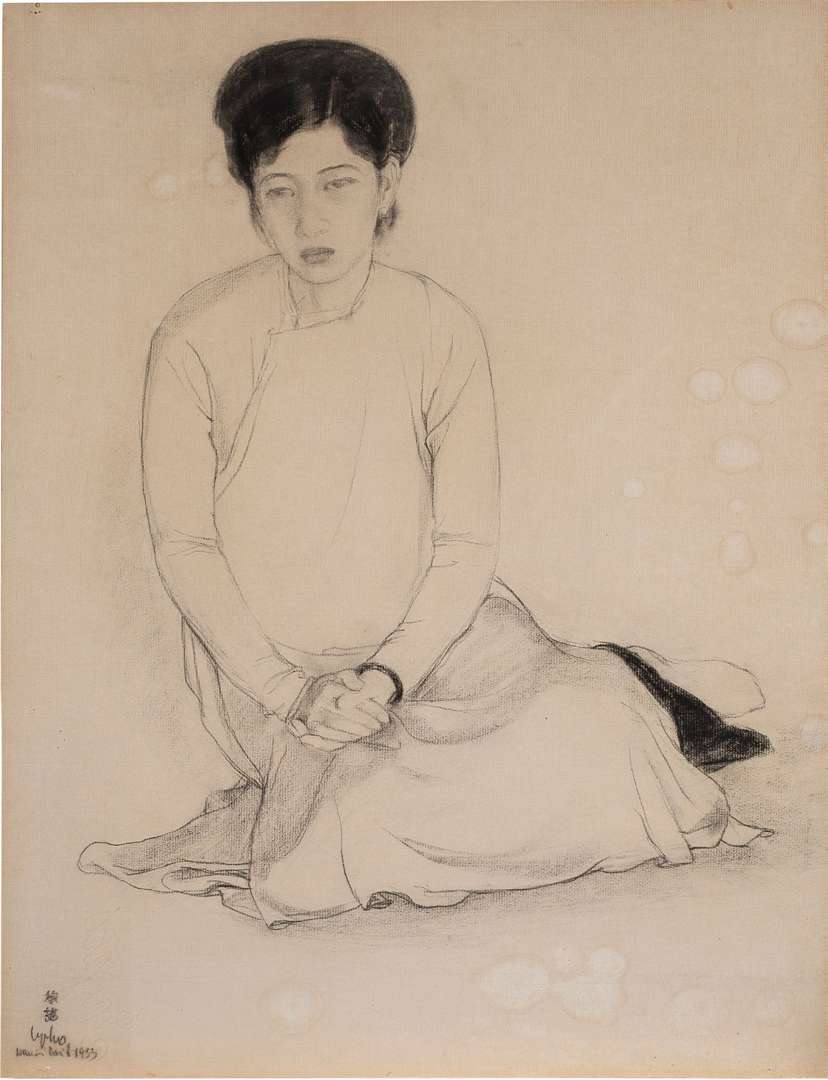
LÊ PHỔ (1907-2001)
Young seated woman, Hanoi, April 1933
Grease pencil on Ingres paper, signed, localized and dated lower left
57.5 x 45 cm - 22 5/8 x 17 3/4 in.
A certificate of inclusion in the artist's catalog raisonné currently being prepared by Charlotte Aguttes-Reynier for the Association des Artistes d'Asie à Paris will be given to the purchaser.
Grease pencil on Ingres paper, signed, located and dated lower left
PROVENANCE
Jacques Lebas Collection, Hanoi
Private collection, France (by descent from previous owner)
This drawing can be compared with many of the artist's works from the early 1930s. In particular, the Jeune fille en blanc (Young Girl in White), kept at the National Gallery in Singapore, and exhibited until very recently at the Venice Biennale. Or the Jeune vietnamienne alanguie, painted in 1932 and sold at auction in Marseilles in 2023.
What these works have in common is their subject: a young woman seated, pensive and dressed in an áo dài. The 1920s and 1930s in Vietnam were characterized by intellectual effervescence. A movement of women's emancipation was developing, which was particularly visible in clothing and fashion. The traditionally dark áo dài (long tunic and pants) became a garment in bright, light fabrics, more fitted and closer to the body.
Bức vẽ này có thể được so sánh với nhiều tác phẩm khác của Lê Phổ vào đầu những năm 1930. Đặc biệt là tác phẩm Thiếu nữ mặc áo dài trắng, hiện được lưu giữ tại Bảo tàng Quốc gia Singapore và mới đây được trưng bày tại Biennale Venice2. Hoặc tác phẩm Thiếu nữ Việt Nam ngồi nghỉ, được vẽ năm 1932 và bán đấu giá vào năm 2023 tại Marseille.
Điểm chung của những tác phẩm này là chủ đề: một thiếu nữ đang ngồi, gương mặt đầy vẻ suy tư và mặc chiếc áo dài. Những năm 1920-1930 tại Việt Nam là thời kỳ sôi động về mặt trí thức. Một phong trào giải phóng phụ nữ bắt đầu phát triển, điều này đặc biệt được thể hiện qua trang phục. Bộ áo dài, gồm áo dài và quần dài, vốn dĩ truyền thống với màu sắc trầm, đã dần trở thành một bộ trang phục có chất liệu sáng, màu sắc tươi sáng, ôm sát cơ thể và mang tính hiện đại hơn.
This drawing can be compared with many of the artist's works from the early 1930s. These include the Jeune fille en blanc, now in Singapore's National Gallery and exhibited until recently at the Venice Biennale 2. Or the Jeune vietnamienne alanguie, painted in 1932 and sold at auction in Marseilles in 2023.
What these works have in common is their subject: a young woman seated, pensive and dressed in an áo dài. The years 1920-1930 in Vietnam were characterized by intellectual effervescence. A movement of women's emancipation was developing, which was particularly visible in clothing and fashion. The traditionally dark áo dài, consisting of a long tunic and pants, became a garment in bright, light fabrics, more fitted and closer to the body.
LÊ PHỔ
Lê Phổ graduated from the École des Beaux-Arts de l'Indochine in 1930 and left for France in 1931. The purpose of his trip was to assist Victor Tardieu at the Colonial Exhibition in Paris. He took advantage of his stay to travel around Europe and attend courses at the École des Beaux-Arts in Paris. On his return to Hanoi in 1932, he was appointed trainee drawing teacher at the École des Beaux-Arts de l'Indochine and drawing teacher at the Lycée Albert Sarraut 1. An unpublished photo, dated May 1934, shows Lê Phổ posing among the lycée staff, standing on the left, behind Jacques Lebas (the lycée's censor and his former art history teacher). A friendly relationship then existed between the two men, who sometimes met up with Victor Tardieu for lunches or dinners.
Lê Phổ tốt nghiệp Trường Mỹ thuật Đông Dương năm 1930 và sang Pháp vào năm 1931. Chuyến đi nhằm hỗ trợ Victor Tardieu tại Triển lãm Thuộc địa được tổ chức tại Paris. Trong thời gian này, ông đã tranh thủ khám phá châu Âu và theo học tại Trường Mỹ thuật Paris. Khi trở lại Hà Nội vào năm 1932, ông được bổ nhiệm làm giáo viên thực tập dạy vẽ tại Trường Cao đẳng Mỹ thuật Đông Dương và giáo viên mỹ thuật tại Trường trung học Albert Sarraut 1.
Một bức ảnh hiếm hoi, chụp vào tháng 5 năm 1934, cho thấy Lê Phổ đứng cùng đội ngũ giáo viên nhà trường, bên trái, phía sau Jacques Lebas (Giám học củ
Young seated woman, Hanoi, April 1933
Grease pencil on Ingres paper, signed, localized and dated lower left
57.5 x 45 cm - 22 5/8 x 17 3/4 in.
A certificate of inclusion in the artist's catalog raisonné currently being prepared by Charlotte Aguttes-Reynier for the Association des Artistes d'Asie à Paris will be given to the purchaser.
Grease pencil on Ingres paper, signed, located and dated lower left
PROVENANCE
Jacques Lebas Collection, Hanoi
Private collection, France (by descent from previous owner)
This drawing can be compared with many of the artist's works from the early 1930s. In particular, the Jeune fille en blanc (Young Girl in White), kept at the National Gallery in Singapore, and exhibited until very recently at the Venice Biennale. Or the Jeune vietnamienne alanguie, painted in 1932 and sold at auction in Marseilles in 2023.
What these works have in common is their subject: a young woman seated, pensive and dressed in an áo dài. The 1920s and 1930s in Vietnam were characterized by intellectual effervescence. A movement of women's emancipation was developing, which was particularly visible in clothing and fashion. The traditionally dark áo dài (long tunic and pants) became a garment in bright, light fabrics, more fitted and closer to the body.
Bức vẽ này có thể được so sánh với nhiều tác phẩm khác của Lê Phổ vào đầu những năm 1930. Đặc biệt là tác phẩm Thiếu nữ mặc áo dài trắng, hiện được lưu giữ tại Bảo tàng Quốc gia Singapore và mới đây được trưng bày tại Biennale Venice2. Hoặc tác phẩm Thiếu nữ Việt Nam ngồi nghỉ, được vẽ năm 1932 và bán đấu giá vào năm 2023 tại Marseille.
Điểm chung của những tác phẩm này là chủ đề: một thiếu nữ đang ngồi, gương mặt đầy vẻ suy tư và mặc chiếc áo dài. Những năm 1920-1930 tại Việt Nam là thời kỳ sôi động về mặt trí thức. Một phong trào giải phóng phụ nữ bắt đầu phát triển, điều này đặc biệt được thể hiện qua trang phục. Bộ áo dài, gồm áo dài và quần dài, vốn dĩ truyền thống với màu sắc trầm, đã dần trở thành một bộ trang phục có chất liệu sáng, màu sắc tươi sáng, ôm sát cơ thể và mang tính hiện đại hơn.
This drawing can be compared with many of the artist's works from the early 1930s. These include the Jeune fille en blanc, now in Singapore's National Gallery and exhibited until recently at the Venice Biennale 2. Or the Jeune vietnamienne alanguie, painted in 1932 and sold at auction in Marseilles in 2023.
What these works have in common is their subject: a young woman seated, pensive and dressed in an áo dài. The years 1920-1930 in Vietnam were characterized by intellectual effervescence. A movement of women's emancipation was developing, which was particularly visible in clothing and fashion. The traditionally dark áo dài, consisting of a long tunic and pants, became a garment in bright, light fabrics, more fitted and closer to the body.
LÊ PHỔ
Lê Phổ graduated from the École des Beaux-Arts de l'Indochine in 1930 and left for France in 1931. The purpose of his trip was to assist Victor Tardieu at the Colonial Exhibition in Paris. He took advantage of his stay to travel around Europe and attend courses at the École des Beaux-Arts in Paris. On his return to Hanoi in 1932, he was appointed trainee drawing teacher at the École des Beaux-Arts de l'Indochine and drawing teacher at the Lycée Albert Sarraut 1. An unpublished photo, dated May 1934, shows Lê Phổ posing among the lycée staff, standing on the left, behind Jacques Lebas (the lycée's censor and his former art history teacher). A friendly relationship then existed between the two men, who sometimes met up with Victor Tardieu for lunches or dinners.
Lê Phổ tốt nghiệp Trường Mỹ thuật Đông Dương năm 1930 và sang Pháp vào năm 1931. Chuyến đi nhằm hỗ trợ Victor Tardieu tại Triển lãm Thuộc địa được tổ chức tại Paris. Trong thời gian này, ông đã tranh thủ khám phá châu Âu và theo học tại Trường Mỹ thuật Paris. Khi trở lại Hà Nội vào năm 1932, ông được bổ nhiệm làm giáo viên thực tập dạy vẽ tại Trường Cao đẳng Mỹ thuật Đông Dương và giáo viên mỹ thuật tại Trường trung học Albert Sarraut 1.
Một bức ảnh hiếm hoi, chụp vào tháng 5 năm 1934, cho thấy Lê Phổ đứng cùng đội ngũ giáo viên nhà trường, bên trái, phía sau Jacques Lebas (Giám học củ