
&w=3840&q=75)
&w=3840&q=75)
&w=3840&q=75)
&w=3840&q=75)
&w=3840&q=75)
&w=3840&q=75)
&w=3840&q=75)
&w=3840&q=75)


20
JOHN ARNOLD & SON / DENT
The item was sold for 2 860 €
Fees include commission and taxes.
JOHN ARNOLD &| SON / DENT
No. 365/666
Late 18th century
Silver chronometer watch with detent escapement
Case: round on hinge, inside with City of London guarantee hallmarks, master hallmark for case manufacturer "AT", opening for mechanism winding square
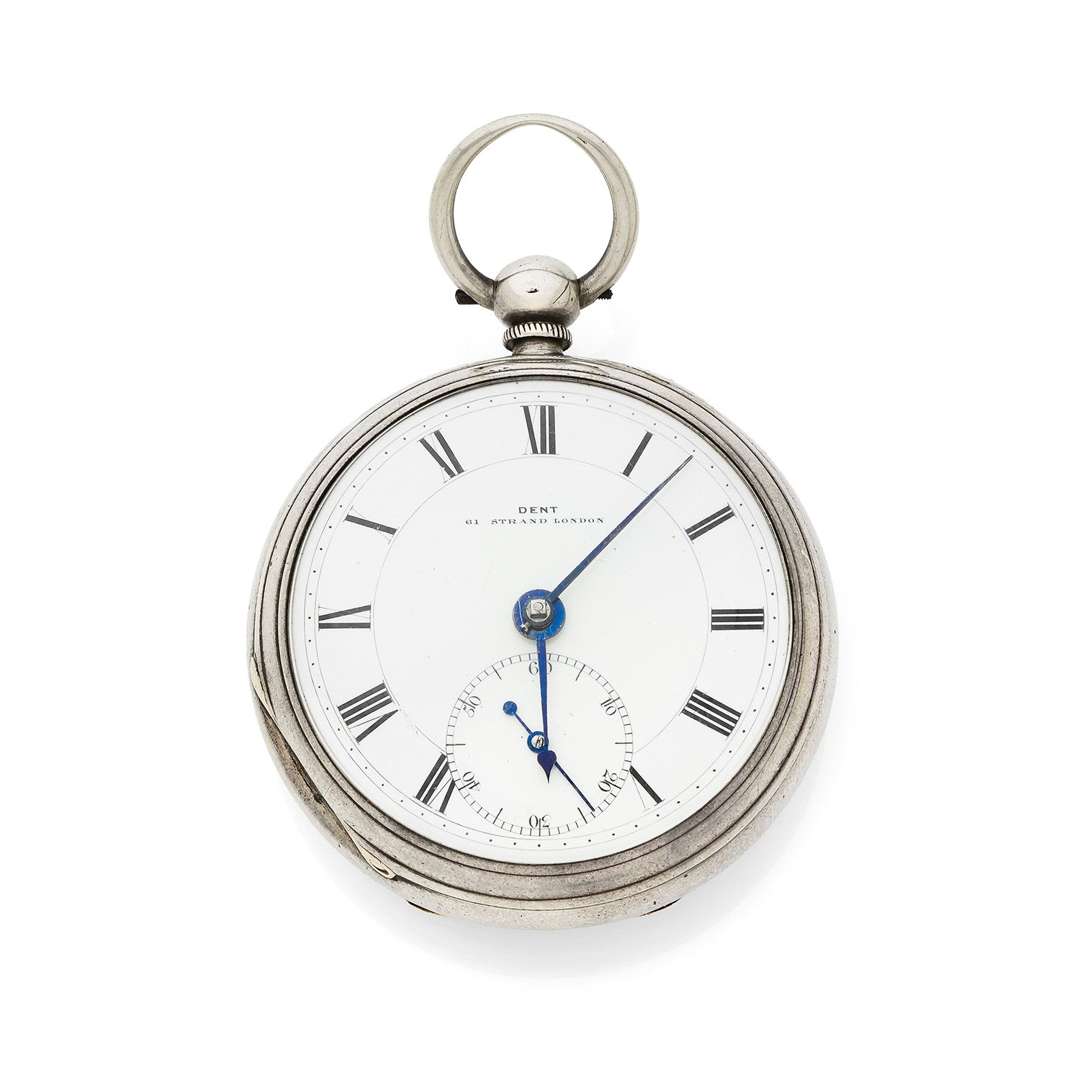
Dial: white enamel with Roman numerals, blued steel hands, small second hand and minute track, signed "Dent, 61 Strand London".
Movement: mechanical with key winding, chronometer type, chased and pierced balance bridge, "S" type balance wheel, cylindrical balance spring, Arnold type detent escapement, signature on plate "John Arnold &| Son London No. 365/666 Inv.t. &| Fc.t.".
Diam. 51 mm
Gross weight 126,3 g
JOHN ARNOLD &| Son / Tooth
Late 18th century
Silver chronometer watch with detent escapement
This type of movement is typical of the work of the famous English watchmaker John Arnold. Along with Thomas Earnshaw, he is one of the two main English chronometers to have developed the movements used for marine chronometers. While the invention of the first marine chronometer is due to John Harrison, who pioneered the field with the first H3 and H4 marine chronometer watches, John Arnold can be said to follow in the footsteps of the watchmaking geniuses of the 18th century. In 1764, he presented a watch to King George III. He was also able to remake a copy of John Harrison's marine watch, which was detailed in the Board of Longitude publication of 1767. John Arnold's innovations were to have a major influence on the world of watchmaking. He befriended the watchmaker Abraham-Louis Breguet, whom he took into his home during the French Revolution. John Arnold's son, John Roger, became Breguet's apprentice. In 1787, father and son created a new signature, "Arnold &| Son". Our example, which bears this "Arnold &| Son" signature, shows that this movement was undoubtedly made with the help of his son John Roger, an apprentice later associated with Dent in London.
No. 365/666
Late 18th century
Silver chronometer watch with detent escapement
Case: round on hinge, inside with City of London guarantee hallmarks, master hallmark for case manufacturer "AT", opening for mechanism winding square
Dial: white enamel with Roman numerals, blued steel hands, small second hand and minute track, signed "Dent, 61 Strand London".
Movement: mechanical with key winding, chronometer type, chased and pierced balance bridge, "S" type balance wheel, cylindrical balance spring, Arnold type detent escapement, signature on plate "John Arnold &| Son London No. 365/666 Inv.t. &| Fc.t.".
Diam. 51 mm
Gross weight 126,3 g
JOHN ARNOLD &| Son / Tooth
Late 18th century
Silver chronometer watch with detent escapement
This type of movement is typical of the work of the famous English watchmaker John Arnold. Along with Thomas Earnshaw, he is one of the two main English chronometers to have developed the movements used for marine chronometers. While the invention of the first marine chronometer is due to John Harrison, who pioneered the field with the first H3 and H4 marine chronometer watches, John Arnold can be said to follow in the footsteps of the watchmaking geniuses of the 18th century. In 1764, he presented a watch to King George III. He was also able to remake a copy of John Harrison's marine watch, which was detailed in the Board of Longitude publication of 1767. John Arnold's innovations were to have a major influence on the world of watchmaking. He befriended the watchmaker Abraham-Louis Breguet, whom he took into his home during the French Revolution. John Arnold's son, John Roger, became Breguet's apprentice. In 1787, father and son created a new signature, "Arnold &| Son". Our example, which bears this "Arnold &| Son" signature, shows that this movement was undoubtedly made with the help of his son John Roger, an apprentice later associated with Dent in London.