
&w=3840&q=75)
&w=3840&q=75)
&w=3840&q=75)
&w=3840&q=75)
&w=3840&q=75)
&w=3840&q=75)
&w=3840&q=75)
&w=3840&q=75)

278
HYAKUNYO JIHO (1731-1804)
The item was sold for 665 €
Fees include commission and taxes.
HYAKUNYO JIHO (1731-1804)
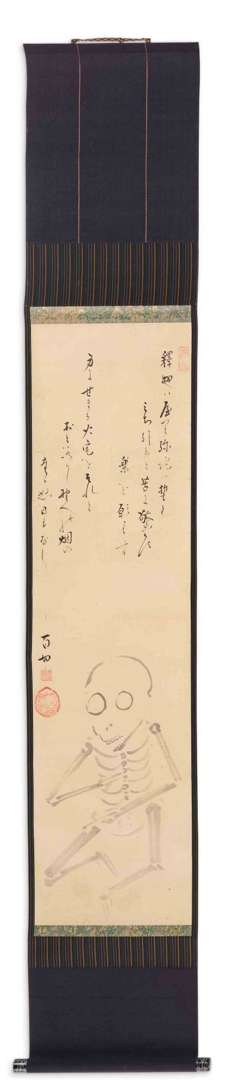
Vertical ink scroll on paper depicting a skeleton and calligraphy
The skeleton is shown seated, with long calligraphy at the top. Signed "Hyakunyo" and three seals. The calligraphy:
"Dedicate your devotion to Shakyamuni Buddha and Amida Bodhisattva. You should not be frightened by the ebb of kalpa and the many sufferings, nor should you wish for ease and comfort. Beware of the imminent threat of kataku ("the burning house"), for not a day goes by without smoke rising from incinerated bodies reduced to ashes."
Dim. tot. 181 x 30 cm
Provenance: Gregg Baker Gallery, London
NOTE
Hyakunyo Jiho was a monk of the Tendai sect, originally from Omi-cho (Shiga prefecture). At the end of his life, he returned to his hometown and built a small temple called the Hyakunyo-an, becoming a pillar of community life. He offered his paintings as a token of his gratitude.
The calligraphy on our work refers to the parable of the "Three chariots and the burning house" from the third chapter of the Lotus Sutra. This parable is quoted by Buddha to his disciple Sariputra to explain the use of similes, parables and other expedient means to preach Buddhist law and help everyone attain supreme and perfect enlightenment.
Vertical ink scroll on paper depicting a skeleton and calligraphy
The skeleton is shown seated, with long calligraphy at the top. Signed "Hyakunyo" and three seals. The calligraphy:
"Dedicate your devotion to Shakyamuni Buddha and Amida Bodhisattva. You should not be frightened by the ebb of kalpa and the many sufferings, nor should you wish for ease and comfort. Beware of the imminent threat of kataku ("the burning house"), for not a day goes by without smoke rising from incinerated bodies reduced to ashes."
Dim. tot. 181 x 30 cm
Provenance: Gregg Baker Gallery, London
NOTE
Hyakunyo Jiho was a monk of the Tendai sect, originally from Omi-cho (Shiga prefecture). At the end of his life, he returned to his hometown and built a small temple called the Hyakunyo-an, becoming a pillar of community life. He offered his paintings as a token of his gratitude.
The calligraphy on our work refers to the parable of the "Three chariots and the burning house" from the third chapter of the Lotus Sutra. This parable is quoted by Buddha to his disciple Sariputra to explain the use of similes, parables and other expedient means to preach Buddhist law and help everyone attain supreme and perfect enlightenment.