
&w=3840&q=75)
&w=3840&q=75)
&w=3840&q=75)
&w=3840&q=75)
&w=3840&q=75)
&w=3840&q=75)
&w=3840&q=75)
&w=3840&q=75)


40
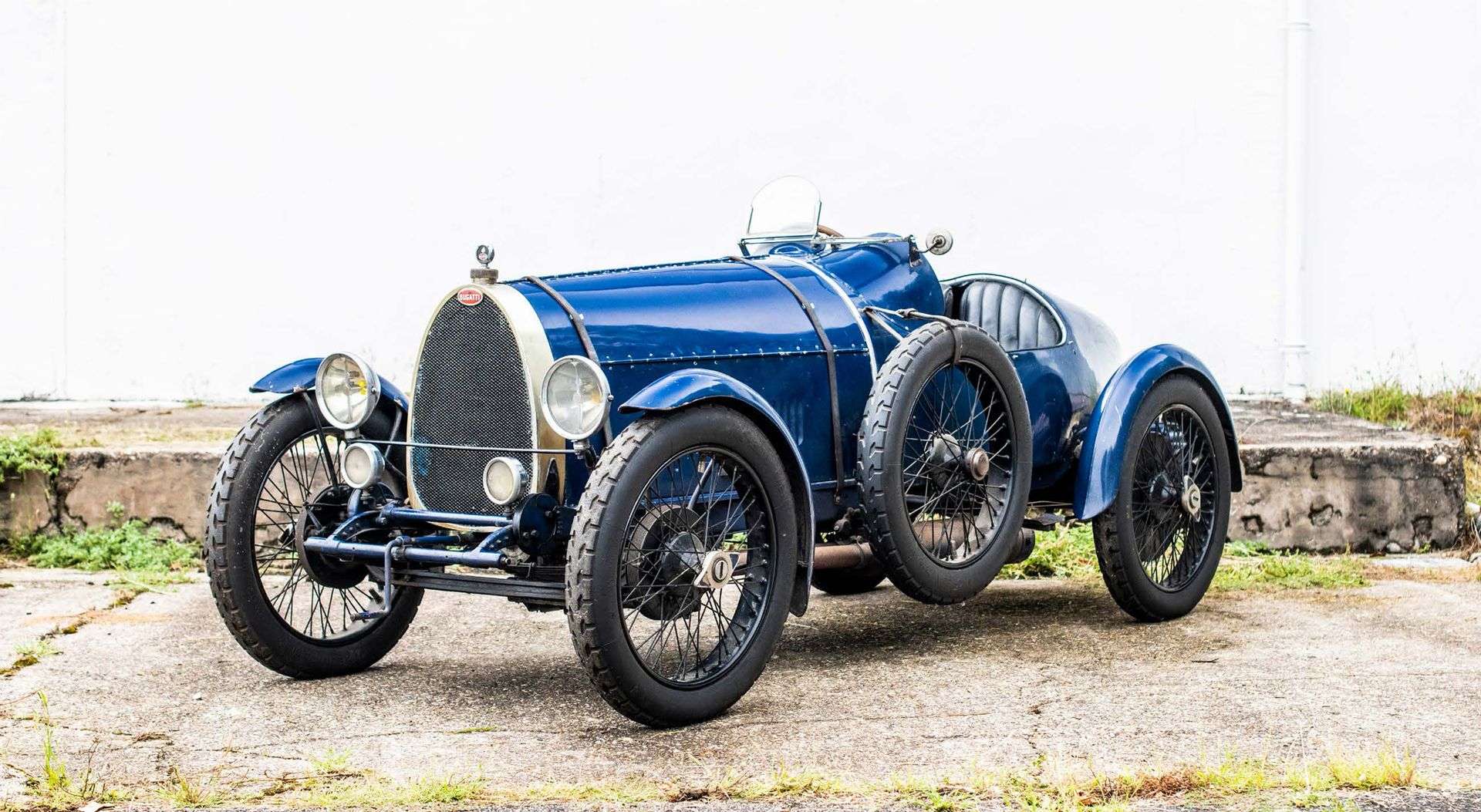
Bugatti Type 30 Grand Prix Usine – 1922
The item was sold for 864 000 €
Fees include commission and taxes.
Bugatti Type 30 Grand Prix Usine – 1922
French historic registration title
One of the first Bugatti 8-cylinder cars
Very rare Type 22 Works short chassis, 2.40 m wheelbase, one of the very first built
Unquestionably works car #4002, entered in the 1922 ACF Grand
Prix (3rd) and the 1923 Indianapolis 500 (9th)
This car was found and restored in the mid-1960s by pioneer
Pierre Dellière, and has been rarely seen since
Unquestionably authentic, a high-performance car, a major part of Bugatti history
The Bugatti Type 30 is a particularly important model in the history of the marque, as it is known to be the first ‘production’ 8-cylinder, after the construction of several prototypes (Type 14, which used 2 Brescia engines placed end to end, and the short-lived Type 28 3-litre), foreshadowing the legendary Grand Prix Type 35. The new Type 30 made its debut at the 1922 ACF Grand Prix, held that year in Strasbourg on 16 July. Ettore decided to field four cars (#4001, #4002, #4003 and #4004), which had the particularity of using short Type 22 chassis (2.40 m wheelbase compared with 2.55 m and then 2.85 m for production cars), to debut the new 2-litre 8-cylinder engine. With their specific cigar-shaped bodywork, streamlined radiator and exhaust coming out of the rear tip, they met with varying fortunes, those driven by De Vizcaya and Marco finishing 2nd and 3rd respectively, behind Nazzaro’s Fiat, while the Marquis of Casa Maury completed the list of four finishers (out of
eighteen starters), Friedrich, in the last Bugatti entered, having been forced to retire. One of these cars was entered in the Italian Grand Prix in September, with Friderich, who finished 3rd, and it was certainly the same car that was exhibited at the Paris Motor Show in October, under the glass roof of the Grand Palais. While the first two ‘civilian’ cars were delivered to England in January, 3 new short chassis (#4014, #4015 and #4016, ordered by the Argentinian de Algaza) and 2 cars seen in Strasbourg, crossed the Atlantic to take part in the legendary Indianapolis 500 on 30 May. These 5 cars, which had the particularity of being, for the occasion, bodied as single-seaters profiled by Lavocat & Marsaud to a design by aeronautical engineer Louis Béchereau (father of the legendary Spad planes), were conspicuous by their abandonment, due to lubrication problems, on this oval, which turned - unlike the European circuits - anticlockwise...
Only one car finished, chassis #4002, in the hands of its owner, the ‘Prince of Cystria’, Bertrand de Faucigny-Lucinge by name, a confirmed gentleman driver, who was here debuting one of his first Bugattis, which he had just bought from the factory, of which he would be a loyal customer.
Factory racing cars were very specific (especially the first ones produced), and were characterised by a whole host of visible or invisible details, such as their short chassis, with side members made of 5 mm thick sheet steel, their dual ignition, their large rear brake drums (operated by cables, via an external lever) and their small front drums (hydraulic and foot-operated), their steel apron, their rear support for front spring leaves, for example, or even their Brescia gearbox, with two specific reinforcements... A whole host of subtleties specific to the so-called ‘Strasbourg’ cars, which quickly disappeared on the production cars, which had a 2.85 m wheelbase chassis made of 6 mm thick steel, cable brakes on all 4 wheels, small drums, ignition by simple magneto and then Delco, and a windscreen/dashboard/floor cast in a single piece of aluminium...
While more than 500 Type 30s were produced for civilian use, competition versions, including factory versions, can be counted on the fingers of two hands. Our example is one of these. It was discovered in the south-east of France, near Istres, in the mid-1960s by Pierre Dellière, a pioneer collector and wellknown Bugatti enthusiast. At the time, this Bugatti was complete:chassis, running gear, gearbox, steering, axles, radiator, canopy, firewall and a few body parts, including windscreens and wings. The engine was missing, so Pierre Dellière bought a Type 30 engine that he found on a boat sailing on Lake Geneva! Once restored, he registered the car with the chassis number stamped on the engine (#4466) and took part in a large number of rallies. It was then sold to a certain Cavalière from Toulon, who also owned a Bugatti Type 43, and who some time later sold it to Monsieur Zobel, a well-known collector from the Agen region in the south-west of France. It was from Mr Zobel that Mr T. bought the car in 1981, in the configuration it still has today. He in turn took part in a host of events, including the Bugatti centenary in 1981, during which he took part in the Turckheim-3 épis hill-climb, where the valiant Type 30 was clocked at an average speed of more than 88 km/h (!), as well as the Maurice Trintignant Jubilee
and the Circuit des Remparts d’Angoulême.
“The oldest Bugatti 8-cylinder racing car still in existence”
French historic registration title
One of the first Bugatti 8-cylinder cars
Very rare Type 22 Works short chassis, 2.40 m wheelbase, one of the very first built
Unquestionably works car #4002, entered in the 1922 ACF Grand
Prix (3rd) and the 1923 Indianapolis 500 (9th)
This car was found and restored in the mid-1960s by pioneer
Pierre Dellière, and has been rarely seen since
Unquestionably authentic, a high-performance car, a major part of Bugatti history
The Bugatti Type 30 is a particularly important model in the history of the marque, as it is known to be the first ‘production’ 8-cylinder, after the construction of several prototypes (Type 14, which used 2 Brescia engines placed end to end, and the short-lived Type 28 3-litre), foreshadowing the legendary Grand Prix Type 35. The new Type 30 made its debut at the 1922 ACF Grand Prix, held that year in Strasbourg on 16 July. Ettore decided to field four cars (#4001, #4002, #4003 and #4004), which had the particularity of using short Type 22 chassis (2.40 m wheelbase compared with 2.55 m and then 2.85 m for production cars), to debut the new 2-litre 8-cylinder engine. With their specific cigar-shaped bodywork, streamlined radiator and exhaust coming out of the rear tip, they met with varying fortunes, those driven by De Vizcaya and Marco finishing 2nd and 3rd respectively, behind Nazzaro’s Fiat, while the Marquis of Casa Maury completed the list of four finishers (out of
eighteen starters), Friedrich, in the last Bugatti entered, having been forced to retire. One of these cars was entered in the Italian Grand Prix in September, with Friderich, who finished 3rd, and it was certainly the same car that was exhibited at the Paris Motor Show in October, under the glass roof of the Grand Palais. While the first two ‘civilian’ cars were delivered to England in January, 3 new short chassis (#4014, #4015 and #4016, ordered by the Argentinian de Algaza) and 2 cars seen in Strasbourg, crossed the Atlantic to take part in the legendary Indianapolis 500 on 30 May. These 5 cars, which had the particularity of being, for the occasion, bodied as single-seaters profiled by Lavocat & Marsaud to a design by aeronautical engineer Louis Béchereau (father of the legendary Spad planes), were conspicuous by their abandonment, due to lubrication problems, on this oval, which turned - unlike the European circuits - anticlockwise...
Only one car finished, chassis #4002, in the hands of its owner, the ‘Prince of Cystria’, Bertrand de Faucigny-Lucinge by name, a confirmed gentleman driver, who was here debuting one of his first Bugattis, which he had just bought from the factory, of which he would be a loyal customer.
Factory racing cars were very specific (especially the first ones produced), and were characterised by a whole host of visible or invisible details, such as their short chassis, with side members made of 5 mm thick sheet steel, their dual ignition, their large rear brake drums (operated by cables, via an external lever) and their small front drums (hydraulic and foot-operated), their steel apron, their rear support for front spring leaves, for example, or even their Brescia gearbox, with two specific reinforcements... A whole host of subtleties specific to the so-called ‘Strasbourg’ cars, which quickly disappeared on the production cars, which had a 2.85 m wheelbase chassis made of 6 mm thick steel, cable brakes on all 4 wheels, small drums, ignition by simple magneto and then Delco, and a windscreen/dashboard/floor cast in a single piece of aluminium...
While more than 500 Type 30s were produced for civilian use, competition versions, including factory versions, can be counted on the fingers of two hands. Our example is one of these. It was discovered in the south-east of France, near Istres, in the mid-1960s by Pierre Dellière, a pioneer collector and wellknown Bugatti enthusiast. At the time, this Bugatti was complete:chassis, running gear, gearbox, steering, axles, radiator, canopy, firewall and a few body parts, including windscreens and wings. The engine was missing, so Pierre Dellière bought a Type 30 engine that he found on a boat sailing on Lake Geneva! Once restored, he registered the car with the chassis number stamped on the engine (#4466) and took part in a large number of rallies. It was then sold to a certain Cavalière from Toulon, who also owned a Bugatti Type 43, and who some time later sold it to Monsieur Zobel, a well-known collector from the Agen region in the south-west of France. It was from Mr Zobel that Mr T. bought the car in 1981, in the configuration it still has today. He in turn took part in a host of events, including the Bugatti centenary in 1981, during which he took part in the Turckheim-3 épis hill-climb, where the valiant Type 30 was clocked at an average speed of more than 88 km/h (!), as well as the Maurice Trintignant Jubilee
and the Circuit des Remparts d’Angoulême.
“The oldest Bugatti 8-cylinder racing car still in existence”