
&w=3840&q=75)
&w=3840&q=75)
&w=3840&q=75)
&w=3840&q=75)
&w=3840&q=75)
&w=3840&q=75)
&w=3840&q=75)
&w=3840&q=75)


3
ADRIEN-JEAN LE MAYEUR DE MERPRÈS (1880-1958)
The item was sold for 235 080 €
Fees include commission and taxes.
ADRIEN-JEAN LE MAYEUR DE MERPRÈS (1880-1958)
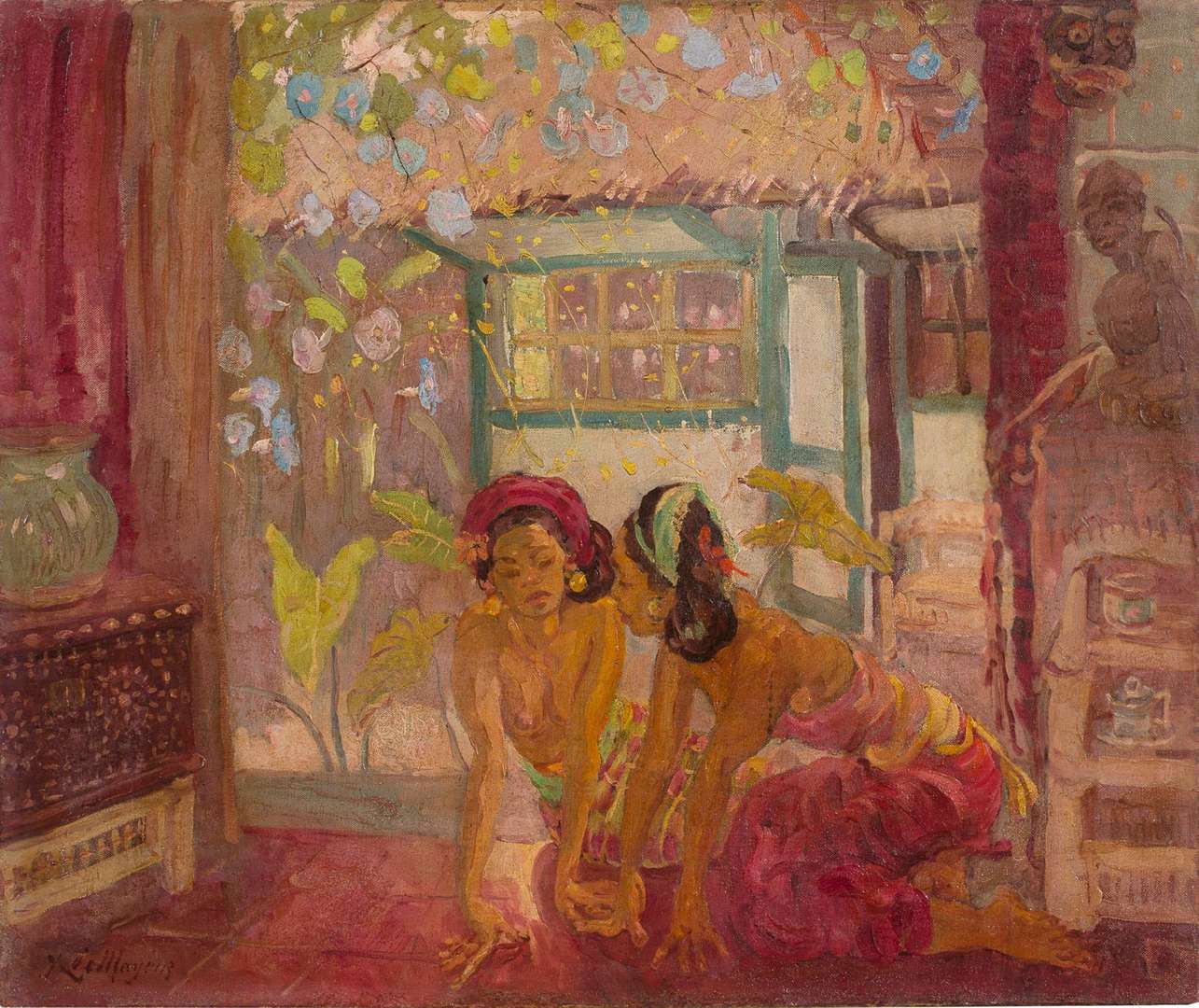
Two women in an interior
Oil on canvas, signed lower left
75.5 x 90 cm - 29 3/4 x 35 7/16 in.
Oil on canvas, signed lower left
PROVENANCE
Former private collection, South-East France
Born in Brussels in 1880, Adrien Jean Le Mayeur de Merprès first studied architecture and civil engineering at the Free University of his native city, before devoting himself to painting. He studied with his father, the painter and engraver Adrien Le Mayeur (1843 - 1916), and with Ernest Blanc-Garin (1843 - 1916). In the early 1900s, after completing his studies, he embarked on his first long trip, spending a few months in San Francisco in the United States. He then returned to Brussels, where his artistic activity was discreet at first. His participation, in 1906, in the 13th exhibition of La Libre Esthétique, alongside Aristide Maillol (1861 - 1944), Henri Matisse (1869 - 1954), and Modeste Huys (1874 - 1932), gave him his first opportunity to present his work publicly.
A painter and war photographer for the Belgian army during the First World War, Le Mayeur took advantage of the new-found peace to spend a few months in Venice, the first stage of a long journey that took him to North Africa, India and Cambodia. He then spent time in southern France, Madagascar, Djibouti, Syria and Turkey. His admiration for Paul Gauguin (1848 - 1903) finally led him to Tahiti.
It was during this period of intense travel that the painter discovered Bali for the first time, between 1929 and 1930. On this occasion, he wrote:
"I also have delicious memories of the island of Bali, and it will be the goal of my next trip. "1
It was in 1932 that he made this wish a reality, firmly resolved to devote the rest of his life to his art. He arrived that year in Indonesia, on the island of Bali, where he chose to live in Denpasar, in the south. In 1933, he exhibited his work at the Young Women Christian Association in Singapore, and met with great commercial and critical success. He continued to exhibit over the following years, notably in 1935, 1937 and 1941.
These early Balinese years were the occasion of his meeting with the model who would become his wife in 1935, Ni Wayan Pollok Tjoeglik (1917 - 1985). The couple built a typical house in Sanur. This living space also became a place of creation, as he set up his studio there.
After the attack on Pearl Harbour in 1941, Japan occupies the Dutch East Indies. Le Mayeur initially sheltered his works, but as a Belgian, he was placed under house arrest for the duration of the Japanese occupation (1942 to 1945). This creative period is characterized by works painted on woven palm leaves, called "bagor", with textile paint or paint made from natural elements.
After the war, Le Mayeur and Ni Pollok welcomed many British and Dutch officers on leave in Bali. The painter's output intensified, as Bali became a more popular tourist destination and demand increased.
In 1956, his talent was noticed by Bahder Djohan (1902-1981), Indonesia's Minister of Education and Culture at the time. He suggested that the couple transform the house-workshop into a museum dedicated to the artist's work. The idea appealed to them, and during their lifetime, the necessary arrangements were made to make the site public, as it is today.
Ill, Adrien Le Mayeur died in 1958 in Brussels, where he was visiting with his wife for treatment.
From his arrival on the island in 1932 to the year of his death in 1958, the painter's favorite subjects were his wife and young Balinese women. His backgrounds were carefully crafted to represent the luxuriant local vegetation. So, if he doesn't set up his models in flowery gardens, he often captures them in their homes, whose walls, adorned with his own paintings, allow for this explosion of color. Two Women in an Interior is typical of this period.
Here, the space is open to the outside, and the scene is illuminated by the foliage and colorful touches of scattered flowers. Everyday and decorative objects, such as the piece of furniture and the vase on the left, and the teapot on the right, give us an idea of the living environment chosen by the painter. The warm, welcoming atmosphere of this scene illustrates the various testimonials from visitors, who all praise the couple's great hospitality.
This painting, which appears in today's auction, is presented with its original mounting, on its stretcher, itself held in the carved wooden frame.
Two women in an interior
Oil on canvas, signed lower left
75.5 x 90 cm - 29 3/4 x 35 7/16 in.
Oil on canvas, signed lower left
PROVENANCE
Former private collection, South-East France
Born in Brussels in 1880, Adrien Jean Le Mayeur de Merprès first studied architecture and civil engineering at the Free University of his native city, before devoting himself to painting. He studied with his father, the painter and engraver Adrien Le Mayeur (1843 - 1916), and with Ernest Blanc-Garin (1843 - 1916). In the early 1900s, after completing his studies, he embarked on his first long trip, spending a few months in San Francisco in the United States. He then returned to Brussels, where his artistic activity was discreet at first. His participation, in 1906, in the 13th exhibition of La Libre Esthétique, alongside Aristide Maillol (1861 - 1944), Henri Matisse (1869 - 1954), and Modeste Huys (1874 - 1932), gave him his first opportunity to present his work publicly.
A painter and war photographer for the Belgian army during the First World War, Le Mayeur took advantage of the new-found peace to spend a few months in Venice, the first stage of a long journey that took him to North Africa, India and Cambodia. He then spent time in southern France, Madagascar, Djibouti, Syria and Turkey. His admiration for Paul Gauguin (1848 - 1903) finally led him to Tahiti.
It was during this period of intense travel that the painter discovered Bali for the first time, between 1929 and 1930. On this occasion, he wrote:
"I also have delicious memories of the island of Bali, and it will be the goal of my next trip. "1
It was in 1932 that he made this wish a reality, firmly resolved to devote the rest of his life to his art. He arrived that year in Indonesia, on the island of Bali, where he chose to live in Denpasar, in the south. In 1933, he exhibited his work at the Young Women Christian Association in Singapore, and met with great commercial and critical success. He continued to exhibit over the following years, notably in 1935, 1937 and 1941.
These early Balinese years were the occasion of his meeting with the model who would become his wife in 1935, Ni Wayan Pollok Tjoeglik (1917 - 1985). The couple built a typical house in Sanur. This living space also became a place of creation, as he set up his studio there.
After the attack on Pearl Harbour in 1941, Japan occupies the Dutch East Indies. Le Mayeur initially sheltered his works, but as a Belgian, he was placed under house arrest for the duration of the Japanese occupation (1942 to 1945). This creative period is characterized by works painted on woven palm leaves, called "bagor", with textile paint or paint made from natural elements.
After the war, Le Mayeur and Ni Pollok welcomed many British and Dutch officers on leave in Bali. The painter's output intensified, as Bali became a more popular tourist destination and demand increased.
In 1956, his talent was noticed by Bahder Djohan (1902-1981), Indonesia's Minister of Education and Culture at the time. He suggested that the couple transform the house-workshop into a museum dedicated to the artist's work. The idea appealed to them, and during their lifetime, the necessary arrangements were made to make the site public, as it is today.
Ill, Adrien Le Mayeur died in 1958 in Brussels, where he was visiting with his wife for treatment.
From his arrival on the island in 1932 to the year of his death in 1958, the painter's favorite subjects were his wife and young Balinese women. His backgrounds were carefully crafted to represent the luxuriant local vegetation. So, if he doesn't set up his models in flowery gardens, he often captures them in their homes, whose walls, adorned with his own paintings, allow for this explosion of color. Two Women in an Interior is typical of this period.
Here, the space is open to the outside, and the scene is illuminated by the foliage and colorful touches of scattered flowers. Everyday and decorative objects, such as the piece of furniture and the vase on the left, and the teapot on the right, give us an idea of the living environment chosen by the painter. The warm, welcoming atmosphere of this scene illustrates the various testimonials from visitors, who all praise the couple's great hospitality.
This painting, which appears in today's auction, is presented with its original mounting, on its stretcher, itself held in the carved wooden frame.