
&w=3840&q=75)
&w=3840&q=75)
&w=3840&q=75)
&w=3840&q=75)
&w=3840&q=75)
&w=3840&q=75)
&w=3840&q=75)
&w=3840&q=75)


17
LÊ PHỔ (1907-2001)
The item was sold for 191 380 €
Fees include commission and taxes.
LÊ PHỔ (1907-2001)
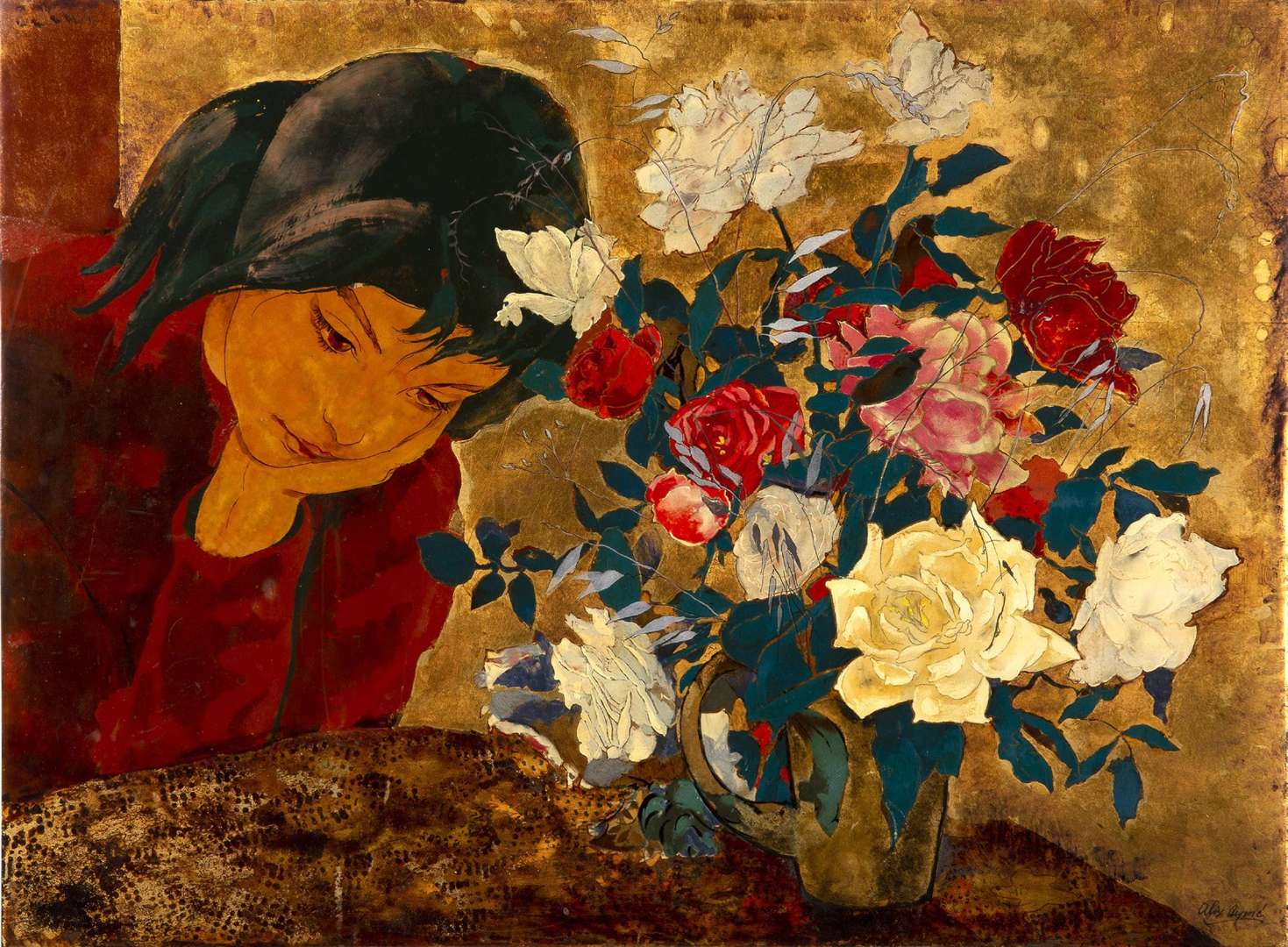
Flowers
Oil on canvas, signed lower left
101 x 65.5 cm - 39 3/4 x 25 3/4 in.
Oil on canvas, signed lower left
Provenance:
Wally F Galleries, New York, Inv. no. 42266
Private collection, USA (acquired from previous owner)
Private collection
Good condition
General good condition
The legacy of Pierre Bonnard and Henri Matisse is essential to Lê Phô's career. Portraits of these two artists hung in his studio. He considers them to be the true guardians of his art. The presence of Matisse's name on this canvas is not insignificant, as this tribute testifies to his admiration for the Fauvist painter.
The two artists met in 1943 in Vence. Their exchanges marked the beginning of a new aesthetic and artistic reflection for Lê Phô. The painter was quickly influenced by Post-Impressionist art, adopting its main characteristics and blending them with a personal, Vietnamese aesthetic.
His palette became lighter, and broad flat tints of color were increasingly present in his canvases. The transcription of light evolves thanks to dazzling colors and is intimately linked to the emotion he wishes to evoke. He is aware of its importance when contemplating a work of art. As a result, Lê Phô leaves more room for the effects of light and the liveliness of his touch, as in the porcelain gu vase and the anemone petals. For example, the white flowers are revealed in a gradation ranging from mother-of-pearl to light pink, while the darker flowers are suggested by more dynamic strokes.
-
The legacy of Pierre Bonnard and Henri Matisse is essential to Lê Phô's career. Portraits of these two artists hung in his studio. He considers them to be the true guardians of his art. The presence of Matisse's name on this canvas is not insignificant, as this tribute testifies to his admiration for the Fauvist painter.
The two artists met in 1943 in Vence. Their exchanges marked the beginning of a new aesthetic and artistic reflection for Lê Phô. The painter was quickly influenced by Post-Impressionist art, adopting its main characteristics and blending them with a personal, Vietnamese aesthetic.
His palette became lighter, and broad flat tints of color were increasingly present in his canvases. The transcription of light evolves thanks to dazzling colors and is intimately linked to the emotion he wishes to evoke. He is aware of its importance when contemplating a work of art. As a result, Lê Phô leaves more room for the effects of light and the liveliness of his touch, as in the porcelain gu vase and the anemone petals. For example, the white flowers are revealed in a gradation ranging from mother-of-pearl to light pink, while the darker flowers are suggested by more dynamic strokes.
Flowers
Oil on canvas, signed lower left
101 x 65.5 cm - 39 3/4 x 25 3/4 in.
Oil on canvas, signed lower left
Provenance:
Wally F Galleries, New York, Inv. no. 42266
Private collection, USA (acquired from previous owner)
Private collection
Good condition
General good condition
The legacy of Pierre Bonnard and Henri Matisse is essential to Lê Phô's career. Portraits of these two artists hung in his studio. He considers them to be the true guardians of his art. The presence of Matisse's name on this canvas is not insignificant, as this tribute testifies to his admiration for the Fauvist painter.
The two artists met in 1943 in Vence. Their exchanges marked the beginning of a new aesthetic and artistic reflection for Lê Phô. The painter was quickly influenced by Post-Impressionist art, adopting its main characteristics and blending them with a personal, Vietnamese aesthetic.
His palette became lighter, and broad flat tints of color were increasingly present in his canvases. The transcription of light evolves thanks to dazzling colors and is intimately linked to the emotion he wishes to evoke. He is aware of its importance when contemplating a work of art. As a result, Lê Phô leaves more room for the effects of light and the liveliness of his touch, as in the porcelain gu vase and the anemone petals. For example, the white flowers are revealed in a gradation ranging from mother-of-pearl to light pink, while the darker flowers are suggested by more dynamic strokes.
-
The legacy of Pierre Bonnard and Henri Matisse is essential to Lê Phô's career. Portraits of these two artists hung in his studio. He considers them to be the true guardians of his art. The presence of Matisse's name on this canvas is not insignificant, as this tribute testifies to his admiration for the Fauvist painter.
The two artists met in 1943 in Vence. Their exchanges marked the beginning of a new aesthetic and artistic reflection for Lê Phô. The painter was quickly influenced by Post-Impressionist art, adopting its main characteristics and blending them with a personal, Vietnamese aesthetic.
His palette became lighter, and broad flat tints of color were increasingly present in his canvases. The transcription of light evolves thanks to dazzling colors and is intimately linked to the emotion he wishes to evoke. He is aware of its importance when contemplating a work of art. As a result, Lê Phô leaves more room for the effects of light and the liveliness of his touch, as in the porcelain gu vase and the anemone petals. For example, the white flowers are revealed in a gradation ranging from mother-of-pearl to light pink, while the darker flowers are suggested by more dynamic strokes.