
&w=3840&q=75)
&w=3840&q=75)
&w=3840&q=75)
&w=3840&q=75)
&w=3840&q=75)
&w=3840&q=75)
&w=3840&q=75)
&w=3840&q=75)


56
ÉCOLE MODERNE DU MILIEU DU XXE SIÈCLE
The item was sold for 390 €
Fees include commission and taxes.
ÉCOLE MODERNE DU MILIEU DU XXE SIÈCLE
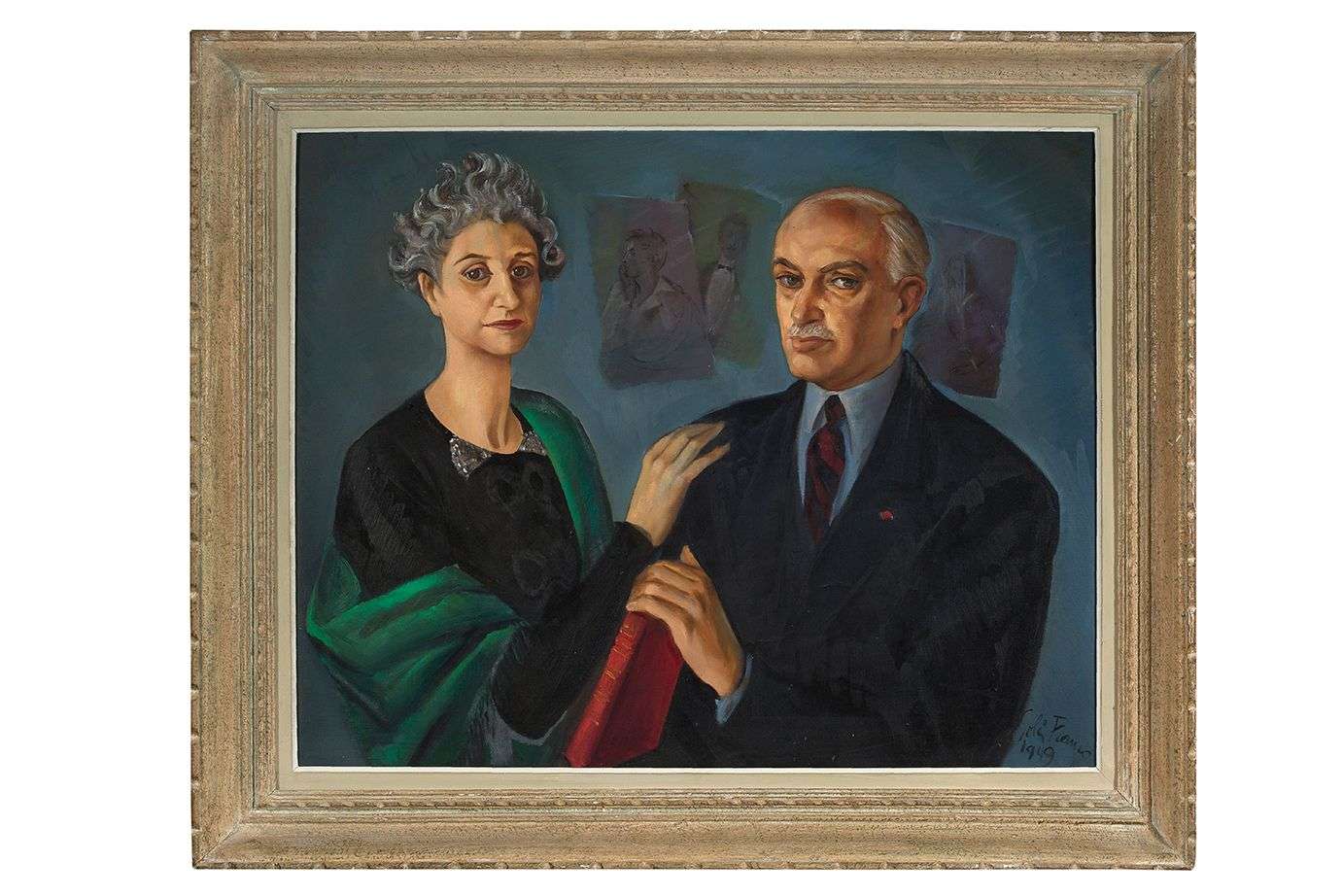
EDUARDO SOLÁ FRANCO (1915-1996)
Portrait of André Maurois and his wife, 1949
Oil on canvas
Signed and dated '1949' lower right
Oil on canvas, indistinctly signed and dated '1949' lower right
73 x 92 cm - 28 3/4 x 31 1/4 in.
Provenance
- André Maurois Collection, Neuilly-sur-Seine
- Private collection, France
André Maurois was born in Elbeuf on July 26, 1885. The son of an Alsatian drapery manufacturer who, in 1871, chose to move his factory to Elbeuf to remain French, André Maurois was educated at the Lycée de Rouen, where he was a pupil of Alain, who exerted an essential influence on his training. After winning a Prix d'Honneur in the Concours Général, the young man went on to earn a Licence de Lettres. Having completed his military service, he went on to manage the family business for ten years. An Anglophone and Anglican, André Maurois was to serve in the First World War as a liaison officer with the British army. From this experience, he was to draw two humorous novels: "Les Silences du colonel Bramble" (1918), which made him immediately famous, and "Les Discours du docteur O'Grady" (1921).
With the war over, André Maurois devoted himself fully to literature, producing an astonishingly large body of work in which novels in the psychological and moral vein: "Bernard Quesnay" (1926), "Climats" (1928), "Le Cercle de famille" (1932), "L'Instinct du bonheur" (1934), "Terre promise" (1946), "Les Roses de septembre" (1956), etc., stand side by side with tales and short stories, These are interspersed with stories and short stories: "Meïpe ou la Délivrance" (1926), "Voyage au pays des Articoles" (1928), "Le Pays des trente-six mille volontés" (1928), "Le Peseur d'âmes" (1931), "La Machine à lire les pensées" (1937), "Toujours l'inattendu arrive" (1943), "Les mondes impossibles" (1948), "Pour piano seul" (1960), as well as numerous essays: "Dialogues sur le commandement" (1924), "Études anglaises" (1927), "Sentiments et coutumes" (1934), "Un art de vivre" (1939), "Sept visages de l'amour" (1946), "Destins exemplaires" (1952), "Lecture, mon doux plaisir" (1957), "La Conversation" (1964), "Au commencement était l'action" (1966), etc.
Finally, alongside books devoted to history: "Histoire de l'Angleterre" (1937), "Histoire des États-Unis" (1943), "Histoire de France" (1947), André Maurois wrote numerous biographies, a genre in which he was the undisputed master. Not to be forgotten: "Ariel ou la vie de Shelley" (1923), "La Vie de Disraëli" (1927), "Byron" (1930), "Lyautey" (1931), "Tourgueniev" (1931), "Voltaire" (1935), "Édouard VII et son temps" (1937), "René ou la Vie de Chateaubriand" (1938), "À la recherche de Marcel Proust" (1949), "Lélia ou la Vie de George Sand" (1952), "Olympio ou la Vie de Victor Hugo" (1954), "Les Trois Dumas" (1957), "Robert and Elizabeth Browning" (1957), "La Vie de Sir Alexander Fleming" (1959), "Adrienne ou la Vie de Madame de La Fayette" (1961), "Prométhée ou la Vie de Balzac" (1965).
After losing the Bainville chair to Joseph de Pesquidoux, André Maurois was elected to the Académie française on June 23, 1938, by 19 votes in the second round, against 13 for René Pinon and 3 for Paul Hazard, replacing René Doumic. In the space of three hundred and four years, he was only the tenth holder of this chair, the XXVIth, known as the longevity chair.
Received on June 22, 1939 by André Chevrillon, he wrote in his Mémoires: "A reception at the Académie is one of France's finest ceremonies. Everything contributes to its grandeur: the age of the building, the strangeness of its form, the crampedness of the hall, the quality of the audience, the military apparatus, the traditional vocabulary and sometimes the quality of the eloquence."
André Maurois was to sit at the Académie for almost thirty years| with his exquisite courtesy and balanced judgement, he was to become one of the most influential members of the company and, in the last years of his life, acquired the reputation of being a "grand électeur".
André Maurois died on October 9, 1967.
EDUARDO SOLÁ FRANCO (1915-1996)
Portrait of André Maurois and his wife, 1949
Oil on canvas
Signed and dated '1949' lower right
Oil on canvas, indistinctly signed and dated '1949' lower right
73 x 92 cm - 28 3/4 x 31 1/4 in.
Provenance
- André Maurois Collection, Neuilly-sur-Seine
- Private collection, France
André Maurois was born in Elbeuf on July 26, 1885. The son of an Alsatian drapery manufacturer who, in 1871, chose to move his factory to Elbeuf to remain French, André Maurois was educated at the Lycée de Rouen, where he was a pupil of Alain, who exerted an essential influence on his training. After winning a Prix d'Honneur in the Concours Général, the young man went on to earn a Licence de Lettres. Having completed his military service, he went on to manage the family business for ten years. An Anglophone and Anglican, André Maurois was to serve in the First World War as a liaison officer with the British army. From this experience, he was to draw two humorous novels: "Les Silences du colonel Bramble" (1918), which made him immediately famous, and "Les Discours du docteur O'Grady" (1921).
With the war over, André Maurois devoted himself fully to literature, producing an astonishingly large body of work in which novels in the psychological and moral vein: "Bernard Quesnay" (1926), "Climats" (1928), "Le Cercle de famille" (1932), "L'Instinct du bonheur" (1934), "Terre promise" (1946), "Les Roses de septembre" (1956), etc., stand side by side with tales and short stories, These are interspersed with stories and short stories: "Meïpe ou la Délivrance" (1926), "Voyage au pays des Articoles" (1928), "Le Pays des trente-six mille volontés" (1928), "Le Peseur d'âmes" (1931), "La Machine à lire les pensées" (1937), "Toujours l'inattendu arrive" (1943), "Les mondes impossibles" (1948), "Pour piano seul" (1960), as well as numerous essays: "Dialogues sur le commandement" (1924), "Études anglaises" (1927), "Sentiments et coutumes" (1934), "Un art de vivre" (1939), "Sept visages de l'amour" (1946), "Destins exemplaires" (1952), "Lecture, mon doux plaisir" (1957), "La Conversation" (1964), "Au commencement était l'action" (1966), etc.
Finally, alongside books devoted to history: "Histoire de l'Angleterre" (1937), "Histoire des États-Unis" (1943), "Histoire de France" (1947), André Maurois wrote numerous biographies, a genre in which he was the undisputed master. Not to be forgotten: "Ariel ou la vie de Shelley" (1923), "La Vie de Disraëli" (1927), "Byron" (1930), "Lyautey" (1931), "Tourgueniev" (1931), "Voltaire" (1935), "Édouard VII et son temps" (1937), "René ou la Vie de Chateaubriand" (1938), "À la recherche de Marcel Proust" (1949), "Lélia ou la Vie de George Sand" (1952), "Olympio ou la Vie de Victor Hugo" (1954), "Les Trois Dumas" (1957), "Robert and Elizabeth Browning" (1957), "La Vie de Sir Alexander Fleming" (1959), "Adrienne ou la Vie de Madame de La Fayette" (1961), "Prométhée ou la Vie de Balzac" (1965).
After losing the Bainville chair to Joseph de Pesquidoux, André Maurois was elected to the Académie française on June 23, 1938, by 19 votes in the second round, against 13 for René Pinon and 3 for Paul Hazard, replacing René Doumic. In the space of three hundred and four years, he was only the tenth holder of this chair, the XXVIth, known as the longevity chair.
Received on June 22, 1939 by André Chevrillon, he wrote in his Mémoires: "A reception at the Académie is one of France's finest ceremonies. Everything contributes to its grandeur: the age of the building, the strangeness of its form, the crampedness of the hall, the quality of the audience, the military apparatus, the traditional vocabulary and sometimes the quality of the eloquence."
André Maurois was to sit at the Académie for almost thirty years| with his exquisite courtesy and balanced judgement, he was to become one of the most influential members of the company and, in the last years of his life, acquired the reputation of being a "grand électeur".
André Maurois died on October 9, 1967.