
&w=3840&q=75)
&w=3840&q=75)
&w=3840&q=75)
&w=3840&q=75)
&w=3840&q=75)
&w=3840&q=75)
&w=3840&q=75)
&w=3840&q=75)


24
Maurice de Vlaminck (1876-1958)
The item was sold for 28 600 €
Fees include commission and taxes.
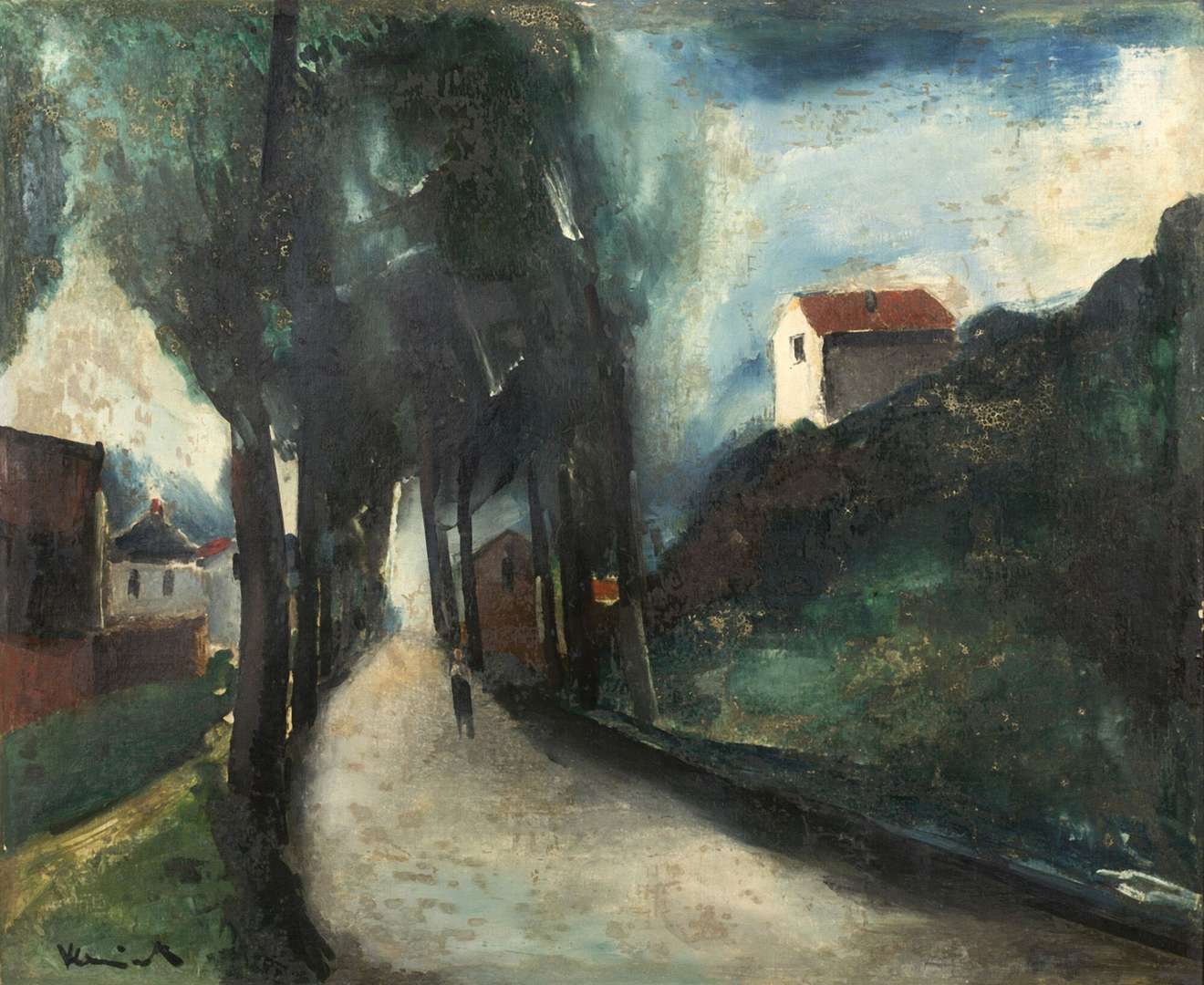
Maurice de Vlaminck (1876-1958)
The Road, circa 1912
Oil on canvas
Signed lower left, damaged and restored
Oil on canvas, signed lower left
60 x 73 cm - 23 5/8 x 28 3/4 in.
This work is included in the Archives
Vlaminck constituted on the initiative of Mrs
Godeliève de Vlaminck in collaboration with Mrs Pascale Krausz.
A certificate from the Archives Vlaminck, dated 6 March 2021, will be given to the buyer.
A certificate from Mr Robert Schmit, dated 4 June 1973, will be given to the buyer.
PROVENANCE Galerie Bernheim-Jeune, Paris
Private collection, France
EXHIBITIONS Paris, Galerie Charpentier, L'OEuvre de Vlaminck, du Fauvisme à nos jours, 1956, n°52 (described in the catalogue)
Paris, Galerie Schmit, Tableaux de Maîtres
Français 1900-1955, 16 May-16 June 1973, n°59 (reproduced in colours in the catalogue p.
BIBLIOGRAPHY Wilhelm Uhde, Picasso et la tradition française,
Édition des Quatre Chemins, Paris: 1928, p. 40 (reproduced in black and white) "Vlaminck is one of the most brilliant representatives of the young phalanx of artists who, after the logical or paradoxical assertions of neo-impressionism, set off on the wide, rocky road where the art of Cézanne led them. They claimed
Ingres. They marveled at the pictorial materialism of Van Gogh| they admired the austere style of Gauguin. In spite of the passion for research that drove some of them into the pits, they were often happy "rediscoverers" of traditions. [...] The painter Vlaminck exhibits about sixty landscapes and a few flowers. What a sounding palette! The general tone is reminiscent of muted earthenware, and one envies the joy that, in a century or two, the owner of a piece such as Port or Riverside will have, and who, carefully washing the venerable canvas, will brighten up the rich material, will make the harmonious range of blues and greens, raw or dark, explode. Moving is this painting, to which one becomes attached the deeper one penetrates into its humanity."
L'Imagier, "Au musée Galliera, Expositions diverses", in L'OEuvre, Thursday 13 February 1919, n°1239, p. 3
The Road, circa 1912
Oil on canvas
Signed lower left, damaged and restored
Oil on canvas, signed lower left
60 x 73 cm - 23 5/8 x 28 3/4 in.
This work is included in the Archives
Vlaminck constituted on the initiative of Mrs
Godeliève de Vlaminck in collaboration with Mrs Pascale Krausz.
A certificate from the Archives Vlaminck, dated 6 March 2021, will be given to the buyer.
A certificate from Mr Robert Schmit, dated 4 June 1973, will be given to the buyer.
PROVENANCE Galerie Bernheim-Jeune, Paris
Private collection, France
EXHIBITIONS Paris, Galerie Charpentier, L'OEuvre de Vlaminck, du Fauvisme à nos jours, 1956, n°52 (described in the catalogue)
Paris, Galerie Schmit, Tableaux de Maîtres
Français 1900-1955, 16 May-16 June 1973, n°59 (reproduced in colours in the catalogue p.
BIBLIOGRAPHY Wilhelm Uhde, Picasso et la tradition française,
Édition des Quatre Chemins, Paris: 1928, p. 40 (reproduced in black and white) "Vlaminck is one of the most brilliant representatives of the young phalanx of artists who, after the logical or paradoxical assertions of neo-impressionism, set off on the wide, rocky road where the art of Cézanne led them. They claimed
Ingres. They marveled at the pictorial materialism of Van Gogh| they admired the austere style of Gauguin. In spite of the passion for research that drove some of them into the pits, they were often happy "rediscoverers" of traditions. [...] The painter Vlaminck exhibits about sixty landscapes and a few flowers. What a sounding palette! The general tone is reminiscent of muted earthenware, and one envies the joy that, in a century or two, the owner of a piece such as Port or Riverside will have, and who, carefully washing the venerable canvas, will brighten up the rich material, will make the harmonious range of blues and greens, raw or dark, explode. Moving is this painting, to which one becomes attached the deeper one penetrates into its humanity."
L'Imagier, "Au musée Galliera, Expositions diverses", in L'OEuvre, Thursday 13 February 1919, n°1239, p. 3