
&w=3840&q=75)
&w=3840&q=75)
&w=3840&q=75)
&w=3840&q=75)
&w=3840&q=75)
&w=3840&q=75)


49
1934 ROLLS-ROYCE PHANTOM II CONTINENTAL CABRIOLET 3-POSITIONS FERNANDEZ &
Estimate150 000 - 200 000 €
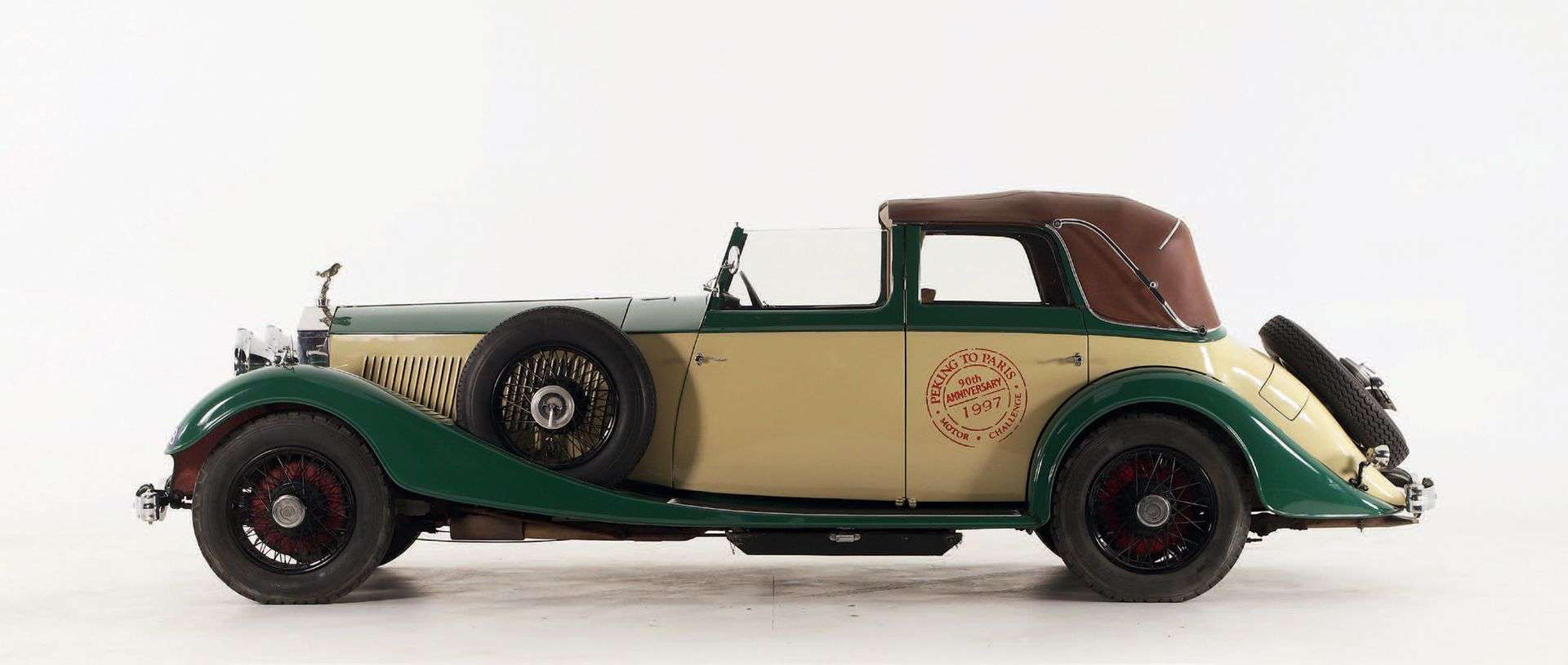
1934 ROLLS-ROYCE PHANTOM II CONTINENTAL CABRIOLET 3-POSITIONS FERNANDEZ & DARRIN
Rediscovery of this very rare Fernandez & Darrin bodywork wrongly attributed to Kellner for so many years
Very nice presentation and perfect working condition
Clear factory data sheet and history
Dutch road registration
Chassis n°: 99RY - Engine n°: SU15
In 1906, at the Olympia Hall Motor Show in London, Henry Royce, a self-taught mechanic of genius, and Charles Rolls, an aristocratic engineer with a passion for mechanics, presented the most famous of all their creations, the 40/50 HP, today known as the Silver Ghost, in reference to the car chassis number #AX201 painted in silver grey. It is the first of the "big" Rolls-Royce cars. Rolls-Royce cars. Manufactured in 7,874 units, it is the car that will establish the reputation of the venerable English firm throughout the world, at a time when the British empire dominates the world. Its 6-cylinder engine (with a capacity of 7 litres, then 7.4 litres from 1910 onwards) offered a level of technical reliability never before seen in a car. Its replacement, the New Phantom, appeared in 1925 and was manufactured in England, but also in the United States where it competed with the most prestigious American cars of the time. Its new 6-cylinder, 7.7-litre engine was incredibly quiet, thanks to an innovative distribution system that generated no vibrations. It was produced in 2,269 units in England until 1929, and 1,243 units in the United States until 1931. Its replacement, the Phantom II (the New Phantom is retroactively named Phantom I), is marketed from 1929. It had the same 7.7-litre 6-cylinder engine as its big sister, but had a stiffer chassis and better running gear. In 1931, based on this Phantom II, Henry Royce built a short-chassis version (everything is relative), named Continental for the most sporty drivers willing to take the wheel themselves... Almost shocking, since until then Rolls-Royce had long chassis and separate driving positions for salaried drivers. With an engine that had a prepared cylinder head and a higher compression ratio, the Continental allowed its driver to flirt with 170 km/h, hardly believable for such an imposing car. In the early 1930s, it was the best car in the world, also thanks to its adjustable suspension, synchronized gearbox and power braking. Out of 1,767 Phantom IIs, only 281 were Continental. In 1935, the Phantom III, now equipped with a V12 engine, ends the beautiful history of the luxurious and inimitable "big" cars Rolls-Royce 6-cylinders. This Phantom II is therefore one of the very few Continental cars with a short chassis. It was ordered new by Juliette and Jacques Violet, a very prominent couple in Paris during the Roaring Twenties. He was the heir to the Byrhh aperitifs, a drink which, in the mid-1930s, accounted for over 50% of the aperitif market! She is the granddaughter of Edmond Bartissol, an engineer who took part in the digging of the Suez Canal, then a member of parliament for the Pyrénées-Orientales (Jacques Violet's home region) and creator of an aperitif that bears his name. Juliette and Jacques Violet, who divide their time between a sumptuous mansion on the very chic Avenue Foch and the Villa Palauda in Thuir (in fact, a palace), have a bit of a folie de grandeur. They receive the Tout-Paris at their table, are among the best customers of the very select jeweller Van Cleef & Arpels and go for example to Maxim's with two Rolls-Royces, in case one of them breaks down, according to the legend... The registers of the British factory indicate indeed that they placed an order in 1932 for two Phantom IIs sent in chassis to Fernandez & Darrin to be bodied as a Coupe de Ville. And the Phantom II which illustrates these pages, considered until then - wrongly! - as a Kellner convertible, is in fact the third Phantom II of the Violet couple bodied by Fernandez & Darrin! The factory records are very clear on this point, as they indicate that chassis #99RY was ordered by "Mr." J. Violet (January 24, 1934), via FBA Ltd (in fact the French importer Franco-Britannic Autos Limited), and delivered to "Fernandez" on April 19, 1934, after having crossed the Channel on the "SS Volga" (steam ship) (steam ship). The car, as it was built as an "inside drive 4-doors completely collaspsible (in fact a kind of 3-positions convertible), will be tested by the FBA Ltd only on March 21, 1935, and the delay of the bodywork at Fernandez could explain the impatience of the Violet... who seem to have resold #99RY, exported to England that year, and registered BYM
Rediscovery of this very rare Fernandez & Darrin bodywork wrongly attributed to Kellner for so many years
Very nice presentation and perfect working condition
Clear factory data sheet and history
Dutch road registration
Chassis n°: 99RY - Engine n°: SU15
In 1906, at the Olympia Hall Motor Show in London, Henry Royce, a self-taught mechanic of genius, and Charles Rolls, an aristocratic engineer with a passion for mechanics, presented the most famous of all their creations, the 40/50 HP, today known as the Silver Ghost, in reference to the car chassis number #AX201 painted in silver grey. It is the first of the "big" Rolls-Royce cars. Rolls-Royce cars. Manufactured in 7,874 units, it is the car that will establish the reputation of the venerable English firm throughout the world, at a time when the British empire dominates the world. Its 6-cylinder engine (with a capacity of 7 litres, then 7.4 litres from 1910 onwards) offered a level of technical reliability never before seen in a car. Its replacement, the New Phantom, appeared in 1925 and was manufactured in England, but also in the United States where it competed with the most prestigious American cars of the time. Its new 6-cylinder, 7.7-litre engine was incredibly quiet, thanks to an innovative distribution system that generated no vibrations. It was produced in 2,269 units in England until 1929, and 1,243 units in the United States until 1931. Its replacement, the Phantom II (the New Phantom is retroactively named Phantom I), is marketed from 1929. It had the same 7.7-litre 6-cylinder engine as its big sister, but had a stiffer chassis and better running gear. In 1931, based on this Phantom II, Henry Royce built a short-chassis version (everything is relative), named Continental for the most sporty drivers willing to take the wheel themselves... Almost shocking, since until then Rolls-Royce had long chassis and separate driving positions for salaried drivers. With an engine that had a prepared cylinder head and a higher compression ratio, the Continental allowed its driver to flirt with 170 km/h, hardly believable for such an imposing car. In the early 1930s, it was the best car in the world, also thanks to its adjustable suspension, synchronized gearbox and power braking. Out of 1,767 Phantom IIs, only 281 were Continental. In 1935, the Phantom III, now equipped with a V12 engine, ends the beautiful history of the luxurious and inimitable "big" cars Rolls-Royce 6-cylinders. This Phantom II is therefore one of the very few Continental cars with a short chassis. It was ordered new by Juliette and Jacques Violet, a very prominent couple in Paris during the Roaring Twenties. He was the heir to the Byrhh aperitifs, a drink which, in the mid-1930s, accounted for over 50% of the aperitif market! She is the granddaughter of Edmond Bartissol, an engineer who took part in the digging of the Suez Canal, then a member of parliament for the Pyrénées-Orientales (Jacques Violet's home region) and creator of an aperitif that bears his name. Juliette and Jacques Violet, who divide their time between a sumptuous mansion on the very chic Avenue Foch and the Villa Palauda in Thuir (in fact, a palace), have a bit of a folie de grandeur. They receive the Tout-Paris at their table, are among the best customers of the very select jeweller Van Cleef & Arpels and go for example to Maxim's with two Rolls-Royces, in case one of them breaks down, according to the legend... The registers of the British factory indicate indeed that they placed an order in 1932 for two Phantom IIs sent in chassis to Fernandez & Darrin to be bodied as a Coupe de Ville. And the Phantom II which illustrates these pages, considered until then - wrongly! - as a Kellner convertible, is in fact the third Phantom II of the Violet couple bodied by Fernandez & Darrin! The factory records are very clear on this point, as they indicate that chassis #99RY was ordered by "Mr." J. Violet (January 24, 1934), via FBA Ltd (in fact the French importer Franco-Britannic Autos Limited), and delivered to "Fernandez" on April 19, 1934, after having crossed the Channel on the "SS Volga" (steam ship) (steam ship). The car, as it was built as an "inside drive 4-doors completely collaspsible (in fact a kind of 3-positions convertible), will be tested by the FBA Ltd only on March 21, 1935, and the delay of the bodywork at Fernandez could explain the impatience of the Violet... who seem to have resold #99RY, exported to England that year, and registered BYM