
&w=3840&q=75)
&w=3840&q=75)
&w=3840&q=75)
&w=3840&q=75)
&w=3840&q=75)
&w=3840&q=75)


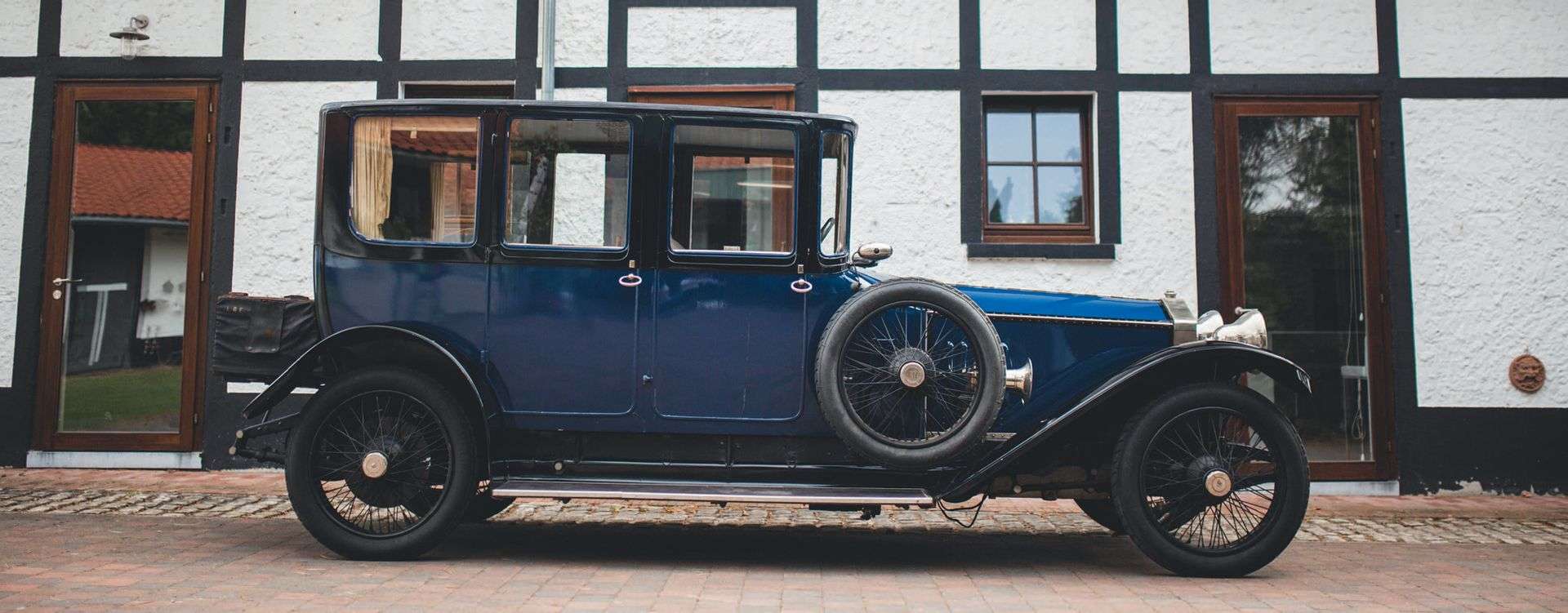
1913 SIZAIRE-BERWICK CARROSSERIE LABOURDETTE
Exceptional state of preservation and singular history. Unique model and the oldest Sizaire-Berwick on record
First owner from 1913 to 1989, never offered for sale since its origin
French competitor of the Rolls-Royce Silver Ghost of the time
Belgian circulation title
Chassis n°: 105 E (Series 6 - Type Y)
Labourdette bodywork n° : 3009
The name of Frederick William Berwick comes up from time to time in the history of the London car trade. Indeed, this strong personality was well known and respected for his business acumen and his ability to achieve the impossible. In 1912, he ran his car company, F.W. Berwick and Co. Ltd. in the heart of London. He was ambitious and had the support of Alexander Keiller of Dundee Marmalade fame, a man of great wealth and a fast-living life who had owned several Bugattis in his lifetime, including a 35 TC (#4849 - NAE 194) which was later owned by the actor Charles Mortimer. Berwick had strong ideas about what constituted a good car, and wanted to see them put into practice. On the other side of the Channel, the Sizaire brothers (Maurice and Georges), aided by their friend Louis Naudin, were trailblazers with an enviable international reputation for both Georges' driving skills and for introducing and applying principles that were not even suspected by others at the time. These innovations included fully compensated servo brakes, rack and pinion steering with automatic wear adjustment, four-wheel independent suspension, suspension using unequal length wishbones and the use of ball joints for suspension and steering components! We are only in the 1910's remember!
As a good matchmaker, the famous Paris-based motoring journalist W.F. Bradley organised the meeting in 1912 between Berwick and the Sizaire brothers. The discussions were quickly concluded with the idea of designing a prestigious car that would have the audacity to outdo the pinnacle of British production at the time, the Rolls-Royce Silver Ghost. On June 20, 1913, the company Sizaire-Berwick (France) Limited was registered and domiciled in Piccadilly, England with a factory at 43 rue Louis Blanc in Courbevoie. Manufactured in France, 80% of the new cars were then sent to a small factory in London, in chassis by road, driven by conveyors from the factory to be bodied overseas, the rest being reserved for the French market. The gamble paid off and within two years 139 cars were sold with a power unit designed entirely by Maurice Sizaire, a perfectly balanced 4070cc one-piece four-cylinder developing 60hp. Equally luxurious and statuesque, more economical, less expensive and equally powerful, the Sizaire-Berwick achieved all the objectives set for it... But at the outbreak of the Great War, all the finished chassis were transported to London, where most of them were bodied as armoured cars for the Royal Naval Air Service, suffering the sad fate of requisitioned cars... The car we present is therefore a real exception in every respect and owes its survival to one man, J. Lefranc, its first owner from 1913 to 1989... As incredible as it may seem, this car is known as the oldest SizaireBerwik in the world. Built by Labourdette, it is a unique model and has known only two owners during its life. Never restored, its history since its conception, its preservation and until its arrival in 1990 at the Museum of Reims is exceptional. Hervé Charbonneaux came across it in 1968 in the garage of the castle of its first owner, an industrialist from Haute Marne. The bodywork had been placed next to the chassis to avoid the car being requisitioned during the war. Numerous photos from this period are included in the file and show the condition of the chassis and the bodywork. At Hervé's initiative, it will be presented at the 1971 edition of the Motor Show during an exhibition of 80 French cars. It was displayed as a complete chassis, its body ready to be reassembled. The latter had been specially made at the request of its owner as a travel sedan at Labourdette, which was very rare at the time and much more expensive to manufacture. One must imagine that cars at that time were not yet closed, but open and often without a top. This vehicle was very modern for its time with a starter and electric lighting, we are in 1913, in a period of transition as regards construction which prefigures the great evolutions of the future.
Exceptional state of preservation and singular history. Unique model and the oldest Sizaire-Berwick on record
First owner from 1913 to 1989, never offered for sale since its origin
French competitor of the Rolls-Royce Silver Ghost of the time
Belgian circulation title
Chassis n°: 105 E (Series 6 - Type Y)
Labourdette bodywork n° : 3009
The name of Frederick William Berwick comes up from time to time in the history of the London car trade. Indeed, this strong personality was well known and respected for his business acumen and his ability to achieve the impossible. In 1912, he ran his car company, F.W. Berwick and Co. Ltd. in the heart of London. He was ambitious and had the support of Alexander Keiller of Dundee Marmalade fame, a man of great wealth and a fast-living life who had owned several Bugattis in his lifetime, including a 35 TC (#4849 - NAE 194) which was later owned by the actor Charles Mortimer. Berwick had strong ideas about what constituted a good car, and wanted to see them put into practice. On the other side of the Channel, the Sizaire brothers (Maurice and Georges), aided by their friend Louis Naudin, were trailblazers with an enviable international reputation for both Georges' driving skills and for introducing and applying principles that were not even suspected by others at the time. These innovations included fully compensated servo brakes, rack and pinion steering with automatic wear adjustment, four-wheel independent suspension, suspension using unequal length wishbones and the use of ball joints for suspension and steering components! We are only in the 1910's remember!
As a good matchmaker, the famous Paris-based motoring journalist W.F. Bradley organised the meeting in 1912 between Berwick and the Sizaire brothers. The discussions were quickly concluded with the idea of designing a prestigious car that would have the audacity to outdo the pinnacle of British production at the time, the Rolls-Royce Silver Ghost. On June 20, 1913, the company Sizaire-Berwick (France) Limited was registered and domiciled in Piccadilly, England with a factory at 43 rue Louis Blanc in Courbevoie. Manufactured in France, 80% of the new cars were then sent to a small factory in London, in chassis by road, driven by conveyors from the factory to be bodied overseas, the rest being reserved for the French market. The gamble paid off and within two years 139 cars were sold with a power unit designed entirely by Maurice Sizaire, a perfectly balanced 4070cc one-piece four-cylinder developing 60hp. Equally luxurious and statuesque, more economical, less expensive and equally powerful, the Sizaire-Berwick achieved all the objectives set for it... But at the outbreak of the Great War, all the finished chassis were transported to London, where most of them were bodied as armoured cars for the Royal Naval Air Service, suffering the sad fate of requisitioned cars... The car we present is therefore a real exception in every respect and owes its survival to one man, J. Lefranc, its first owner from 1913 to 1989... As incredible as it may seem, this car is known as the oldest SizaireBerwik in the world. Built by Labourdette, it is a unique model and has known only two owners during its life. Never restored, its history since its conception, its preservation and until its arrival in 1990 at the Museum of Reims is exceptional. Hervé Charbonneaux came across it in 1968 in the garage of the castle of its first owner, an industrialist from Haute Marne. The bodywork had been placed next to the chassis to avoid the car being requisitioned during the war. Numerous photos from this period are included in the file and show the condition of the chassis and the bodywork. At Hervé's initiative, it will be presented at the 1971 edition of the Motor Show during an exhibition of 80 French cars. It was displayed as a complete chassis, its body ready to be reassembled. The latter had been specially made at the request of its owner as a travel sedan at Labourdette, which was very rare at the time and much more expensive to manufacture. One must imagine that cars at that time were not yet closed, but open and often without a top. This vehicle was very modern for its time with a starter and electric lighting, we are in 1913, in a period of transition as regards construction which prefigures the great evolutions of the future.