
&w=3840&q=75)
&w=3840&q=75)
&w=3840&q=75)
&w=3840&q=75)
&w=3840&q=75)
&w=3840&q=75)


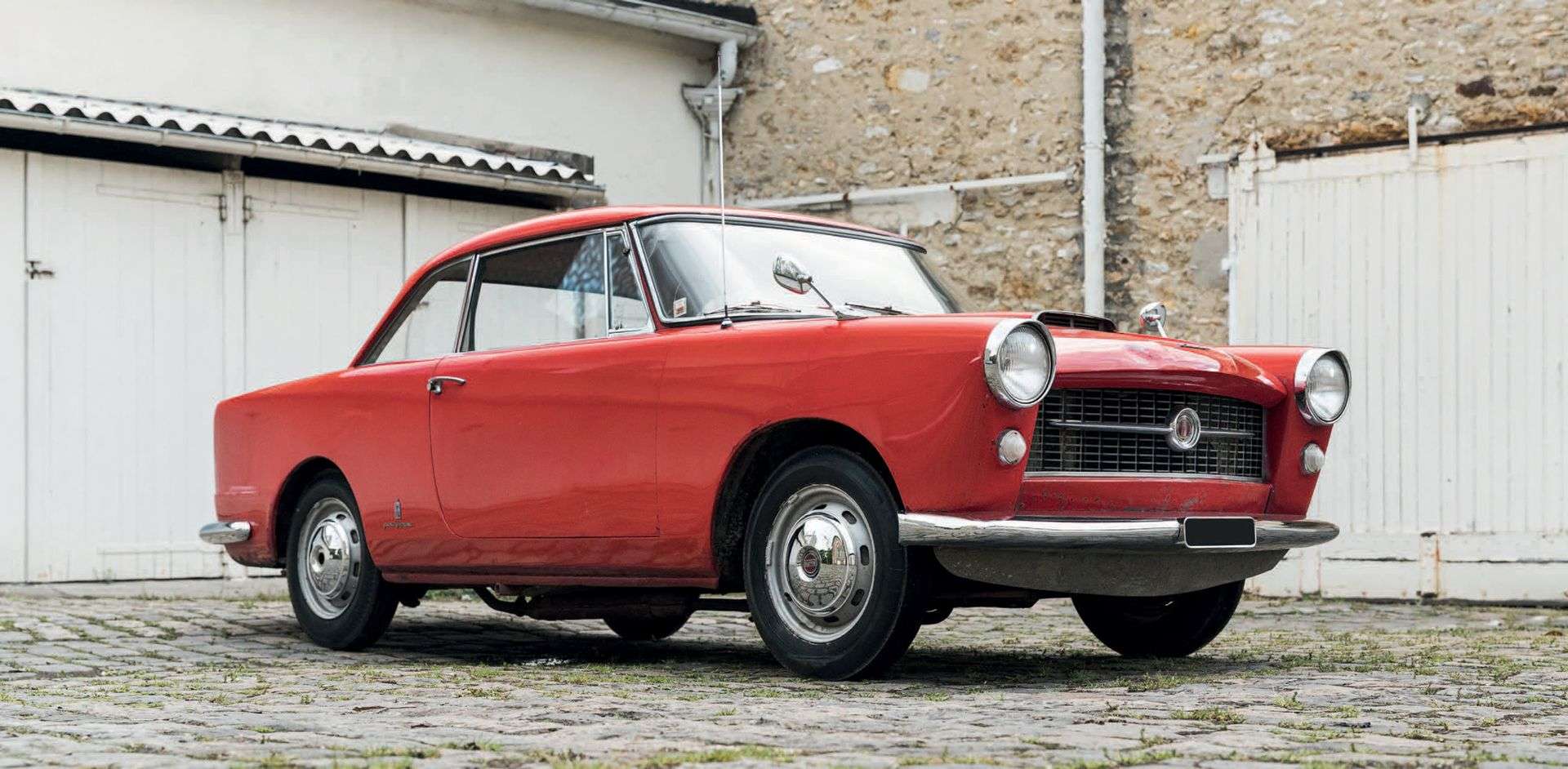
1958 FIAT 1200 PININ FARINA
Rolling car but to be restored
One of the 19 built
Mechanics of great series
Swedish road registration
Chassis n° : 423 052
At the 1957 Turin Motor Show, Fiat presents the 1200 Granluce, meant to replace the 1100-103, launched in 1953 and which was a huge success until the middle of the 1960s (and even until 2000, with the Indian-made Premier Padmini!). It was also intended to replace the high-performance and luxurious Turismo Veloce (1100-103 TV). Equipped with a 1,221 cc engine developing 55 hp, its bodywork is closely derived from the 1100-103 with a modernized roof. While the prototype had "suicide" front doors, the production version had four doors that opened in the "normal direction". Around 400,000 Fiat 1200s were produced up to 1960, with various body styles, including the very elegant Trasformabile designed by Fabio Luigi Rapi, head of the sezione carrozzerie speciali at Fiat, initially for the 1100-103 TV. In 1959, the Fiat 1200 Trasformabile was replaced by the 1200 spider bodied by Pinin Farina. The Turin-based coachbuilder, located a few blocks away from the Fiat factory (Gian-Battista Pinin's father, Joseph, was a Fiat employee), had close relations with the Italian giant and had already worked on a large number of Fiat 6 C 1500s and 1100 S berlinettes, and as early as 1953 on the Fiat 1100 TV. In 1957, Pinin Farina presented a 4-seat coach (with quarter windows) and a 2-seat coupé at the Geneva and Turin Motor Shows, available on either the 1100 or 1200 base. Their innovative design, close to the Lancia Appia, Flaminia and Ferrari 250 GT coaches and coupes, would later be used on the Ferrari 250 GTE and, on a larger scale, on the Peugeot 404 coupé. A 2-seater prototype was bought by Enzo Ferrari himself, shortened and reworked by Carrozzeria Scaglietti di Modena, equipped with Dunlop disc brakes and the 854 engine, to become the prototype of the ASA 1000 GT, the famous Ferrarina. According to the experts, nineteen Fiat 1100 and 1200 Pinin Farina were built as 2 and 4-seater coupes with this design.
The car shown here is one of these very rare Pinin Farina versions, built as a 4-seater coupé on a Fiat 1200 base. According to the brochure of the time, "the most important difference" with the 2-seater coach "is in the roof which, being larger, allows interior space for four people. The front seats are separate and independent: when the backrests are folded forward the seats themselves move forward automatically to allow easier access to the rear seats." The bodywork, like the doors, is made of steel, except for the rear trunk... made of fiberglass! The dashboard, "special, is painted in anti-reflex varnish." Chassis #423 052 was sold new in Sweden. Its second owner, Mr Nicklasson, passed a last technical check-up in 1970, before storing the car for several decades. Originally light blue, it was repainted in red probably before its long immobilization. The car, rediscovered in 2017, was restarted just before the sale. It is now in an advanced state of use, and although it is still running, it will need a restoration worthy of its rarity and historical interest.
Rolling car but to be restored
One of the 19 built
Mechanics of great series
Swedish road registration
Chassis n° : 423 052
At the 1957 Turin Motor Show, Fiat presents the 1200 Granluce, meant to replace the 1100-103, launched in 1953 and which was a huge success until the middle of the 1960s (and even until 2000, with the Indian-made Premier Padmini!). It was also intended to replace the high-performance and luxurious Turismo Veloce (1100-103 TV). Equipped with a 1,221 cc engine developing 55 hp, its bodywork is closely derived from the 1100-103 with a modernized roof. While the prototype had "suicide" front doors, the production version had four doors that opened in the "normal direction". Around 400,000 Fiat 1200s were produced up to 1960, with various body styles, including the very elegant Trasformabile designed by Fabio Luigi Rapi, head of the sezione carrozzerie speciali at Fiat, initially for the 1100-103 TV. In 1959, the Fiat 1200 Trasformabile was replaced by the 1200 spider bodied by Pinin Farina. The Turin-based coachbuilder, located a few blocks away from the Fiat factory (Gian-Battista Pinin's father, Joseph, was a Fiat employee), had close relations with the Italian giant and had already worked on a large number of Fiat 6 C 1500s and 1100 S berlinettes, and as early as 1953 on the Fiat 1100 TV. In 1957, Pinin Farina presented a 4-seat coach (with quarter windows) and a 2-seat coupé at the Geneva and Turin Motor Shows, available on either the 1100 or 1200 base. Their innovative design, close to the Lancia Appia, Flaminia and Ferrari 250 GT coaches and coupes, would later be used on the Ferrari 250 GTE and, on a larger scale, on the Peugeot 404 coupé. A 2-seater prototype was bought by Enzo Ferrari himself, shortened and reworked by Carrozzeria Scaglietti di Modena, equipped with Dunlop disc brakes and the 854 engine, to become the prototype of the ASA 1000 GT, the famous Ferrarina. According to the experts, nineteen Fiat 1100 and 1200 Pinin Farina were built as 2 and 4-seater coupes with this design.
The car shown here is one of these very rare Pinin Farina versions, built as a 4-seater coupé on a Fiat 1200 base. According to the brochure of the time, "the most important difference" with the 2-seater coach "is in the roof which, being larger, allows interior space for four people. The front seats are separate and independent: when the backrests are folded forward the seats themselves move forward automatically to allow easier access to the rear seats." The bodywork, like the doors, is made of steel, except for the rear trunk... made of fiberglass! The dashboard, "special, is painted in anti-reflex varnish." Chassis #423 052 was sold new in Sweden. Its second owner, Mr Nicklasson, passed a last technical check-up in 1970, before storing the car for several decades. Originally light blue, it was repainted in red probably before its long immobilization. The car, rediscovered in 2017, was restarted just before the sale. It is now in an advanced state of use, and although it is still running, it will need a restoration worthy of its rarity and historical interest.