
&w=3840&q=75)
&w=3840&q=75)
&w=3840&q=75)
&w=3840&q=75)
&w=3840&q=75)
&w=3840&q=75)
&w=3840&q=75)
&w=3840&q=75)


7
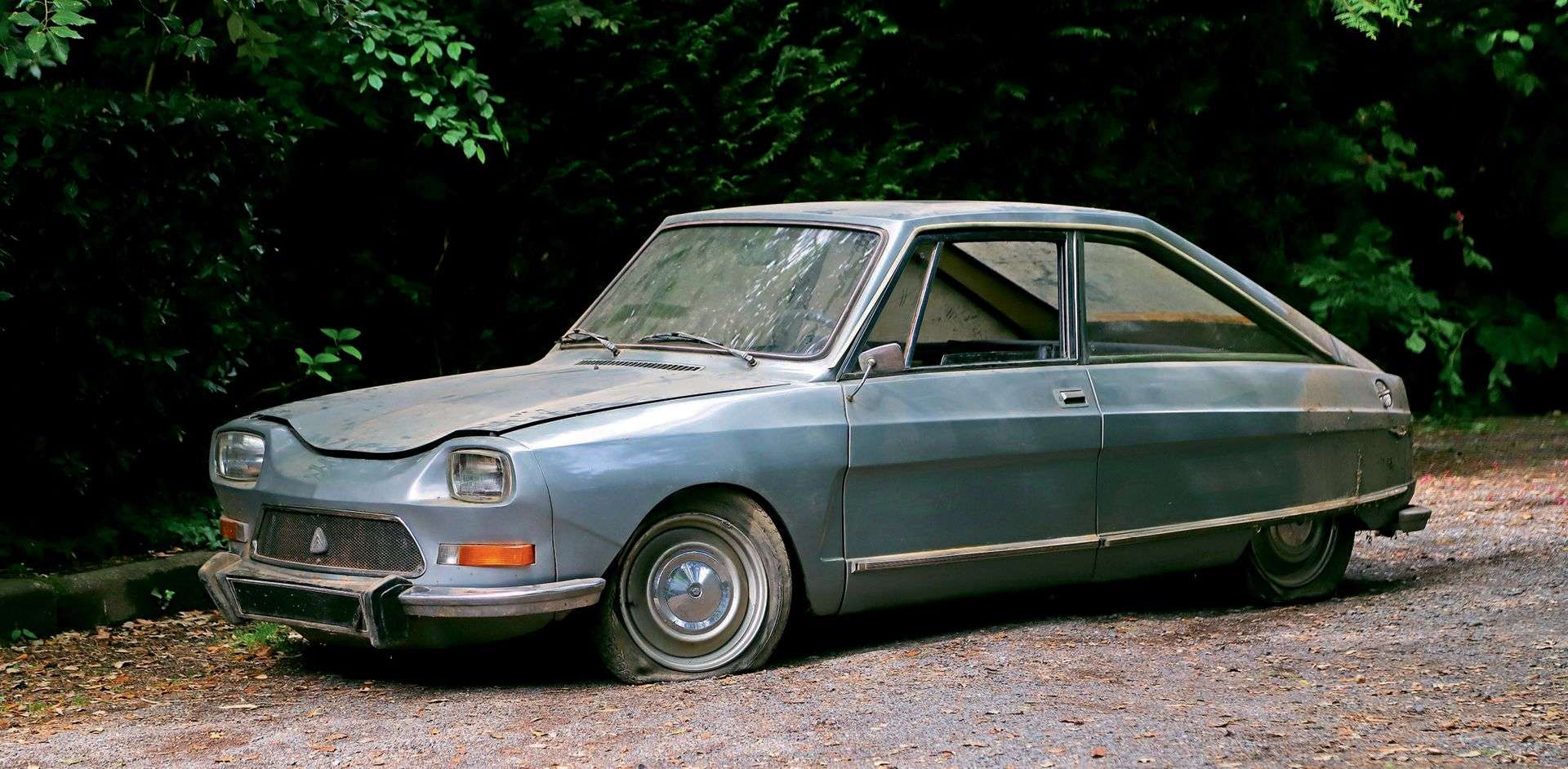
CIRCA 1969 CITROËN M35
The item was sold for 21 032 €
Fees include commission and taxes.
CIRCA 1969 CITROËN M35
Interesting history
Very rare prototype
Nice state of preservation
No registration document
Chassis n°: 00 EA 0061
Sold without technical control
In the 1960s, Citroën, a major French manufacturer, wanted to establish its domination. In 1965 the historic firm of the "quai de Javel" took control of Panhard, in the hope of using its skills and, above all, its industrial tool, since the oldest of the French brands disappeared two years later. In 1968, the firm with the double chevrons buys the Italian manufacturer of sports cars Maserati, and produces the SM, arrived in a bad economic situation. The trident brand was sold to Alejandro de Tomaso in 1975. But in 1967, Citroën's finances are still good, so its managers sign a partnership with the German NSU to build twin-rotor Wankel engines. In 1969, NSU went bankrupt and was bought out by Volkswagen for a few marks, and the French manufacturer was forced to continue the Wankel adventure alone. To confirm its strategic choices, Citroën decides to fit its 995 cc, 49 bhp Comotor engine (with a single rotor) in a prototype built on the basis of the Ami 8 by the coachbuilder Heuliez, with a very futuristic 2-door coupé bodywork with a fastback-type rear end, and an in-house hydropneumatic suspension. Citroën decides to build 500 prototypes and give them to its most loyal customers for long-term testing, in order to test the engine in real use and decide on its mass production. The rotary engine proved to be very efficient, revving up so easily that an audible alarm had to be installed when the engine speed exceeded 7,000 rpm. On the other hand, it is unreliable and difficult to start. The result was so disappointing that Citroën recalled the M35s to... destroy them, and avoid bad publicity. Out of the 500 M35s that Citroën claims to have built (each car had a number written on the wing to validate this figure), it seems that only 267 really saw the light of day. And only about 30 of them would have survived until today, having miraculously escaped the scrap heap. The M35 chassis number 00 EA 0061 was offered to Mr H., a very good customer of the brand, in the early 1970's, maybe at the very moment the cars were recalled to be destroyed, since he took delivery of it at the Citroën factory in Aulnay, and was given it... without a registration document. He was even stopped by the maréchaussée, more intrigued by the car than by its papers, while driving it back to his native Maine-et-Loire. When he arrived at his destination, Mr. H. put the M35 back in a shed, where it was not brought out until May 2021, after fifty years of sleep. The car, although stored in less than optimal conditions, shows up to us in a rather incredible state, with a particularly sound body (in the model's own metallic grey colour), chassis and interior (including the superb seats, reminiscent of the SM). The car was put on the ground because of a non-functioning hydropneumatic suspension, and some parts, including the exhaust system, have been damaged by time. The specific sticker stating that "This M35 prototype with rotary piston engine is undergoing long-term testing in the hands of a Citroën customer" is still present on the rear window. For practical purposes, new tires have been fitted since the catalogue photos and the car has been cleaned.
Interesting history
Very rare prototype
Nice state of preservation
No registration document
Chassis n°: 00 EA 0061
Sold without technical control
In the 1960s, Citroën, a major French manufacturer, wanted to establish its domination. In 1965 the historic firm of the "quai de Javel" took control of Panhard, in the hope of using its skills and, above all, its industrial tool, since the oldest of the French brands disappeared two years later. In 1968, the firm with the double chevrons buys the Italian manufacturer of sports cars Maserati, and produces the SM, arrived in a bad economic situation. The trident brand was sold to Alejandro de Tomaso in 1975. But in 1967, Citroën's finances are still good, so its managers sign a partnership with the German NSU to build twin-rotor Wankel engines. In 1969, NSU went bankrupt and was bought out by Volkswagen for a few marks, and the French manufacturer was forced to continue the Wankel adventure alone. To confirm its strategic choices, Citroën decides to fit its 995 cc, 49 bhp Comotor engine (with a single rotor) in a prototype built on the basis of the Ami 8 by the coachbuilder Heuliez, with a very futuristic 2-door coupé bodywork with a fastback-type rear end, and an in-house hydropneumatic suspension. Citroën decides to build 500 prototypes and give them to its most loyal customers for long-term testing, in order to test the engine in real use and decide on its mass production. The rotary engine proved to be very efficient, revving up so easily that an audible alarm had to be installed when the engine speed exceeded 7,000 rpm. On the other hand, it is unreliable and difficult to start. The result was so disappointing that Citroën recalled the M35s to... destroy them, and avoid bad publicity. Out of the 500 M35s that Citroën claims to have built (each car had a number written on the wing to validate this figure), it seems that only 267 really saw the light of day. And only about 30 of them would have survived until today, having miraculously escaped the scrap heap. The M35 chassis number 00 EA 0061 was offered to Mr H., a very good customer of the brand, in the early 1970's, maybe at the very moment the cars were recalled to be destroyed, since he took delivery of it at the Citroën factory in Aulnay, and was given it... without a registration document. He was even stopped by the maréchaussée, more intrigued by the car than by its papers, while driving it back to his native Maine-et-Loire. When he arrived at his destination, Mr. H. put the M35 back in a shed, where it was not brought out until May 2021, after fifty years of sleep. The car, although stored in less than optimal conditions, shows up to us in a rather incredible state, with a particularly sound body (in the model's own metallic grey colour), chassis and interior (including the superb seats, reminiscent of the SM). The car was put on the ground because of a non-functioning hydropneumatic suspension, and some parts, including the exhaust system, have been damaged by time. The specific sticker stating that "This M35 prototype with rotary piston engine is undergoing long-term testing in the hands of a Citroën customer" is still present on the rear window. For practical purposes, new tires have been fitted since the catalogue photos and the car has been cleaned.