
&w=3840&q=75)
&w=3840&q=75)
&w=3840&q=75)
&w=3840&q=75)
&w=3840&q=75)
&w=3840&q=75)
&w=3840&q=75)
&w=3840&q=75)


6
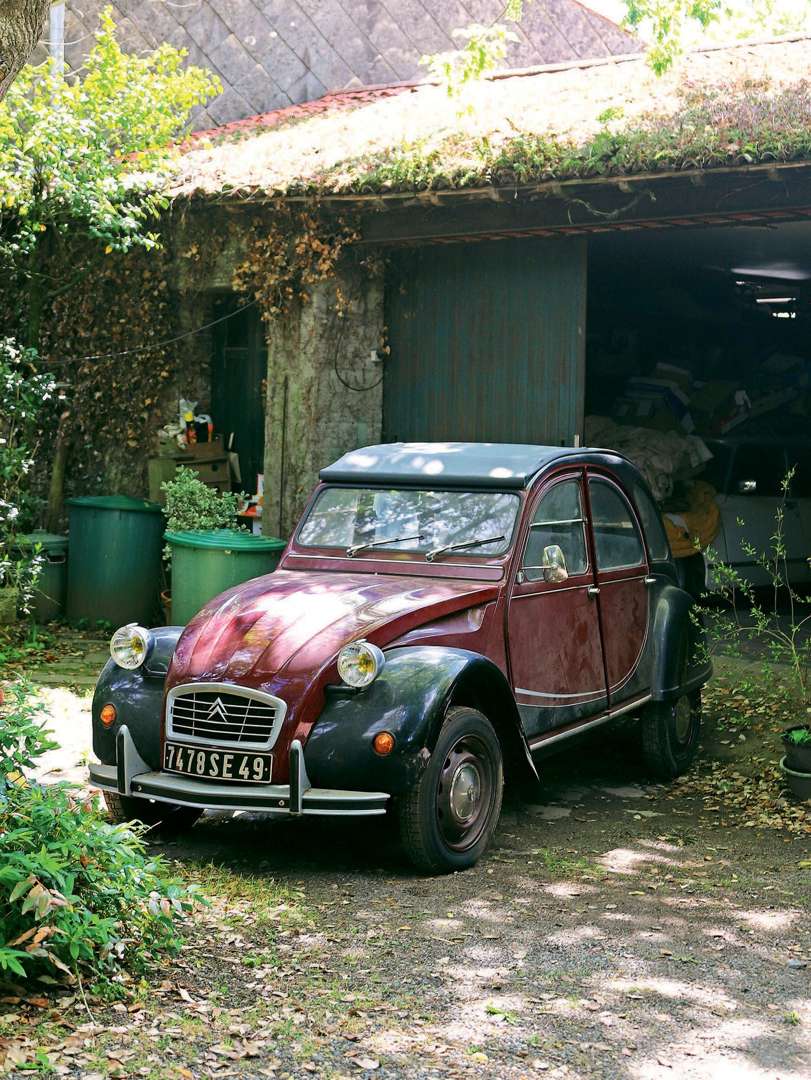
1982 CITROËN 2 CV CHARLESTON 39 KM AU COMPTEUR
The item was sold for 48 000 €
Fees include commission and taxes.
1982 CITROËN 2 CV CHARLESTON 39 KM AU COMPTEUR
Incredible history
Unique configuration
Brand new condition
French registration
Chassis number: VF7AZKA0087KA0983
Sold without technical control
In 1935, Citroën, bankrupt, is bought by the Michelin family, who made their fortune with their tyre factory. Gone is André Citroën, the new boss is called Pierre Michelin. But when he dies in a car accident, Pierre-Jules Boulanger, an engineer by training and until then director of commercial services at Michelin, is called in. In order to turn the company around, he was forced to lay off some of the staff, but also to put an end to some interesting projects, including the legendary Traction 22 CV with a V8 engine. As part of this rationalisation policy, he gets his teams to work on a car intended for a rural and hard-working population with few resources. The specifications were simple: the future car had to have four seats and be able to carry 50 kg of luggage at 60 km/h, without exceeding a fiscal power of 2 HP, while being easy to maintain and economical. It must also be able to cross a ploughed field at full speed with a basket of eggs without breaking a single one... The design office was given carte blanche to explore some of the most original solutions. On September 1, 1939, 250 cars were assembled, ready to be launched on the market. But on 3 September, war was declared. The cars (except three, which remained hidden until 1998) were dismantled and destroyed. Nevertheless, studies continued during the war, and after the Liberation, a new air-cooled engine and an astonishing trailing arm suspension were introduced. The car, in its final version, was finally presented in the nave of the Grand Palais at the first post-war Motor Show in 1948. Between the metallic grey AC 109 Type A unveiled on 7 October 1948 and the grey Charleston which rolled off the production line at the Mangualde plant in Spain on 27 July 1990, 5,114,961 Citroën 2CVs were produced in all versions and series. The one we present here is neither the first nor the last to be built. But its history and its condition make it one of the most desirable cars that a car enthusiast can hope to own. You have to go back to the 1980 Paris Motor Show to discover the very first 2 CV 6 Charleston, which is distinguished by its very chic finish and its black and Delage red color reminding of the high-end cars of the 1930s (Bugatti and... Delage in the lead). At the time, the Charleston was only a limited series, with 8,000 units to be built. But it was so successful that Citroën decided to add the new model to its catalogue. Between the limited series and the mass-produced model, a few details differ, notably the chrome headlights and the diamond-shaped upholstery. Two other colours are also available: Black / Helios Yellow (only in 1982) and Cormorant Grey / Night Grey (from 1983). Mr H., a well-known businessman from Maine-et-Loire, has always been loyal to Citroën, as has his entire family. He himself owned more than twenty-five of them, including an M35 prototype that was graciously offered to him by the brand (see next lot), rewarding the loyalty of the convinced Citroënist that he still is today. He placed an order for a Charleston Rouge Delage in 1981, when the famous two-tone 2CV had just entered the range as a fully-fledged model. A little coquetry on the part of this connoisseur: he ordered it with openwork Ami Super rims, painted in Delage red of course. No "new" 2CV (we have already seen some) has less than 9 km, and it is likely that this corresponds to the distance between the different assembly workshops and the short test drive to which the cars were subjected before their delivery. As for the additional 30 km that this 2CV covered, it is the distance between the Citroën dealership in Cholet and Mr H's home. Once home, he parks the beautiful Charleston in his garage, next to his ID station wagon. It is there that we discover it 29 years later under some covers, in its incredible new condition. Mr. H. never put air in the tires. Even the air is original Citroën... To keep the magic alive, we didn't restart the engine or press the brake pedal. The car is as it was when it left the dealership
Incredible history
Unique configuration
Brand new condition
French registration
Chassis number: VF7AZKA0087KA0983
Sold without technical control
In 1935, Citroën, bankrupt, is bought by the Michelin family, who made their fortune with their tyre factory. Gone is André Citroën, the new boss is called Pierre Michelin. But when he dies in a car accident, Pierre-Jules Boulanger, an engineer by training and until then director of commercial services at Michelin, is called in. In order to turn the company around, he was forced to lay off some of the staff, but also to put an end to some interesting projects, including the legendary Traction 22 CV with a V8 engine. As part of this rationalisation policy, he gets his teams to work on a car intended for a rural and hard-working population with few resources. The specifications were simple: the future car had to have four seats and be able to carry 50 kg of luggage at 60 km/h, without exceeding a fiscal power of 2 HP, while being easy to maintain and economical. It must also be able to cross a ploughed field at full speed with a basket of eggs without breaking a single one... The design office was given carte blanche to explore some of the most original solutions. On September 1, 1939, 250 cars were assembled, ready to be launched on the market. But on 3 September, war was declared. The cars (except three, which remained hidden until 1998) were dismantled and destroyed. Nevertheless, studies continued during the war, and after the Liberation, a new air-cooled engine and an astonishing trailing arm suspension were introduced. The car, in its final version, was finally presented in the nave of the Grand Palais at the first post-war Motor Show in 1948. Between the metallic grey AC 109 Type A unveiled on 7 October 1948 and the grey Charleston which rolled off the production line at the Mangualde plant in Spain on 27 July 1990, 5,114,961 Citroën 2CVs were produced in all versions and series. The one we present here is neither the first nor the last to be built. But its history and its condition make it one of the most desirable cars that a car enthusiast can hope to own. You have to go back to the 1980 Paris Motor Show to discover the very first 2 CV 6 Charleston, which is distinguished by its very chic finish and its black and Delage red color reminding of the high-end cars of the 1930s (Bugatti and... Delage in the lead). At the time, the Charleston was only a limited series, with 8,000 units to be built. But it was so successful that Citroën decided to add the new model to its catalogue. Between the limited series and the mass-produced model, a few details differ, notably the chrome headlights and the diamond-shaped upholstery. Two other colours are also available: Black / Helios Yellow (only in 1982) and Cormorant Grey / Night Grey (from 1983). Mr H., a well-known businessman from Maine-et-Loire, has always been loyal to Citroën, as has his entire family. He himself owned more than twenty-five of them, including an M35 prototype that was graciously offered to him by the brand (see next lot), rewarding the loyalty of the convinced Citroënist that he still is today. He placed an order for a Charleston Rouge Delage in 1981, when the famous two-tone 2CV had just entered the range as a fully-fledged model. A little coquetry on the part of this connoisseur: he ordered it with openwork Ami Super rims, painted in Delage red of course. No "new" 2CV (we have already seen some) has less than 9 km, and it is likely that this corresponds to the distance between the different assembly workshops and the short test drive to which the cars were subjected before their delivery. As for the additional 30 km that this 2CV covered, it is the distance between the Citroën dealership in Cholet and Mr H's home. Once home, he parks the beautiful Charleston in his garage, next to his ID station wagon. It is there that we discover it 29 years later under some covers, in its incredible new condition. Mr. H. never put air in the tires. Even the air is original Citroën... To keep the magic alive, we didn't restart the engine or press the brake pedal. The car is as it was when it left the dealership