
&w=3840&q=75)
&w=3840&q=75)
&w=3840&q=75)
&w=3840&q=75)
&w=3840&q=75)
&w=3840&q=75)
&w=3840&q=75)
&w=3840&q=75)


1
PHAM HAU (1903-1995)
The item was sold for 833 000 €
Fees include commission and taxes.
PHAM HAU (1903-1995)
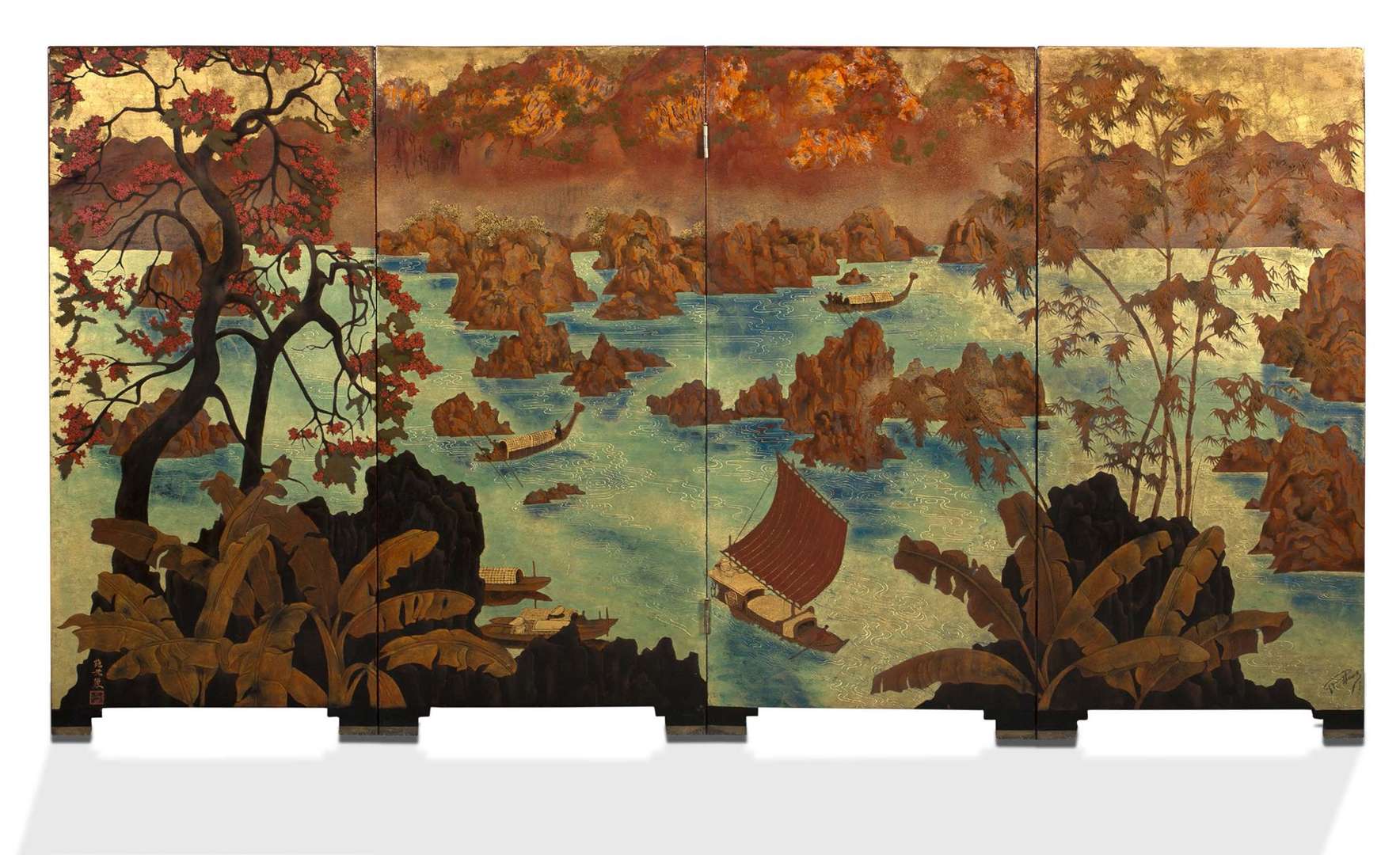
Landscape with junks, 1943
Lacquer with gold and silver highlights, signed lower left and right, dated lower right
Screen in 4 panels :
104 x 49.3 x 49.3 x 49.5 x 49.5 cm
- 40 7/8 x 19 3/8 x 19 3/8 x 19 1/2 x 19 1/2 in.
Total : 104 x 197.6 cm - 40 7/8 x 77 3/8 in.
Lacquer with gold and silver highlights, signed lower left and right, dated lower right
Screen with four panels
PROVENANCE
Laurin-Guilloux-Buffetaud sale, Paris, 3 June 1988
Private collection, Paris (Acquired at previous sale)
RELATED WORK Pham Gia Yên, So'n Mài Pham Hâu, The lacquer art of Pham Hau, Nhà Xuât Bàn My Thuât Fine Arts Publishing House, 2019, repr. p. 44
Lacquer painting is a major art form in Vietnam, inseparable from the country's cultural history. A traditional art par excellence, it also shines abroad and makes Vietnam a bastion of this ancestral technique. Although this know-how dates back to the 15th century, its current influence owes much to the impetus of Joseph Inguimberty at the Indochina School of Fine Arts, who introduced lacquerware courses in 1927. Thanks to new means made possible by the modernity of the School, he clearly redefined the creative process of lacquer while introducing new principles. With the help of Alix Aymé, a free and talented artist, they enriched the use of colours. Traditionally, only red, black, brown but also silver and gold are represented. Thanks to the introduction of new materials such as eggshell, cadmium sulphide or chromium oxide, other colours such as white, yellow or green appeared. This creative renewal has continued ever since, allowing artists to impose this Asian technique as the equal of Western painting.
Pham Hau's Landscape with junks is a perfect example of the commitment of a new generation of Vietnamese artists who are politicized and proud of their origins. The art of lacquer is displayed as a tool for the dissemination of Vietnamese culture in the face of Chinese and Western imperialism. The teaching received at the Indochina School of Fine Arts brought Pham Hau an enrichment of his palette and the traditional reds and blacks enriched with gold and silver are here enhanced with a rare blue, thus bringing totally new nuances and more contrasts. This four-panel lacquer screen pays tribute to the beauty of the Vietnamese landscape. The lush vegetation made of banana leaves, apple blossoms or bamboo, underlines the tropical nature of Vietnam. Idyllic with its turquoise waters, Pham Hau sublimates this landscape populated with its traditional junks and rocks. If the creation of lacquerware has long been the prerogative of craftsmen, Pham Hau has established himself as a true artist and offers a magnificent representation of the wonders of his country.
Vẽ tranh sơn mài ở Việt Nam là một nghệ thuật lớn, không thể tách rời khỏi lịch sử văn hóa của đất nước. Nghệ thuật truyền thống xuất sắc này cũng lan tỏa ra ngoài biên giới và làm cho Việt Nam là một trong những cái nôi của kĩ sơn mài. Nếu như lịch sử làm sơn mài được truy ngược về thế kỷ 15, thì sự tỏa sáng hiện tại có công rất lớn của Joseph Inguimberty trong Trường Mỹ thuật Đông Dương về việc cho mở các lớp học sơn mài ngay từ năm 1927. Nhờ có các phương tiện mới, hiện đại của Trường, người thầy Pháp này đã xác định lại rõ ràng quy trình sáng tạo của sơn mài trong khi đồng thời giới thiệu các nguyên tắc mới. Với sự trợ giúp của Alix Aymé, họa sĩ tự do và tài năng, họ làm phong phú thêm việc sử dụng màu sắc một cách đặc biệt trong sơn mài. Theo truyền thống, chỉ có màu đỏ, đen, nâu nhưng các mảng mạ bạc và vàng cũng được thể hiện. Nhờ sự ra đời của các vật liệu mới như vỏ trứng, cadmium sulfide hoặc chrome oxid, các màu khác như trắng, vàng hoặc xanh lá cây xuất hiện. Việc sáng tạo đổi mới này đã diễn ra không ngừng và cho phép các họa sĩ áp đặt kỹ thuật châu Á này ngang hàng với hội họa châu Âu.
Bức sơn mài Phong cảnh với thuyền buồm của Phạm Hậu là một minh chứng hoàn hảo cho một thế hệ nghệ sĩ Việt Nam mới, những người bị chính trị hóa và tự hào về nguồn gốc của mình. Nghệ thuật sơn mài được xem như một công cụ truyền bá văn hóa Việt Nam trước sự xâm lăng của đế quốc Trung Hoa và phương Tây. Việc giảng dạy tại Trường Mỹ thuật Đông Dương đã mang đến cho Phạm Hậu sự phong phú về bảng màu của mình, màu đỏ và đen truyền thống được pha thêm vàng và bạc ở đây tăng cường bằng một màu xanh lam cực kỳ hiếm gặp, mang đến những sắc thái hoàn toàn mới và tương phản hơn. Bức tranh sơn mài này tạo thành một bức bình phong với bốn tấm thể hiện sự tôn kính vẻ đẹp của các danh lam thắng cảnh Việt Nam. Những thảm thực vật tươi tốt như lá chuối, hoa táo hoặc tre, nứa, nhấn mạnh bản chất nhiệt đới của Việt Nam. B
PA2021
Landscape with junks, 1943
Lacquer with gold and silver highlights, signed lower left and right, dated lower right
Screen in 4 panels :
104 x 49.3 x 49.3 x 49.5 x 49.5 cm
- 40 7/8 x 19 3/8 x 19 3/8 x 19 1/2 x 19 1/2 in.
Total : 104 x 197.6 cm - 40 7/8 x 77 3/8 in.
Lacquer with gold and silver highlights, signed lower left and right, dated lower right
Screen with four panels
PROVENANCE
Laurin-Guilloux-Buffetaud sale, Paris, 3 June 1988
Private collection, Paris (Acquired at previous sale)
RELATED WORK Pham Gia Yên, So'n Mài Pham Hâu, The lacquer art of Pham Hau, Nhà Xuât Bàn My Thuât Fine Arts Publishing House, 2019, repr. p. 44
Lacquer painting is a major art form in Vietnam, inseparable from the country's cultural history. A traditional art par excellence, it also shines abroad and makes Vietnam a bastion of this ancestral technique. Although this know-how dates back to the 15th century, its current influence owes much to the impetus of Joseph Inguimberty at the Indochina School of Fine Arts, who introduced lacquerware courses in 1927. Thanks to new means made possible by the modernity of the School, he clearly redefined the creative process of lacquer while introducing new principles. With the help of Alix Aymé, a free and talented artist, they enriched the use of colours. Traditionally, only red, black, brown but also silver and gold are represented. Thanks to the introduction of new materials such as eggshell, cadmium sulphide or chromium oxide, other colours such as white, yellow or green appeared. This creative renewal has continued ever since, allowing artists to impose this Asian technique as the equal of Western painting.
Pham Hau's Landscape with junks is a perfect example of the commitment of a new generation of Vietnamese artists who are politicized and proud of their origins. The art of lacquer is displayed as a tool for the dissemination of Vietnamese culture in the face of Chinese and Western imperialism. The teaching received at the Indochina School of Fine Arts brought Pham Hau an enrichment of his palette and the traditional reds and blacks enriched with gold and silver are here enhanced with a rare blue, thus bringing totally new nuances and more contrasts. This four-panel lacquer screen pays tribute to the beauty of the Vietnamese landscape. The lush vegetation made of banana leaves, apple blossoms or bamboo, underlines the tropical nature of Vietnam. Idyllic with its turquoise waters, Pham Hau sublimates this landscape populated with its traditional junks and rocks. If the creation of lacquerware has long been the prerogative of craftsmen, Pham Hau has established himself as a true artist and offers a magnificent representation of the wonders of his country.
Vẽ tranh sơn mài ở Việt Nam là một nghệ thuật lớn, không thể tách rời khỏi lịch sử văn hóa của đất nước. Nghệ thuật truyền thống xuất sắc này cũng lan tỏa ra ngoài biên giới và làm cho Việt Nam là một trong những cái nôi của kĩ sơn mài. Nếu như lịch sử làm sơn mài được truy ngược về thế kỷ 15, thì sự tỏa sáng hiện tại có công rất lớn của Joseph Inguimberty trong Trường Mỹ thuật Đông Dương về việc cho mở các lớp học sơn mài ngay từ năm 1927. Nhờ có các phương tiện mới, hiện đại của Trường, người thầy Pháp này đã xác định lại rõ ràng quy trình sáng tạo của sơn mài trong khi đồng thời giới thiệu các nguyên tắc mới. Với sự trợ giúp của Alix Aymé, họa sĩ tự do và tài năng, họ làm phong phú thêm việc sử dụng màu sắc một cách đặc biệt trong sơn mài. Theo truyền thống, chỉ có màu đỏ, đen, nâu nhưng các mảng mạ bạc và vàng cũng được thể hiện. Nhờ sự ra đời của các vật liệu mới như vỏ trứng, cadmium sulfide hoặc chrome oxid, các màu khác như trắng, vàng hoặc xanh lá cây xuất hiện. Việc sáng tạo đổi mới này đã diễn ra không ngừng và cho phép các họa sĩ áp đặt kỹ thuật châu Á này ngang hàng với hội họa châu Âu.
Bức sơn mài Phong cảnh với thuyền buồm của Phạm Hậu là một minh chứng hoàn hảo cho một thế hệ nghệ sĩ Việt Nam mới, những người bị chính trị hóa và tự hào về nguồn gốc của mình. Nghệ thuật sơn mài được xem như một công cụ truyền bá văn hóa Việt Nam trước sự xâm lăng của đế quốc Trung Hoa và phương Tây. Việc giảng dạy tại Trường Mỹ thuật Đông Dương đã mang đến cho Phạm Hậu sự phong phú về bảng màu của mình, màu đỏ và đen truyền thống được pha thêm vàng và bạc ở đây tăng cường bằng một màu xanh lam cực kỳ hiếm gặp, mang đến những sắc thái hoàn toàn mới và tương phản hơn. Bức tranh sơn mài này tạo thành một bức bình phong với bốn tấm thể hiện sự tôn kính vẻ đẹp của các danh lam thắng cảnh Việt Nam. Những thảm thực vật tươi tốt như lá chuối, hoa táo hoặc tre, nứa, nhấn mạnh bản chất nhiệt đới của Việt Nam. B
PA2021