
&w=3840&q=75)
&w=3840&q=75)
&w=3840&q=75)
&w=3840&q=75)
&w=3840&q=75)
&w=3840&q=75)
&w=3840&q=75)
&w=3840&q=75)

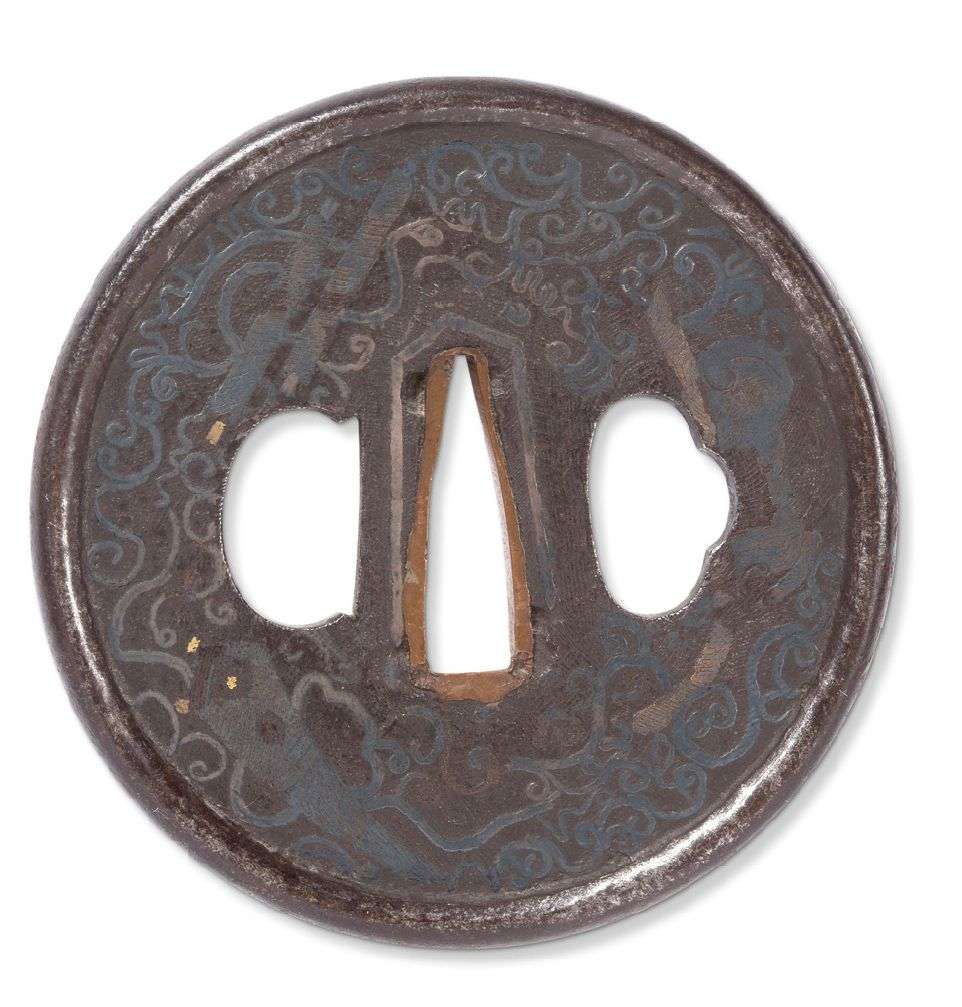
JAPON XVIIe siècle
Iron tsuba maru-gata decorated with karakusa and auspicious motifs inlaid in pewter and enhanced with golden touches, the nakago-ana underlined with sentoku, the mimi forming a circle in high relief.
H. 7.6 cm
Private Collection of Mr L. Paris
Private Collection of Mr L.Paris
L氏のプライベートコレクション。パリ
Lots 83 to 97
TSUBA Tsuba were used as guards for Japanese swords. They protected the hands, preventing them from slipping on the blade, and also served as counterweights for the long blades of Katana-type swords. The first tsuba date back to the 6th century. Until the
Muromachi period, Tsuba were essentially linked to a defensive and protective role. Blacksmiths then added a decorative aspect to them, often illustrating the social rank of their owner.
The most elaborate ones adorned swords during ceremonies. Becoming an art object in its own right, the blacksmiths sometimes put their signatures on it.
TSUBA Tsuba served as guards for Japanese swords.
They protected the hands, preventing them from slipping on the blade, and also served as a counterweight for the long blades of Katana type swords.
The first tsuba are said to date back to the 6th century. Until the Muromachi period, Tsuba were mainly related to a defensive and protective role. Blacksmiths then added a decorative aspect, often illustrating the social rank of its owner. The most elaborate ones adorned swords during ceremonies. Becoming an art object in its own right, the blacksmiths sometimes put their signatures on them.
Iron tsuba maru-gata decorated with karakusa and auspicious motifs inlaid in pewter and enhanced with golden touches, the nakago-ana underlined with sentoku, the mimi forming a circle in high relief.
H. 7.6 cm
Private Collection of Mr L. Paris
Private Collection of Mr L.Paris
L氏のプライベートコレクション。パリ
Lots 83 to 97
TSUBA Tsuba were used as guards for Japanese swords. They protected the hands, preventing them from slipping on the blade, and also served as counterweights for the long blades of Katana-type swords. The first tsuba date back to the 6th century. Until the
Muromachi period, Tsuba were essentially linked to a defensive and protective role. Blacksmiths then added a decorative aspect to them, often illustrating the social rank of their owner.
The most elaborate ones adorned swords during ceremonies. Becoming an art object in its own right, the blacksmiths sometimes put their signatures on it.
TSUBA Tsuba served as guards for Japanese swords.
They protected the hands, preventing them from slipping on the blade, and also served as a counterweight for the long blades of Katana type swords.
The first tsuba are said to date back to the 6th century. Until the Muromachi period, Tsuba were mainly related to a defensive and protective role. Blacksmiths then added a decorative aspect, often illustrating the social rank of its owner. The most elaborate ones adorned swords during ceremonies. Becoming an art object in its own right, the blacksmiths sometimes put their signatures on them.