
&w=3840&q=75)
&w=3840&q=75)
&w=3840&q=75)
&w=3840&q=75)
&w=3840&q=75)
&w=3840&q=75)
&w=3840&q=75)
&w=3840&q=75)


62
JAPON PÉRIODE EDO, XVIIIE SIÈCLE
The item was sold for 676 €
Fees include commission and taxes.
JAPON PÉRIODE EDO, XVIIIE SIÈCLE
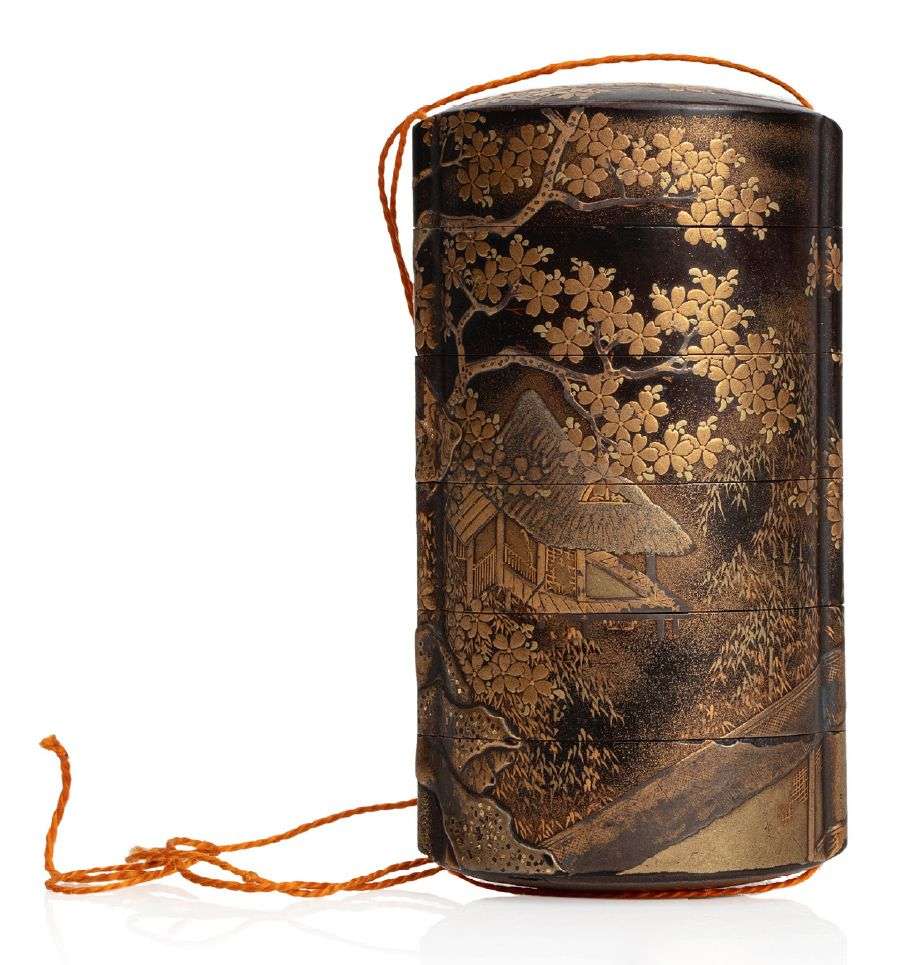
A black lacquered five-boxed inrô, decorated in hiramaki-e and takamaki-e with gold lacquer on a mura-nashiji background, and kirigane, with a cherry tree in blossom and bamboo near a thatched cottage surrounded by a high wall| the interior in nashiji lacquer and fundame.
H. 9.5 cm
(Lacquer lacquer, chips, shocks)
Private Collection of Mrs F. West of Paris
Private Collection of Mrs F. West of Paris
F夫人のプライベートコレクション。パリ西部
Lots 62 to 82
INRO Appearing in Japan in the mid-16th century, inrô are small utilitarian boxes formed of one to seven compartments, which were used to hold sealing seals, vermilion wax, and medicines. A male accessory, the inrô was suspended from the obi of the kimono, held by a netsuke at the end of a cord regulated by an ojime, and allowed the transport of small personal effects since the kimono had no pockets. Simply covered with a layer of black lacquer during the Tensho period (1573-1591), the inrô was soon coupled with decorative attention reflecting the social status and aesthetic taste of its wearer. During the 17th century, decorations flourished, reflecting Japanese mythology and imagination. The materials became more noble and were embellished with decorations carved using various techniques, in lacquer or covered with tortoise shell. The lacquer, originally sober, is enriched by inclusions of ivory, mother of pearl, gold and silver. Today, the inro is one of the most important objects for Japanese art collectors.
INRO Appeared in Japan in the middle of the 16th century, the inrô are small utilitarian boxes made of one to seven compartments, which were used to contain seals, vermilion wax, and medicines. A male accessory, the inrô was suspended from the obi of the kimono, held by a netsuke at the end of a cord regulated by an ojime, and allowed the transport of small personal effects since the kimono had no pockets. Simply covered with a layer of black lacquer during the Tensho period (1573-1591), the inrô was soon coupled with a decorative attention reflecting the social status and aesthetic taste of its holder. During the 17th century, decorations flourished, reflecting
Japanese mythology and imagination. The choice rose for ennobled materials and they were embellished with sculpted decorations using several techniques, in lacquer or covered with tortoise shell. Originally sober, the lacquer is enriched by inclusions of ivory, mother of pearl, gold and silver. Today, a great inrô is one of the most coveted objects for Japanese art collectors.
A black lacquered five-boxed inrô, decorated in hiramaki-e and takamaki-e with gold lacquer on a mura-nashiji background, and kirigane, with a cherry tree in blossom and bamboo near a thatched cottage surrounded by a high wall| the interior in nashiji lacquer and fundame.
H. 9.5 cm
(Lacquer lacquer, chips, shocks)
Private Collection of Mrs F. West of Paris
Private Collection of Mrs F. West of Paris
F夫人のプライベートコレクション。パリ西部
Lots 62 to 82
INRO Appearing in Japan in the mid-16th century, inrô are small utilitarian boxes formed of one to seven compartments, which were used to hold sealing seals, vermilion wax, and medicines. A male accessory, the inrô was suspended from the obi of the kimono, held by a netsuke at the end of a cord regulated by an ojime, and allowed the transport of small personal effects since the kimono had no pockets. Simply covered with a layer of black lacquer during the Tensho period (1573-1591), the inrô was soon coupled with decorative attention reflecting the social status and aesthetic taste of its wearer. During the 17th century, decorations flourished, reflecting Japanese mythology and imagination. The materials became more noble and were embellished with decorations carved using various techniques, in lacquer or covered with tortoise shell. The lacquer, originally sober, is enriched by inclusions of ivory, mother of pearl, gold and silver. Today, the inro is one of the most important objects for Japanese art collectors.
INRO Appeared in Japan in the middle of the 16th century, the inrô are small utilitarian boxes made of one to seven compartments, which were used to contain seals, vermilion wax, and medicines. A male accessory, the inrô was suspended from the obi of the kimono, held by a netsuke at the end of a cord regulated by an ojime, and allowed the transport of small personal effects since the kimono had no pockets. Simply covered with a layer of black lacquer during the Tensho period (1573-1591), the inrô was soon coupled with a decorative attention reflecting the social status and aesthetic taste of its holder. During the 17th century, decorations flourished, reflecting
Japanese mythology and imagination. The choice rose for ennobled materials and they were embellished with sculpted decorations using several techniques, in lacquer or covered with tortoise shell. Originally sober, the lacquer is enriched by inclusions of ivory, mother of pearl, gold and silver. Today, a great inrô is one of the most coveted objects for Japanese art collectors.