
&w=3840&q=75)
&w=3840&q=75)
&w=3840&q=75)
&w=3840&q=75)
&w=3840&q=75)
&w=3840&q=75)


178
JOSEPH-MARIE VIEN MONTPELLIER, 1716/1809, PARIS
The item was sold for 13 000 €
Fees include commission and taxes.
JOSEPH-MARIE VIEN MONTPELLIER, 1716/1809, PARIS
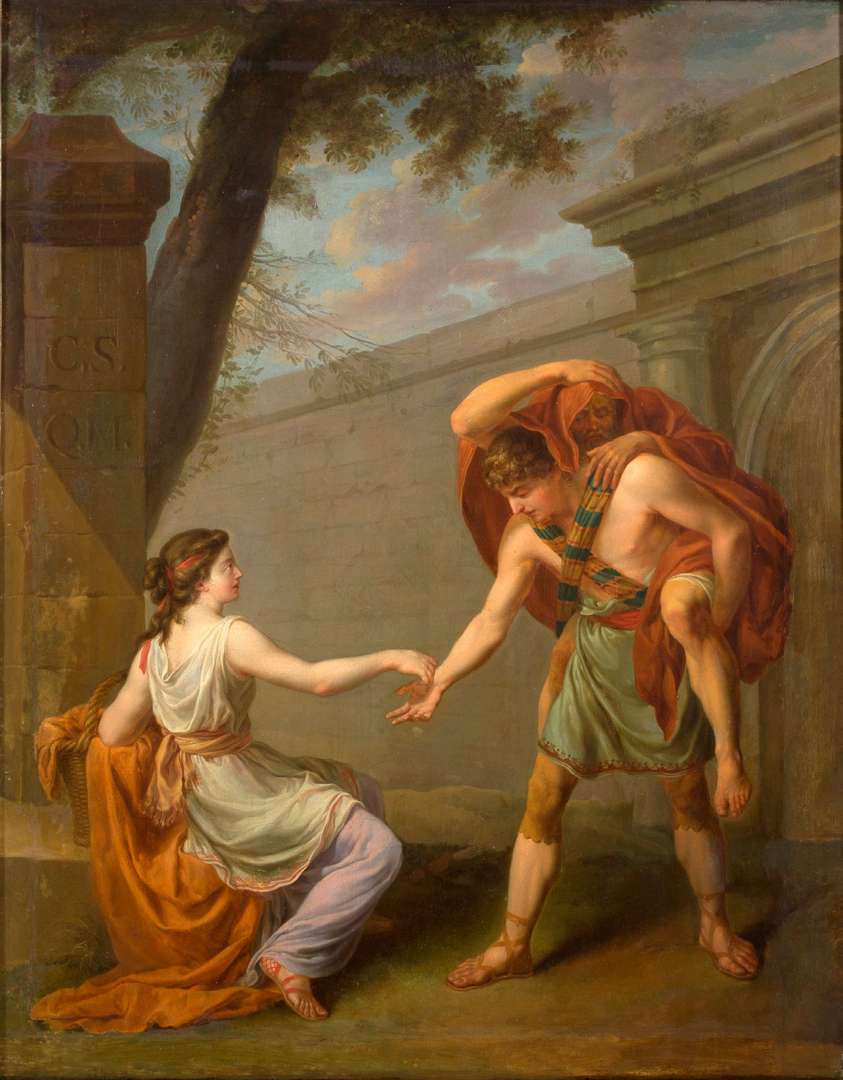
Aeneas and Anchises begging for alms
Oil on canvas
89 x 73 cm
If there is one painter who occupied a truly important place in the initiation and development of neoclassicism in France, it is Joseph-Marie Vien. Born at the beginning of the 18th century, the painter trained with a school still particularly marked by the "rocaille" aesthetic of which François Boucher (1703/1770) was the absolute master. At the same time, the influences change with the beginning of the excavations on the sites of Herculaneum rediscovered in 1709 and Pompeii in 1738. These events are only additional elements to support a number of scholars and other polemicists pleading for a return to antiquity.
Vien, if he distinguishes himself by a rather naturalist style at the beginning, became nevertheless one of the leaders of this new school following his meeting with the Count of Caylus (1692/1765) whom he frequented from 1755 until the latter's death. Our painter truly opened the way to the new artistic movement that was neoclassicism and which would affect all the arts.
A student of Charles-Joseph Natoire, he won the Prix de Rome in 1744 with Suzanne et les vieillards (Nantes, Musée des Beaux-Arts).
Vien was inspired by Virgil's Aeneid to represent Aeneas carrying his father Anchises on his shoulders and asking for alms. Dramatic subject, the painter chooses to treat it nevertheless in a rather charming way. The acidulous and diverse colours, the elegantly poised poses contrast with the cheerless expressions on the faces in keeping with the subject. Without the dramatic radicalism of his future pupil, Jacques-Louis David (1748/1825), the painter tackles a subject from ancient history which he treats in an antiquisite atmosphere with poetry and delicacy of touch.
Aeneas and Anchises begging for alms
Oil on canvas
89 x 73 cm
If there is one painter who occupied a truly important place in the initiation and development of neoclassicism in France, it is Joseph-Marie Vien. Born at the beginning of the 18th century, the painter trained with a school still particularly marked by the "rocaille" aesthetic of which François Boucher (1703/1770) was the absolute master. At the same time, the influences change with the beginning of the excavations on the sites of Herculaneum rediscovered in 1709 and Pompeii in 1738. These events are only additional elements to support a number of scholars and other polemicists pleading for a return to antiquity.
Vien, if he distinguishes himself by a rather naturalist style at the beginning, became nevertheless one of the leaders of this new school following his meeting with the Count of Caylus (1692/1765) whom he frequented from 1755 until the latter's death. Our painter truly opened the way to the new artistic movement that was neoclassicism and which would affect all the arts.
A student of Charles-Joseph Natoire, he won the Prix de Rome in 1744 with Suzanne et les vieillards (Nantes, Musée des Beaux-Arts).
Vien was inspired by Virgil's Aeneid to represent Aeneas carrying his father Anchises on his shoulders and asking for alms. Dramatic subject, the painter chooses to treat it nevertheless in a rather charming way. The acidulous and diverse colours, the elegantly poised poses contrast with the cheerless expressions on the faces in keeping with the subject. Without the dramatic radicalism of his future pupil, Jacques-Louis David (1748/1825), the painter tackles a subject from ancient history which he treats in an antiquisite atmosphere with poetry and delicacy of touch.