
&w=3840&q=75)
&w=3840&q=75)
&w=3840&q=75)
&w=3840&q=75)
&w=3840&q=75)
&w=3840&q=75)
&w=3840&q=75)
&w=3840&q=75)

37
École Française du XIXe siècle
The item was sold for 11 050 €
Fees include commission and taxes.
École Française du XIXe siècle
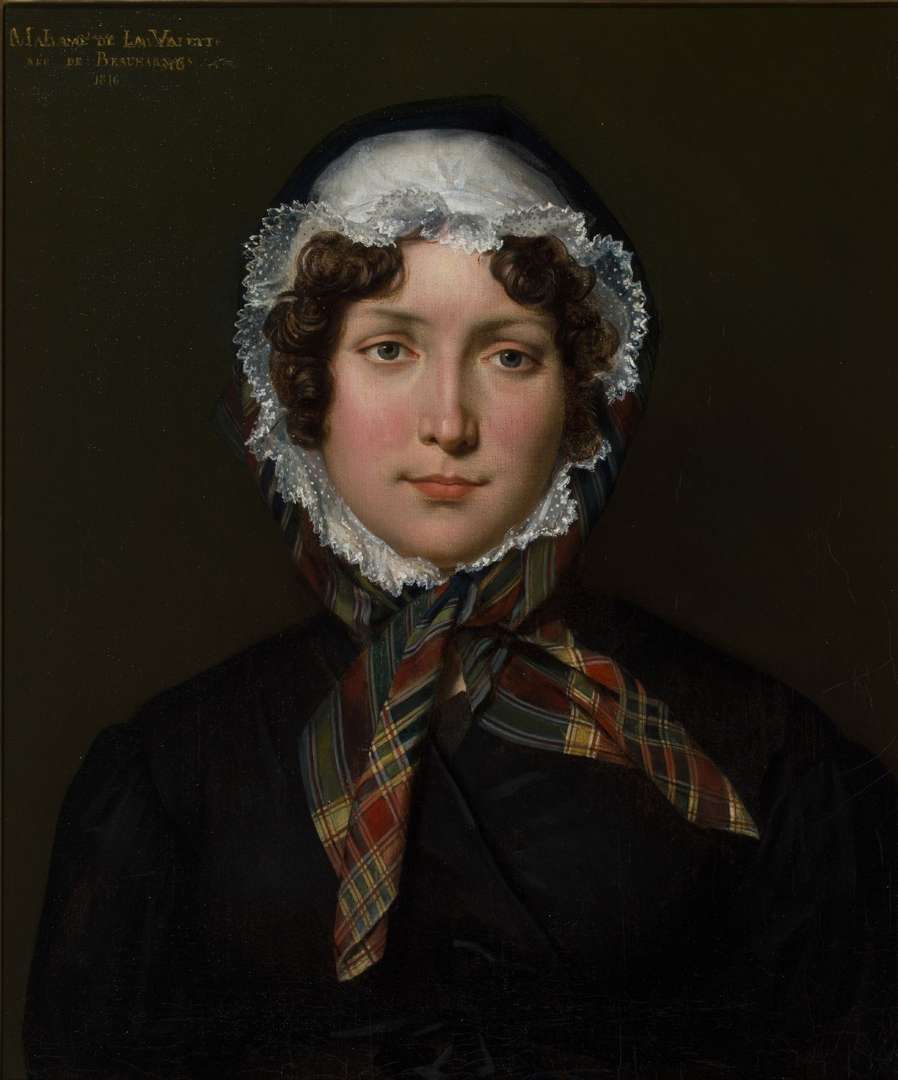
Portrait of Émilie Louise de Beauharnais, Countess of Lavalette (1781/1855)
Oil on canvasIdentified and dated in the upper left corner Madame/Comtesse de Lavalette / née BEAUHARNAIS / 1816
46 x 57 cm
"Madame la Comtesse de Lavalette, example of conjugal love, has become the heroine of her sex| her steps are surrounded by tributes| everywhere she shows herself in public, unanimous testimonies come to pay her a tribute of admiration. (...) The law prosecutes| the cry of the public wants to absolve."
Procès du général Sir Robert Wilson, (...), Paris, Lhuillier, 1816, pp. 2-3.
Madame de Lavalette, born Émilie de Beauharnais, was taken in at an early age by her aunt, the future Empress Joséphine de Beauharnais (1763/1814). In 1796, Napoleon Bonaparte arranged for Emilie to marry Antoine-Marie de Lavalette (1769/1830), a young aide-de-camp. Together they had a daughter, Joséphine, cousin and future lover of the painter Eugène Delacroix (1798/1863). In 1804, Emilie became lady-in-waiting to the Empress, while Antoine was elevated to the rank of count and given the post office. The young woman can be seen in David's painting of the Rite (1804, Paris, Louvre Museum) where she is wearing the Empress's train.
In 1815, after the return of the Bourbons, Antoine was imprisoned and sentenced to death. His wife then organizes a truly incredible escape when, coming to visit him one evening accompanied by her daughter, she exchanges clothes with him, letting him escape in drag. Left alone in the cell, the deception is discovered almost immediately and Emily undergoes numerous interrogations, completing her loss of sanity, she who had been very affected by the recent loss of a young child. When her husband returned for her five years later, pardoned by the king, she no longer recognized him. She finally died some forty years later, and Delacroix wrote at her funeral on 20 June 1855: "How many things to say about this dead woman, dead for forty years, an imposing ghost in the deep abasement in which we have seen her.
Portrait of Émilie Louise de Beauharnais, Countess of Lavalette (1781/1855)
Oil on canvasIdentified and dated in the upper left corner Madame/Comtesse de Lavalette / née BEAUHARNAIS / 1816
46 x 57 cm
"Madame la Comtesse de Lavalette, example of conjugal love, has become the heroine of her sex| her steps are surrounded by tributes| everywhere she shows herself in public, unanimous testimonies come to pay her a tribute of admiration. (...) The law prosecutes| the cry of the public wants to absolve."
Procès du général Sir Robert Wilson, (...), Paris, Lhuillier, 1816, pp. 2-3.
Madame de Lavalette, born Émilie de Beauharnais, was taken in at an early age by her aunt, the future Empress Joséphine de Beauharnais (1763/1814). In 1796, Napoleon Bonaparte arranged for Emilie to marry Antoine-Marie de Lavalette (1769/1830), a young aide-de-camp. Together they had a daughter, Joséphine, cousin and future lover of the painter Eugène Delacroix (1798/1863). In 1804, Emilie became lady-in-waiting to the Empress, while Antoine was elevated to the rank of count and given the post office. The young woman can be seen in David's painting of the Rite (1804, Paris, Louvre Museum) where she is wearing the Empress's train.
In 1815, after the return of the Bourbons, Antoine was imprisoned and sentenced to death. His wife then organizes a truly incredible escape when, coming to visit him one evening accompanied by her daughter, she exchanges clothes with him, letting him escape in drag. Left alone in the cell, the deception is discovered almost immediately and Emily undergoes numerous interrogations, completing her loss of sanity, she who had been very affected by the recent loss of a young child. When her husband returned for her five years later, pardoned by the king, she no longer recognized him. She finally died some forty years later, and Delacroix wrote at her funeral on 20 June 1855: "How many things to say about this dead woman, dead for forty years, an imposing ghost in the deep abasement in which we have seen her.