
&w=3840&q=75)
&w=3840&q=75)
&w=3840&q=75)
&w=3840&q=75)
&w=3840&q=75)
&w=3840&q=75)
&w=3840&q=75)
&w=3840&q=75)

35
FRANS VERVLOET MALINE, 1795/1872, VENISE
The item was sold for 7 800 €
Fees include commission and taxes.
FRANS VERVLOET MALINE, 1795/1872, VENISE
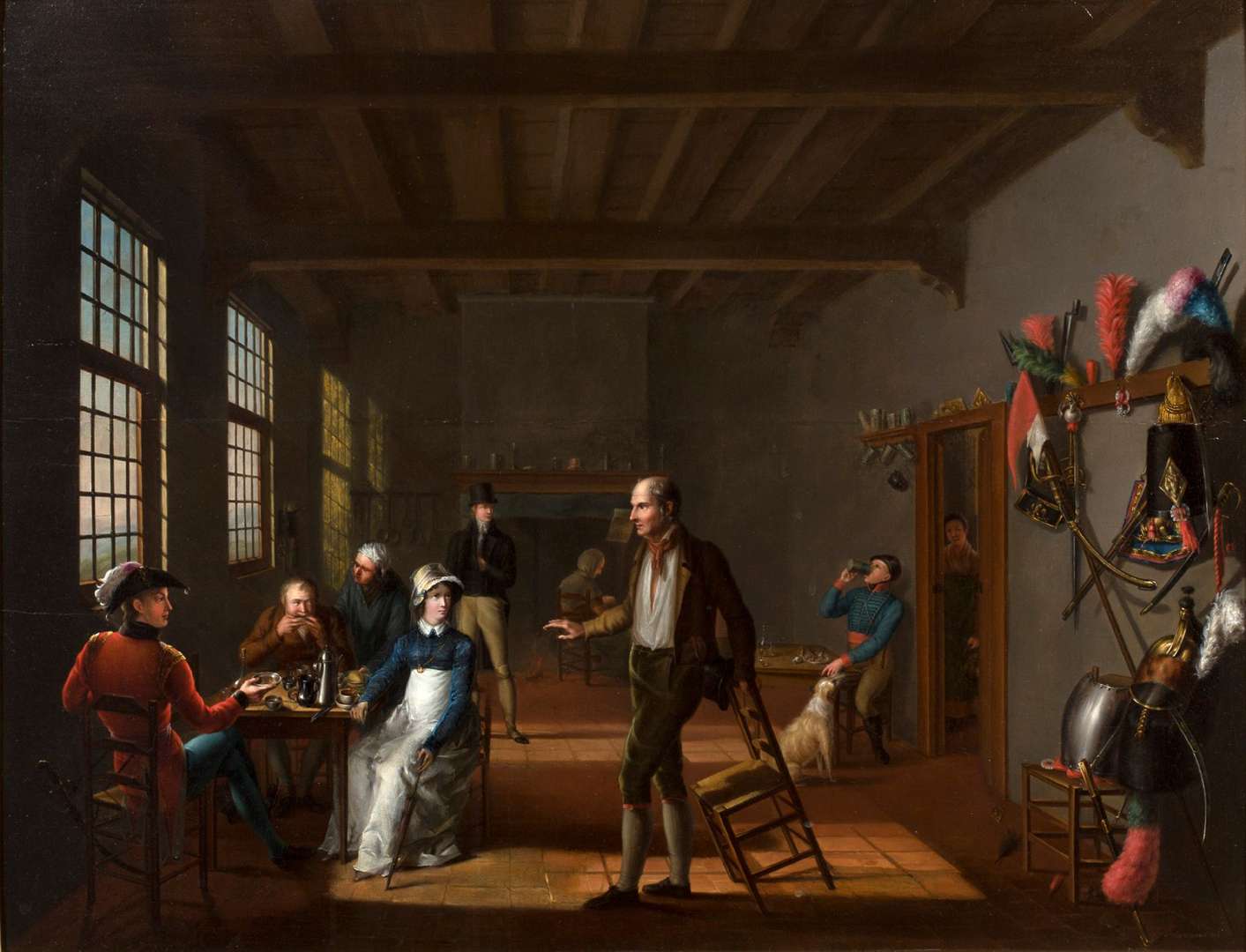
Cabaret scene with trophy from the battle of Waterloo
Oil on panelSigned lower right verloet pinxit 1816
63 x 50 cm
This scene offers us an interesting testimony of the battle of Waterloo. A light and jovial tone infuses the scene located in an inn near the military camp. In the centre, a man is about to sit down to tell his story. To the right of the composition, an English officer is seated with some friends. In the left background, an English hussar is emptying a pint. And yet, in a corner of the room, in the foreground on the left of the composition, the remnants of a uniform catch the eye. One can recognize a Dragon helmet, an infantry Shako or even a Polish lancer's flame, remnants of the Grande Armée defeated a few months earlier. In 1816, the year of the painting's execution, Francis Vervloet visited the Waterloo battlefield and produced numerous sketches. Far from being mere decorative elements, these trophies are a real tribute to the combatants present that day. Our painting then takes on a completely different aspect and, through this discreet allusion to the soldiers who died in battle, suggests the tragedy that had been played out on this very spot some time earlier. This contrasting superimposition of two different registers illustrates Vervloet's varied and diversified interests throughout his life. He is best known for his many interiors, scenes that were highly regarded by dealers and art critics. He also spent a large part of his career in Italy and is now considered an important painter who contributed to the renewal of Italian landscape painting in the 19th century as a painter of the Pollipsio School in Naples.
Cabaret scene with trophy from the battle of Waterloo
Oil on panelSigned lower right verloet pinxit 1816
63 x 50 cm
This scene offers us an interesting testimony of the battle of Waterloo. A light and jovial tone infuses the scene located in an inn near the military camp. In the centre, a man is about to sit down to tell his story. To the right of the composition, an English officer is seated with some friends. In the left background, an English hussar is emptying a pint. And yet, in a corner of the room, in the foreground on the left of the composition, the remnants of a uniform catch the eye. One can recognize a Dragon helmet, an infantry Shako or even a Polish lancer's flame, remnants of the Grande Armée defeated a few months earlier. In 1816, the year of the painting's execution, Francis Vervloet visited the Waterloo battlefield and produced numerous sketches. Far from being mere decorative elements, these trophies are a real tribute to the combatants present that day. Our painting then takes on a completely different aspect and, through this discreet allusion to the soldiers who died in battle, suggests the tragedy that had been played out on this very spot some time earlier. This contrasting superimposition of two different registers illustrates Vervloet's varied and diversified interests throughout his life. He is best known for his many interiors, scenes that were highly regarded by dealers and art critics. He also spent a large part of his career in Italy and is now considered an important painter who contributed to the renewal of Italian landscape painting in the 19th century as a painter of the Pollipsio School in Naples.