
&w=3840&q=75)
&w=3840&q=75)
&w=3840&q=75)
&w=3840&q=75)
&w=3840&q=75)
&w=3840&q=75)
&w=3840&q=75)
&w=3840&q=75)


211
École FRANÇAISE de la fin du XVIIIe siècle
The item was sold for 6 760 €
Fees include commission and taxes.
École FRANÇAISE de la fin du XVIIIe siècle
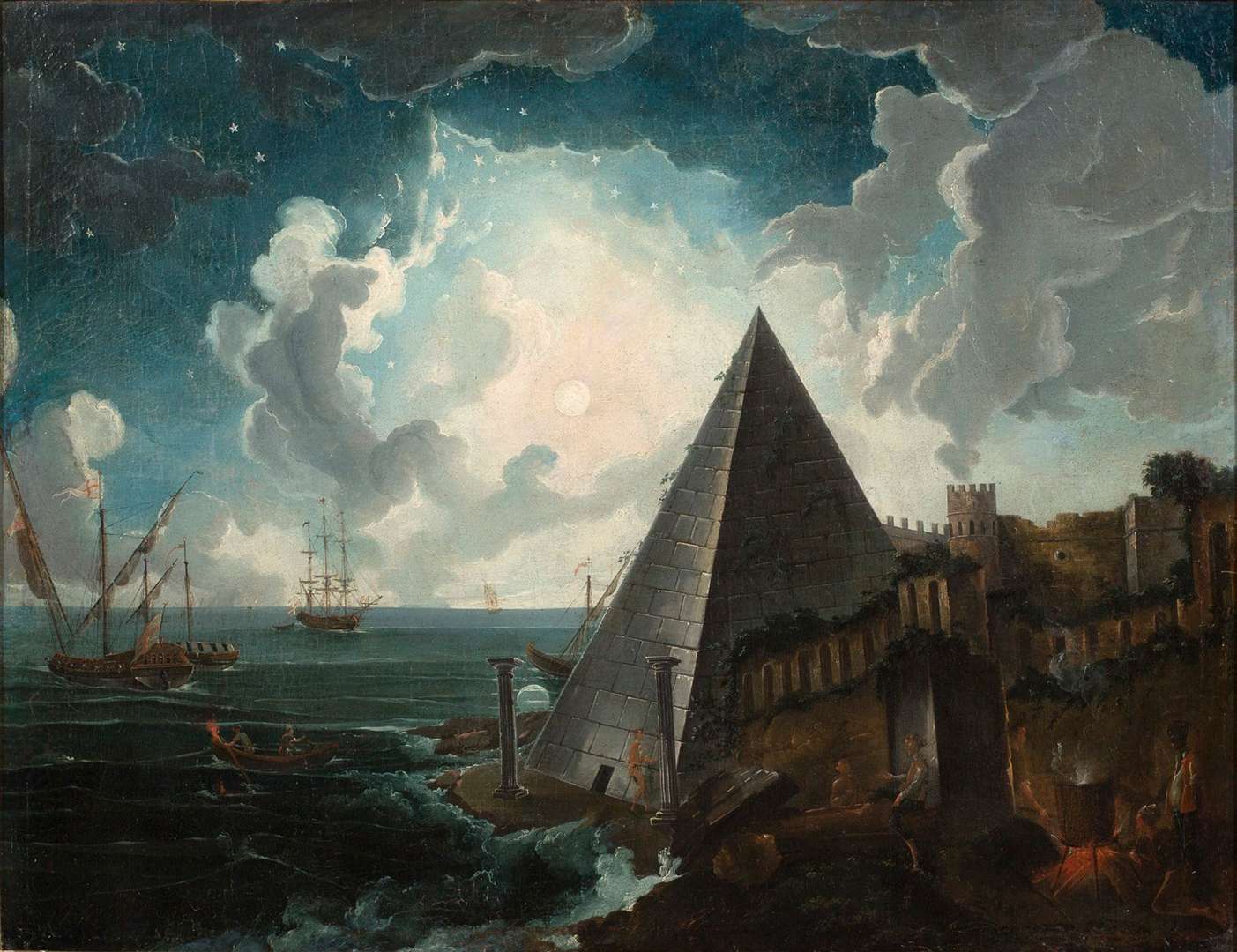
A Just and Perfect Work or The Path of Masonry and its Initiates
Oil on canvas 95.4 x 121.8 cm
The theory of the origins of Freemasonry places it in ancient Egypt. More probably, it only really appeared in the Middle Ages, on the great medieval cathedral sites. Small lodges were temporarily installed next to the cathedrals, where the masons met, and where they exchanged ideas and lived their daily lives. At that time, Freemasonry was called "operative". Subsequently, in the 16th and 17th centuries, it was in Scotland that the first members unrelated to the profession, often local notables, were admitted to the operative lodges. The transition would then have been made slowly towards the Freemasonry known as "speculative". In reality, it was at the beginning of the eighteenth century in London, that a group of local scholars, fond of philosophy, neoplatonism and probably having a certain attraction for the mystical, decided to form. They borrowed certain symbolic and ritual forms from the Scottish masons they had met, and thus helped build the identity of their own society. In 1717, the Grand Lodge of England was created in London and in 1725, a lodge was founded in Paris by the British in the Saint-Germain district. It is precisely this moment of the arrival of Freemasonry in France that our painting illustrates and which, when read, leads us along the path of the initiate.
To the left of the composition is a ship flying the English flag and whose masts form a compass. Further ahead, a rowboat approaches the shore with people on board carrying fire, a symbol of light. Without this light, which refers to knowledge, the impetus represented with an effect of transparency in front of the temple, will not be able to penetrate it. Further to the right, the non-initiated receives the initiation from the figure in front of him. The work then begins, embodied by three individuals working around a crucible. Each of the faces bears one of the three colours of the great work: red, white and black.
Everything here refers to Masonic symbols and rites. The construction itself takes up the symbolism of the lodge carpet (fig. 1), originally drawn on the ground and then a panel that became mobile, present in the Temple. As in this one, we find the starry sky, the sun, the moon, the compass, the columns, the temple, the tools of the trade...
The Empire was particularly marked by the presence in the lodge of important people including Napoleon's brothers, Joseph, Louis, Jerome| his ministers also like Joseph Fouché, Charles Maurice de Talleyrand or Claude Ambroise Régnier.
A Just and Perfect Work or The Path of Masonry and its Initiates
Oil on canvas 95.4 x 121.8 cm
The theory of the origins of Freemasonry places it in ancient Egypt. More probably, it only really appeared in the Middle Ages, on the great medieval cathedral sites. Small lodges were temporarily installed next to the cathedrals, where the masons met, and where they exchanged ideas and lived their daily lives. At that time, Freemasonry was called "operative". Subsequently, in the 16th and 17th centuries, it was in Scotland that the first members unrelated to the profession, often local notables, were admitted to the operative lodges. The transition would then have been made slowly towards the Freemasonry known as "speculative". In reality, it was at the beginning of the eighteenth century in London, that a group of local scholars, fond of philosophy, neoplatonism and probably having a certain attraction for the mystical, decided to form. They borrowed certain symbolic and ritual forms from the Scottish masons they had met, and thus helped build the identity of their own society. In 1717, the Grand Lodge of England was created in London and in 1725, a lodge was founded in Paris by the British in the Saint-Germain district. It is precisely this moment of the arrival of Freemasonry in France that our painting illustrates and which, when read, leads us along the path of the initiate.
To the left of the composition is a ship flying the English flag and whose masts form a compass. Further ahead, a rowboat approaches the shore with people on board carrying fire, a symbol of light. Without this light, which refers to knowledge, the impetus represented with an effect of transparency in front of the temple, will not be able to penetrate it. Further to the right, the non-initiated receives the initiation from the figure in front of him. The work then begins, embodied by three individuals working around a crucible. Each of the faces bears one of the three colours of the great work: red, white and black.
Everything here refers to Masonic symbols and rites. The construction itself takes up the symbolism of the lodge carpet (fig. 1), originally drawn on the ground and then a panel that became mobile, present in the Temple. As in this one, we find the starry sky, the sun, the moon, the compass, the columns, the temple, the tools of the trade...
The Empire was particularly marked by the presence in the lodge of important people including Napoleon's brothers, Joseph, Louis, Jerome| his ministers also like Joseph Fouché, Charles Maurice de Talleyrand or Claude Ambroise Régnier.