
&w=3840&q=75)
&w=3840&q=75)
&w=3840&q=75)
&w=3840&q=75)
&w=3840&q=75)
&w=3840&q=75)
&w=3840&q=75)
&w=3840&q=75)


187
PIERRE-JOSEPH-CÉLESTIN FRANCOIS
The item was sold for 21 600 €
Fees include commission and taxes.
PIERRE-JOSEPH-CÉLESTIN FRANCOIS
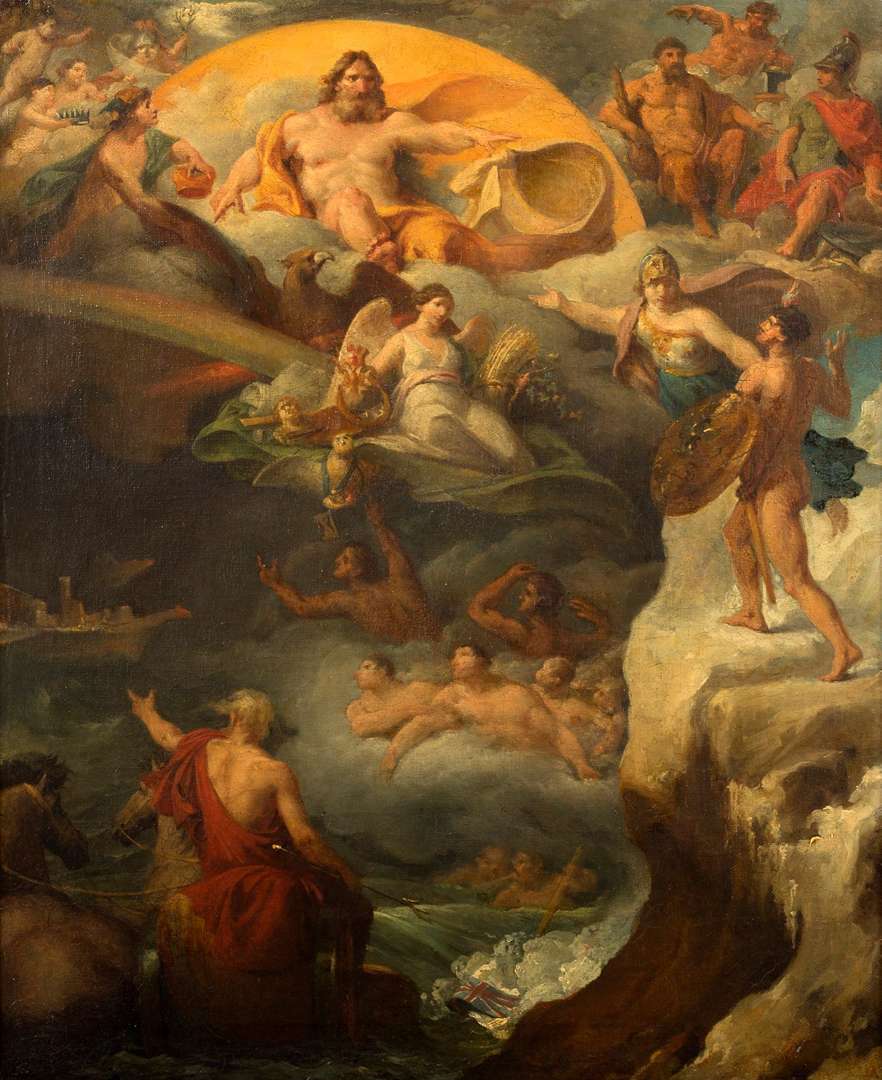
Allegory of the Battle of Grand Port in August 1810
Oil on canvas
59 x 49 cm
Pierre-Joseph-Célestin François was a Belgian painter who entered the studio of the painter Pierre Balthasar de Blocq (active between 1754 and 1795) at the age of 11 before entering the Royal Academy of Fine Arts in Antwerp. Originally from Wallonia, he grew up in a region dominated by the Holy Roman Empire, whose artistic references left their mark on him.
During his training and then his career, he visited Italy twice, between 1778 and 1781 and again between 1789 and 1792. It was probably there that he discovered the neoclassicism of Anton Raphaël Mengs (1728/1779), then known as one of the greatest painters in Europe. Following the theories of Johann Joachim Winckelmann (1717-1768), the Bohemian painter advocated a return to the beautiful antique, to the simple, noble manner, and to the observation of the drawings of Raphael (1483-1520).
François' painting expresses these references: the artist has seen the antique and is inspired by it in the anatomy of his figures| he has also looked at Raphael and the Italian masters of the 16th century, from whom he retains the theatricality of the poses, a powerful upward movement, and the use of precious, vivid and varied colours. We find these elements in another composition by the painter, the Allegory of the Concordat (fig.1| 1802, Malmaison, châteaux of Malmaison and Bois-Préau).
After the French Revolution in 1789, there was a revival of allegorical discourse to celebrate the glories of the sovereign people at first, and then, more occasionally, of the ruling power.
Here, the Battle of Grand Port is identifiable by the presence of the English flag grounded against the reefs at the bottom of the composition and the dismasted ship on the left in the background.
A naval confrontation between the France of Napoleon I and the England of George III, this allegory commemorates the Empire's one and only victory at sea over the dreaded British fleet. In this month of August 1810, the confrontation off the coast of Mauritius (Isle de France), the French frigates the Bellone and the Minerve as well as three other ships led by Captain Guy-Victor Duperré (1775-1846) opposed the four British frigates, the HMS Sirius, the HMS Iphigenia, the HMS Magicienne and the HMS Nereide led by Captain Nesbit Willoughby (1777- 849). After having recaptured the Island of Reunion (Isle Bonaparte) on the 13th August, the British attacked the Island of the Passage, with the aim of gradually conquering the whole of this area of the Pacific, dominated by the French Empire.
Victorious on the 20th August, the French captured the last English survivors. This was the only naval victory to appear on the Arc de Triomphe, and imperial propaganda did not remember the loss of the Isle de France four months later, a territory dominated by the British until 1968.
Allegory of the Battle of Grand Port in August 1810
Oil on canvas
59 x 49 cm
Pierre-Joseph-Célestin François was a Belgian painter who entered the studio of the painter Pierre Balthasar de Blocq (active between 1754 and 1795) at the age of 11 before entering the Royal Academy of Fine Arts in Antwerp. Originally from Wallonia, he grew up in a region dominated by the Holy Roman Empire, whose artistic references left their mark on him.
During his training and then his career, he visited Italy twice, between 1778 and 1781 and again between 1789 and 1792. It was probably there that he discovered the neoclassicism of Anton Raphaël Mengs (1728/1779), then known as one of the greatest painters in Europe. Following the theories of Johann Joachim Winckelmann (1717-1768), the Bohemian painter advocated a return to the beautiful antique, to the simple, noble manner, and to the observation of the drawings of Raphael (1483-1520).
François' painting expresses these references: the artist has seen the antique and is inspired by it in the anatomy of his figures| he has also looked at Raphael and the Italian masters of the 16th century, from whom he retains the theatricality of the poses, a powerful upward movement, and the use of precious, vivid and varied colours. We find these elements in another composition by the painter, the Allegory of the Concordat (fig.1| 1802, Malmaison, châteaux of Malmaison and Bois-Préau).
After the French Revolution in 1789, there was a revival of allegorical discourse to celebrate the glories of the sovereign people at first, and then, more occasionally, of the ruling power.
Here, the Battle of Grand Port is identifiable by the presence of the English flag grounded against the reefs at the bottom of the composition and the dismasted ship on the left in the background.
A naval confrontation between the France of Napoleon I and the England of George III, this allegory commemorates the Empire's one and only victory at sea over the dreaded British fleet. In this month of August 1810, the confrontation off the coast of Mauritius (Isle de France), the French frigates the Bellone and the Minerve as well as three other ships led by Captain Guy-Victor Duperré (1775-1846) opposed the four British frigates, the HMS Sirius, the HMS Iphigenia, the HMS Magicienne and the HMS Nereide led by Captain Nesbit Willoughby (1777- 849). After having recaptured the Island of Reunion (Isle Bonaparte) on the 13th August, the British attacked the Island of the Passage, with the aim of gradually conquering the whole of this area of the Pacific, dominated by the French Empire.
Victorious on the 20th August, the French captured the last English survivors. This was the only naval victory to appear on the Arc de Triomphe, and imperial propaganda did not remember the loss of the Isle de France four months later, a territory dominated by the British until 1968.