
&w=3840&q=75)
&w=3840&q=75)
&w=3840&q=75)
&w=3840&q=75)
&w=3840&q=75)
&w=3840&q=75)
&w=3840&q=75)
&w=3840&q=75)


9
Henri MARTIN (1860-1943)
The item was sold for 27 300 €
Fees include commission and taxes.
Henri MARTIN (1860-1943)
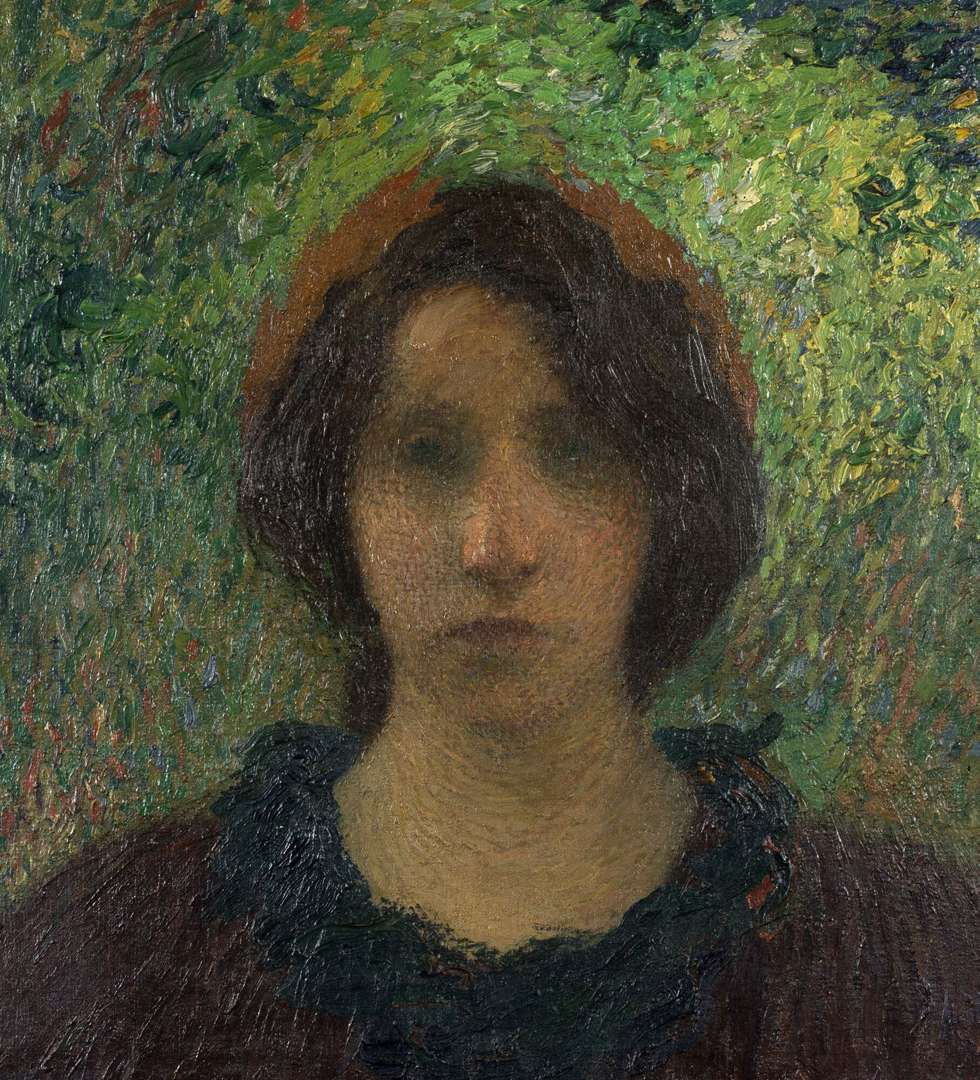
Young Woman with a Bun, circa 1895-1900
Oil on canvas
43 x 32.5 cm
16 7/8 x 12 3/4 in.
A notice of inclusion in the archives intended for the elaboration of the catalogue raisonné of Henri Martin written by Mrs Marie-Anne Destrebecq-Martin dated 11 April 2021 will be given to the buyer.
PROVENANCE
Sale of the collection of Madame de Prussac, Aixe-sur-Vienne, 1930
Private collection (acquired at the previous sale)
Private collection, France
Then by descent
HENRI MARTIN
Henri Martin is one of those artists who do not leave anyone indifferent. Too academic for the avant-garde and too innovative for the more classical, the artist has left posterity a most interesting body of work. Born in Toulouse, he followed an academic course at the Ecole des Beaux-Arts de la Ville rose. This classical training allowed him to gain official recognition, as evidenced by the numerous public commissions he received, such as the one made by the Third Republic to decorate the ceiling of a salon in the Paris Town Hall, which was burned down by the Commune in 1871. Although the artist enjoyed public recognition thanks to his academic mastery, he did not hesitate to lighten his palette and adopt a more impressionist touch from 1889. Young Wreathed Woman with Bun is fully in line with this stylistic renewal. A studious student and a painter sensitive to the different variations permitted by human expressions, Henri Martin portrayed his entire family from his earliest years. This habit will last while the frame and technique evolve. This portrait retains the frontality of his first representations but the appearance of the impressionist touch allows for an almost abstract background evoking a spring garden. The impasto made of large juxtaposed flat tints is part of an impressionist approach far from the academic principles of the early days. Thanks to a nuanced palette, the artist plays with light and shadow. The luminosity of the garden is reflected in the young girl's skin tone, while her hair and outfit adopt a darker chromatic range that nevertheless echoes the blue and red used sparingly in this background. This young girl, whom the artist liked to represent on various occasions, is wearing a laurel wreath, reminding us that the artist tried his hand at symbolism for a time. Academic, impressionist, symbolist, pointillist, Henri Martin's style could not be summed up in a single trend. Far from scientific principles, the artist follows his instinct and his works innovate by their great freshness.
Young Woman with a Bun, circa 1895-1900
Oil on canvas
43 x 32.5 cm
16 7/8 x 12 3/4 in.
A notice of inclusion in the archives intended for the elaboration of the catalogue raisonné of Henri Martin written by Mrs Marie-Anne Destrebecq-Martin dated 11 April 2021 will be given to the buyer.
PROVENANCE
Sale of the collection of Madame de Prussac, Aixe-sur-Vienne, 1930
Private collection (acquired at the previous sale)
Private collection, France
Then by descent
HENRI MARTIN
Henri Martin is one of those artists who do not leave anyone indifferent. Too academic for the avant-garde and too innovative for the more classical, the artist has left posterity a most interesting body of work. Born in Toulouse, he followed an academic course at the Ecole des Beaux-Arts de la Ville rose. This classical training allowed him to gain official recognition, as evidenced by the numerous public commissions he received, such as the one made by the Third Republic to decorate the ceiling of a salon in the Paris Town Hall, which was burned down by the Commune in 1871. Although the artist enjoyed public recognition thanks to his academic mastery, he did not hesitate to lighten his palette and adopt a more impressionist touch from 1889. Young Wreathed Woman with Bun is fully in line with this stylistic renewal. A studious student and a painter sensitive to the different variations permitted by human expressions, Henri Martin portrayed his entire family from his earliest years. This habit will last while the frame and technique evolve. This portrait retains the frontality of his first representations but the appearance of the impressionist touch allows for an almost abstract background evoking a spring garden. The impasto made of large juxtaposed flat tints is part of an impressionist approach far from the academic principles of the early days. Thanks to a nuanced palette, the artist plays with light and shadow. The luminosity of the garden is reflected in the young girl's skin tone, while her hair and outfit adopt a darker chromatic range that nevertheless echoes the blue and red used sparingly in this background. This young girl, whom the artist liked to represent on various occasions, is wearing a laurel wreath, reminding us that the artist tried his hand at symbolism for a time. Academic, impressionist, symbolist, pointillist, Henri Martin's style could not be summed up in a single trend. Far from scientific principles, the artist follows his instinct and his works innovate by their great freshness.