
&w=3840&q=75)
&w=3840&q=75)
&w=3840&q=75)
&w=3840&q=75)
&w=3840&q=75)
&w=3840&q=75)
&w=3840&q=75)
&w=3840&q=75)


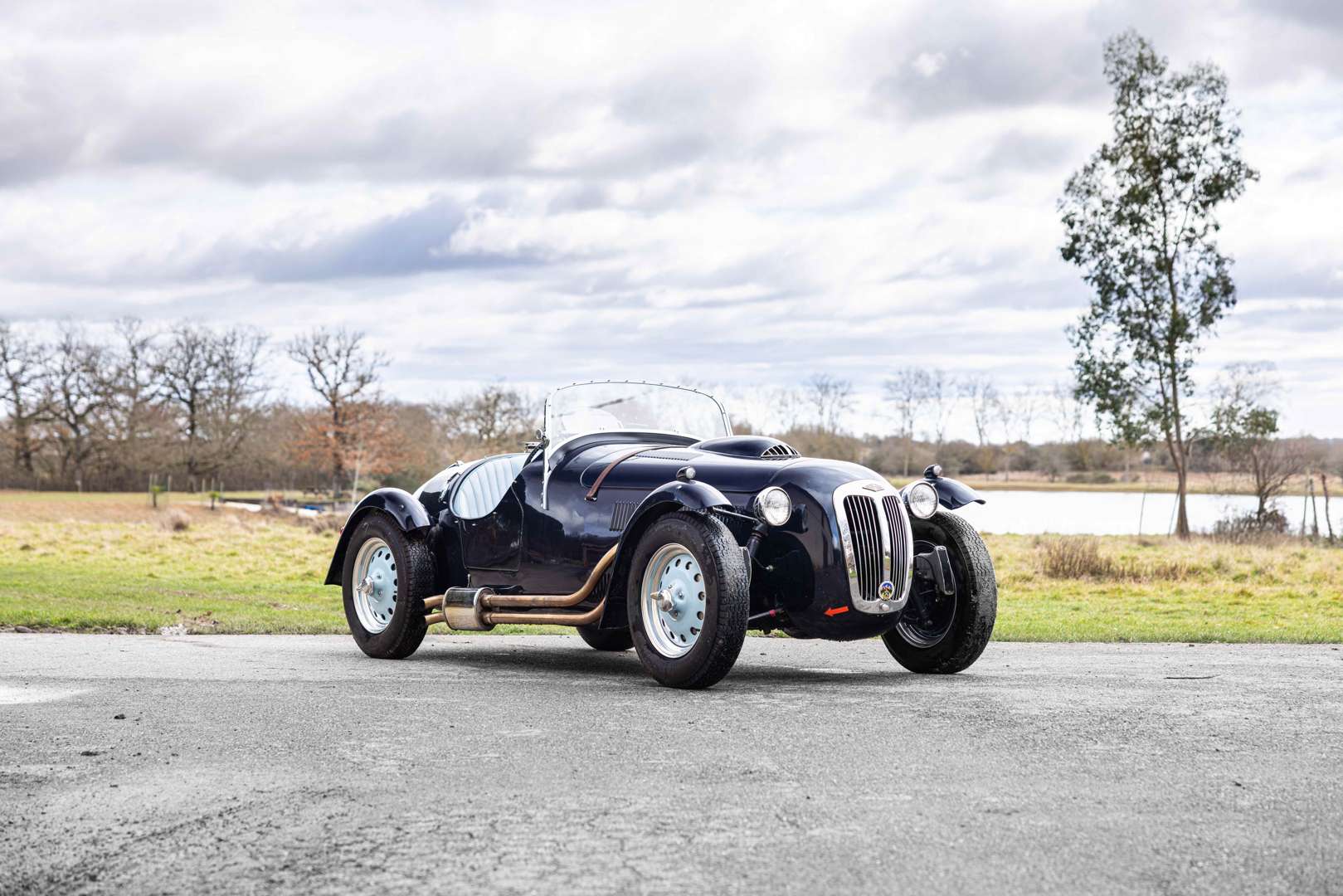
1950 – Frazer Nash Le Mans Replica (R) FIA
French classic car registration document
French historic registration certificate
Vehicle sold without MOT
Sold without MOT
Chassis no. 42100120
Eligible for Le Mans Classic, the Tour Auto, Goodwood, the Mille Miglia and even the HGPCA! What incredible versatility!
Eligible for Le Mans Classic, the Tour Auto, Goodwood, the Mille Miglia and even the HGPCA! What incredible versatility!
- In the late 1930s, Archibald Frazer Nash Limited, which had made a name for itself with the highly efficient and eccentric GNs (Godefrrey-Nash collaboration), imported rebadged BMW 328 roadsters into England. After the Second World War, the firm returned to producing uncompromising, competition-style sports cars, such as those that had forged its reputation during the ‘Chain Gang’ era of the 1920s (the GNs and Frazer Nashs prior to the licensed 328s utilised a complex but formidable chain drive).
- With the resumption of production in 1948, the firm focused on a single engine model, the incredible Bristol… which was none other than a BMW 328, a sort of war trophy. The High Speed soon made a name for itself, finishing 3rd in the first post-war 24 Hours of Le Mans in 1949: and so it was renamed the Le Mans Replica… By the time production ceased in 1957, the venerable British marque had forged an incredible reputation, generating unprecedented enthusiasm, almost disproportionate to its limited production run.
- Denis Jenkinson, the legendary Motor Sport journalist, wrote of it: “The Le Mans Replica was produced for four years, with just over thirty examples made. At the time, it set the benchmark for performance: it easily exceeded 190 km/h and covered the quarter-mile from a standing start in 16 seconds. Its handling was impeccable and, in addition to its road-going qualities, it enjoyed great success in competition, being sold ‘ready to race’ for events as diverse as the Targa Florio or a Goodwood Club meeting. The Frazer Nash ‘LMR’ is undoubtedly – and quite rightly so – one of the most sought-after post-war motorcycle-fender racing cars; incredibly versatile, it enjoyed great success in motor racing, and continues to do so today on the historic racing scene. Eligible for a wide variety of prestigious events, it is a particularly sought-after machine.
- An exact replica of a Frazer Nash Le Mans Replica, the car featured in these pages was acquired by its current owner, a French gentleman driver, in England in the early 2010s. It had just been completed and fine-tuned by Bill Roberts, a Frazer Nash specialist – particularly regarding the LMRs – and former president of the brand’s club. It is said to have been rebuilt using a few original parts from the club’s stock, and a chassis, likely rebuilt as part of a small series by Crosthwaite & Gardiner in the 1970s.
- It has since competed no fewer than six times in the Le Mans Classic and the Historic Grand Prix de Pau (in F2 specification!), whilst benefiting from ongoing and continuous maintenance and preparation, evidenced by over €80,000 in invoices. Duly registered in France (the chassis number is that of a factory car destroyed during its era and renumbered), the car, whose engine has recently been rebuilt using a new block supplied by the British specialist IN Racing, is ready to compete in the finest events on the calendar, thanks in particular to its FIA PTH valid until 2032. Le Mans Classic, Tour Auto, Goodwood, Mille Miglia or F1/F2 races organised by the HGPCA: you won’t find another car on the market quite as versatile!
- In the late 1930s, Archibald Frazer Nash Limited, a company that had made a name for itself with the highly efficient and eccentric GN (Godfrey-Nash) models, imported rebadged BMW 328 roadsters into England. After the Second World War, the company returned to producing uncompromising, competition-style sports cars, such as those that had forged its reputation during the ‘Chain Gang’ era of the 1920s (the GNs and Frazer Nashs, prior to the licensed 328s, used a complex but formidable chain drive).
- With the resumption of production in 1948, the firm focused on a single-engine model, the incredible Bristol… which was none other than a BMW 328, a sort of war trophy. The High Speed soon made a name for itself, going so far as to finish 3rd in the first post-war 24 Hours of Le Mans in 1949: and so it was renamed the Le Mans Replica… By the time production ceased in 1957, the venerable British marque had forged an incredible reputation, generating unprecedented enthusiasm, almost disproportionate to its limited production run.
- Denis Jenkinson, the legendary Motor Sport journalist, wrote of it: “The Le Mans Replica was produced over a four-year period, with just over thirty examples built. At the time, it set the benchmark for performance: it easily exceeded 190 km/h and covered the quarter-mile from a standing start in 16 seconds. Its handling was impeccable and, in addition to its road-going qualities, it enjoyed great success in competition, being sold ‘ready to race’ for events as diverse as the Targa Florio or a Goodwood Club meeting.” The Frazer Nash ‘LMR’ is undoubtedly – and quite rightly so – one of the most sought-after post-war motorcycle-fender racing cars; incredibly versatile, it enjoyed great success in motor racing, and continues to do so today on the historic circuit. Eligible for a wide variety of prestigious events, it is a particularly sought-after machine.
- An exact replica of a Frazer Nash Le Mans Replica, the car featured in these pages was acquired by its current owner, a French gentleman driver, in England in the early 2010s. It had just been completed and fine-tuned by Bill Roberts, a Frazer Nash specialist – particularly with regard to the LMRs – and former president of the brand’s club. It is said to have been rebuilt using a few original parts from the club’s stock, and a chassis, likely rebuilt as part of a small series by Crosthwaite & Gardiner in the 1970s.
- It has since competed no fewer than six times in the Le Mans Classic and the Historic Grand Prix de Pau (in F2 specification!), whilst benefiting from ongoing and continuous maintenance and preparation, evidenced by invoices totalling over €80,000. Duly registered in France (the chassis number is that of a factory car destroyed during its era and subsequently renumbered), the car—whose engine has recently been rebuilt using a new block supplied by the British specialist IN Racing—is ready to compete in the finest events on the calendar, particularly thanks to its FIA HTP valid until 2032. Le Mans Classic, Tour Auto, Goodwood, Mille Miglia or F1/F2 races organised by the HGPCA: you won’t find another car on the market quite as versatile!
Est. €200,000 – €300,000