
&w=3840&q=75)
&w=3840&q=75)
&w=3840&q=75)
&w=3840&q=75)
&w=3840&q=75)
&w=3840&q=75)
&w=3840&q=75)
&w=3840&q=75)


94
Attribué à Jean-François GARNERAY
The item was sold for 13 000 €
Fees include commission and taxes.
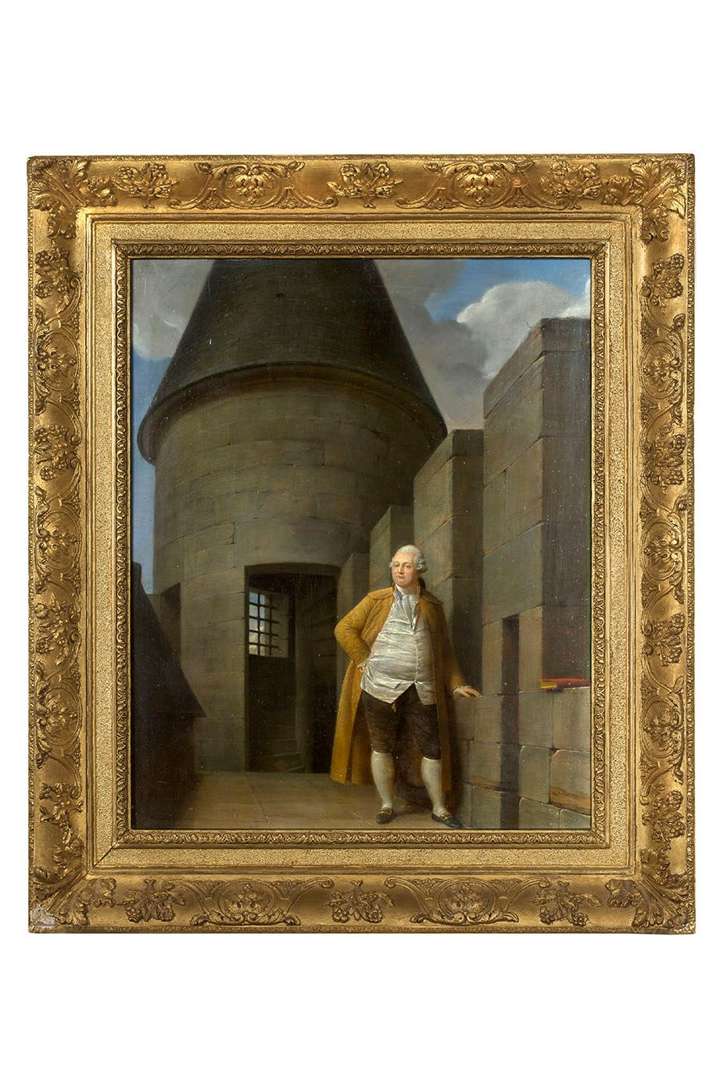
Attributed to Jean-François GARNERAY Paris, 1755 - 1837, Auteuil Portrait de Louis XVI (1754-1793) à la prison du Temple Panel 47 x 37,5 cm - 18 1/2 x 14 3/4 in. PROVENANCE Sale Sotheby's (Paris), December 3, 2020, no. 87| acquired in this sale by the current owner, private collection (France).
Portrait fo Louis XVI (1754-1793) at the Temple, panel There is another version of this work in the Musée Carnavalet in Paris (inv. P2813). A sad but touching reminder of the late King Louis XVI, this image depicts him in the last hours of his life, imprisoned in the Temple tower. The Musée Carnavalet holds another version of this composition (inv. P2813), presented at the Salon of 1814, suggesting that it was produced in the early days of the Restoration and the rehabilitation of the Bourbons. Separated from his family, the king stands alone on the tower's parapet walk. Fallen, he appears to be posing without pomp and circumstance, with no royal attributes other than the thin blue piping visible beneath his white vest. Probably a reminder of the Order of St. Louis, it is a vestige of a bygone era. Around the king, austerity reigns: shutters have been placed between the battlements so that no one can see him, and a prayer book is placed in front of him. Cleverly, it is not the iconography of a reviled absolute monarch that has been chosen here. In this context of rehabilitation, it is the image of a simple, unostentatious man that is emphasized, and thus, perhaps, that of a restored monarchy that has learned the lessons of the past.
Portrait fo Louis XVI (1754-1793) at the Temple, panel There is another version of this work in the Musée Carnavalet in Paris (inv. P2813). A sad but touching reminder of the late King Louis XVI, this image depicts him in the last hours of his life, imprisoned in the Temple tower. The Musée Carnavalet holds another version of this composition (inv. P2813), presented at the Salon of 1814, suggesting that it was produced in the early days of the Restoration and the rehabilitation of the Bourbons. Separated from his family, the king stands alone on the tower's parapet walk. Fallen, he appears to be posing without pomp and circumstance, with no royal attributes other than the thin blue piping visible beneath his white vest. Probably a reminder of the Order of St. Louis, it is a vestige of a bygone era. Around the king, austerity reigns: shutters have been placed between the battlements so that no one can see him, and a prayer book is placed in front of him. Cleverly, it is not the iconography of a reviled absolute monarch that has been chosen here. In this context of rehabilitation, it is the image of a simple, unostentatious man that is emphasized, and thus, perhaps, that of a restored monarchy that has learned the lessons of the past.