
&w=3840&q=75)
&w=3840&q=75)
&w=3840&q=75)
&w=3840&q=75)
&w=3840&q=75)
&w=3840&q=75)


209
CHINE PÉRIODE RÉPUBLIQUE (1911-1949)
The item was sold for 15 744 €
Fees include commission and taxes.
CHINA REPUBLIC PERIOD (1911-1949)
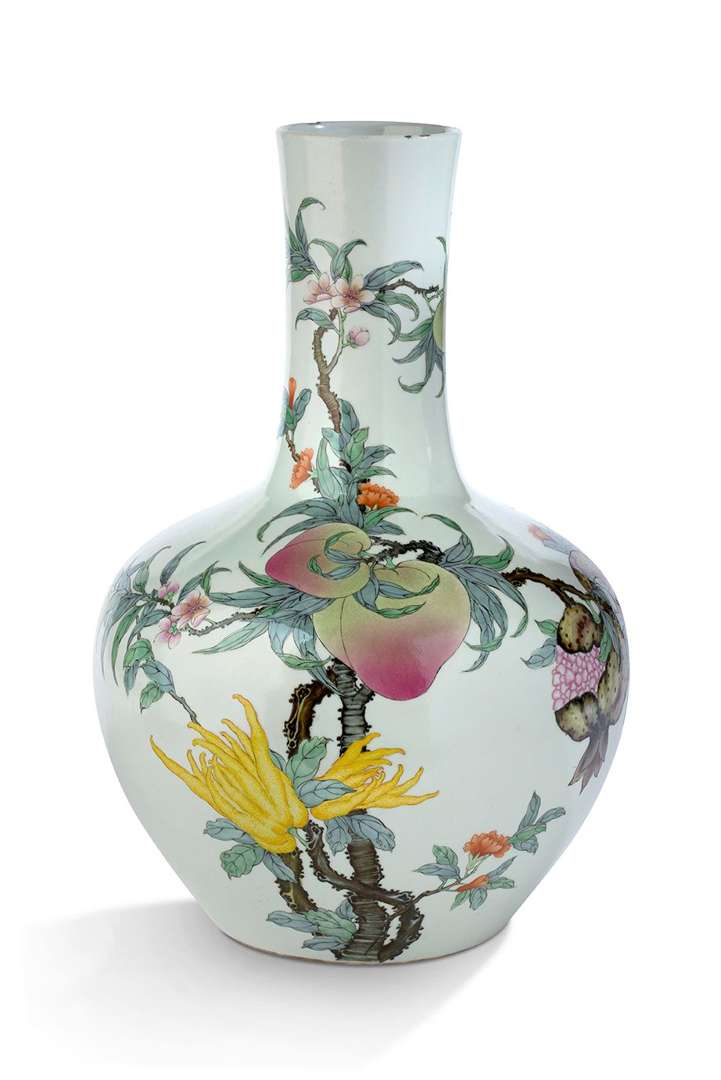
Important tianqiuping porcelain vase with polychrome enamels, the body enameled with flowering branches and peach, pomegranate and lemon digitate motifs known as "San Duo" ("Three Abundances"). The base features a four-character Yongzheng mark within a double square in blue over glaze.
H. 46.5 cm
NOTE This vase features a particularly auspicious enamel decoration, that of the "Three Abundances" embodying a wish for longevity, fertility and good fortune, through the association of peach, pomegranate and digested citron. These symbols reflect a syncretism of Chinese cosmological beliefs, blending Taoist, Buddhist and Confucian influences. The peach symbolizes longevity, notably in the Taoist tradition of the immortality peach orchard of
Xiwangmu, Queen Mother of the West. The pomegranate, with its many seeds, is synonymous with fertility and abundant male offspring, a value dear to Confucian family ideals.
Finally, the digitized citron, also known by the evocative name of "Buddha's hand", represents good fortune. This iconography, which appeared during the Tang and Song dynasties, really flourished during the Ming and Qing dynasties, and more precisely with the appearance of Famille rose enamels in the second quarter of the 18th century, which enabled the delicate nuances and beauty of these fruits to be accurately rendered, as in the case of the vase we are offering for sale.
Important tianqiuping porcelain vase with polychrome enamels, the body enameled with flowering branches and peach, pomegranate and lemon digitate motifs known as "San Duo" ("Three Abundances"). The base features a four-character Yongzheng mark within a double square in blue over glaze.
H. 46.5 cm
NOTE This vase features a particularly auspicious enamel decoration, that of the "Three Abundances" embodying a wish for longevity, fertility and good fortune, through the association of peach, pomegranate and digested citron. These symbols reflect a syncretism of Chinese cosmological beliefs, blending Taoist, Buddhist and Confucian influences. The peach symbolizes longevity, notably in the Taoist tradition of the immortality peach orchard of
Xiwangmu, Queen Mother of the West. The pomegranate, with its many seeds, is synonymous with fertility and abundant male offspring, a value dear to Confucian family ideals.
Finally, the digitized citron, also known by the evocative name of "Buddha's hand", represents good fortune. This iconography, which appeared during the Tang and Song dynasties, really flourished during the Ming and Qing dynasties, and more precisely with the appearance of Famille rose enamels in the second quarter of the 18th century, which enabled the delicate nuances and beauty of these fruits to be accurately rendered, as in the case of the vase we are offering for sale.