
&w=3840&q=75)
&w=3840&q=75)
&w=3840&q=75)
&w=3840&q=75)
&w=3840&q=75)
&w=3840&q=75)
&w=3840&q=75)
&w=3840&q=75)

126
JONONE (JOHN ANDREW PERELLO DIT) (né en 1963)
The item was sold for 16 793 €
Fees include commission and taxes.
JONONE (JOHN ANDREW PERELLO DIT) (born 1963)
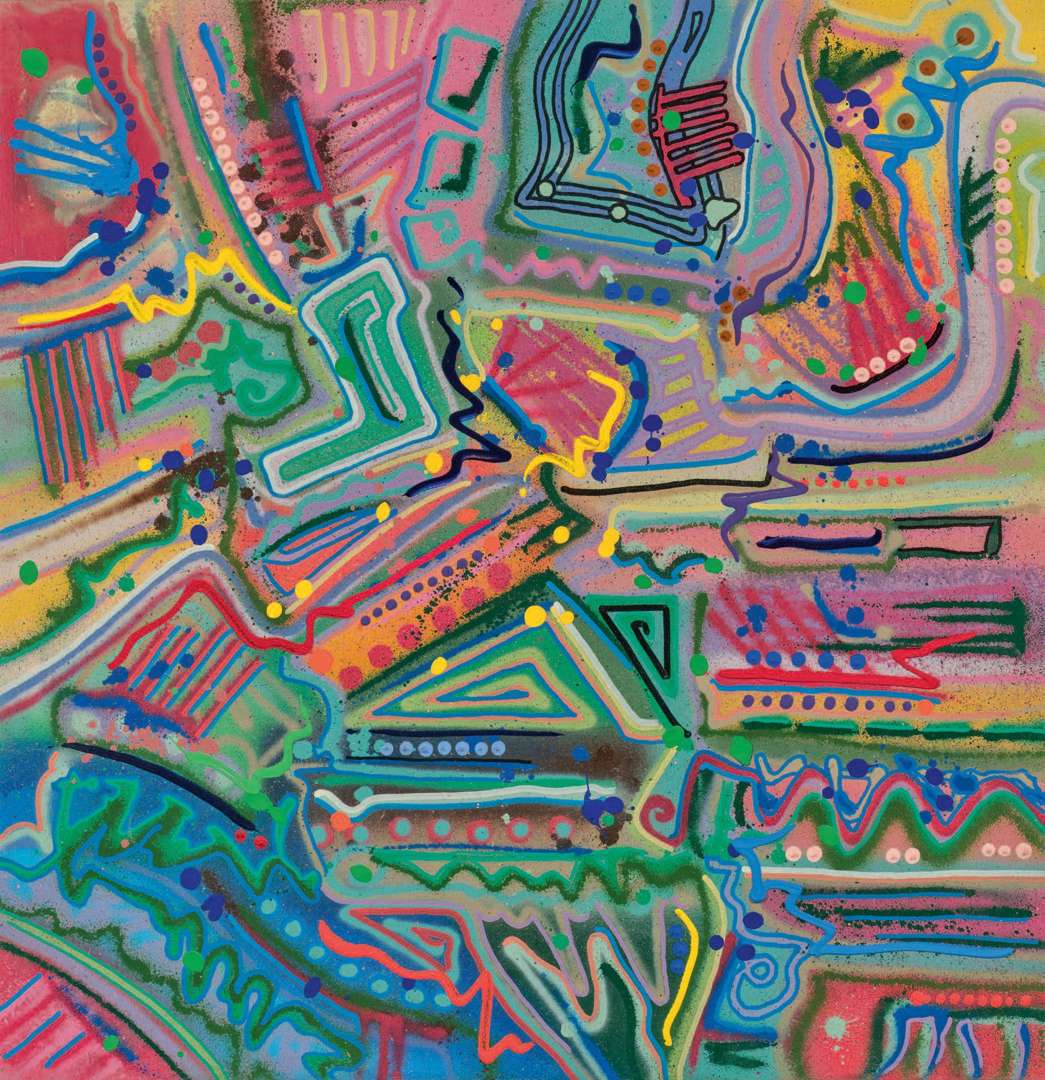
What is in between, 1991
Spray paint and acrylic on canvas, titled, signed and dated on back
99 x 96 cm - 38 31/32 x 37 51/64 in.
Spray paint and acrylic on canvas, titled, signed and dated on the reverse
PROVENANCE:
Dark and Wild, Paris
In the late 1980s and early 1990s, street art experienced a veritable ascendancy in Paris, driven by a raw energy and a need for free expression that transformed the walls of the city and the Paris metro, turning the city into a "cardboard city". The graph or tag movement attracted artists of all styles, including JonOne, AxOne, André and A-One, each helping to redefine the codes of urban art.
André, a pioneer of street art in France, left his mark on the city with his famous "Monsieur A" character: a wide-eyed fellow with a mischievous smile. A-One, meanwhile, is a figure of aerosol expressionism, close to the New York graffiti movement, which he adapts to the Parisian scene. Known for his abstract-inspired lettering and compositions, he developed a style in which the intensity of gesture and color are placed at the service of form.
John Perello, renamed JonOne, is a young New Yorker who grew up on 156th Street, between Harlem and Washington Heights. Inspired by early tagging, he joined the graffiti movement under the name Jon156. Graffiti, with its freedom and sweeping gestures, heralded an unprecedented graphic revolution. In the tunnels of the New York subway, Jon156 stood out for his free style, his defiance of convention and his passion for abstraction. In 1984, he founded the 156 All Starz street art collective, which became an international community. In 1987, French graffiti artist Bando noticed his work and invited him to Paris. JonOne moved there a few months later.
For five years in the early 90s, he spent time at the Hôpital Éphémère, followed by residencies in some of the squats and collectives that enabled him to experiment further, both in his techniques and in his choice of media. Although he retains a close link with the urban art scene, his work primarily transposes the essence of the mural onto canvas.
From graffiti to lyrical abstraction, he has managed to evolve his art while retaining a unique signature. His work is marked by a constant quest for renewal. He has explored a variety of techniques and styles, from the blue period to oils, unbridled acrylics and pointillism, as in the works presented here. This stylistic diversity testifies to his rich artistic palette.
Through these artists, Parisian street art becomes a field of innovation, where styles confront and complement each other. Each of these creators, with his or her distinct approach, contributes to making Paris a hotbed of lively urban art, where boldness and creativity resonate on the city's walls.
These artists were spurred on by the Dark &| Wild exhibitions, contributing to the recognition of street art as an art form in its own right in the 1990s.
In the late 1980s and early 1990s, street art experienced a significant rise in Paris, driven by raw energy and a desire for free expression that transformed the city's walls and metro into vibrant canvases. This movement, encompassing graffiti and tagging, attracted artists with diverse styles, including JonOne, AxOne, André and A-One, each redefining urban art's boundaries.
André, a pioneer of French street art, left his mark with his iconic "Monsieur A" character-a figure with big eyes and a mischievous smile. A-One, closely tied to New York's graffiti scene, brought his aerosol expressionism to Paris, blending abstract forms and bold lettering into a style marked by dynamic gestures and vivid colors.
JonOne, born John Perello in New York, grew up between Harlem and Washington Heights, where he became inspired by the city's graffiti culture. Under the name Jon156, he made a name for himself in the metro tunnels with his abstract, rule-defying style. In 1984, he founded the 156 All Starz collective, fostering an international community of graffiti artists. French artist Bando noticed his work and invited him to Paris in 1987, where JonOne later settled.
During the early 1990s, JonOne spent time at L'Hôpital Éphémère, experimenting with techniques and mediums through residences in various squats and collectives.
His art evolved from graffiti to lyrical abstraction, bridging mural techniques with canvas work. Known for his ever-evolving style, JonOne explored different approaches, from bold acrylics to pointillism, as seen in his diverse body of work.
Through these artists, Parisian street art became a hub of innovation, where distinct styles collided and complemented one another. Their creat
What is in between, 1991
Spray paint and acrylic on canvas, titled, signed and dated on back
99 x 96 cm - 38 31/32 x 37 51/64 in.
Spray paint and acrylic on canvas, titled, signed and dated on the reverse
PROVENANCE:
Dark and Wild, Paris
In the late 1980s and early 1990s, street art experienced a veritable ascendancy in Paris, driven by a raw energy and a need for free expression that transformed the walls of the city and the Paris metro, turning the city into a "cardboard city". The graph or tag movement attracted artists of all styles, including JonOne, AxOne, André and A-One, each helping to redefine the codes of urban art.
André, a pioneer of street art in France, left his mark on the city with his famous "Monsieur A" character: a wide-eyed fellow with a mischievous smile. A-One, meanwhile, is a figure of aerosol expressionism, close to the New York graffiti movement, which he adapts to the Parisian scene. Known for his abstract-inspired lettering and compositions, he developed a style in which the intensity of gesture and color are placed at the service of form.
John Perello, renamed JonOne, is a young New Yorker who grew up on 156th Street, between Harlem and Washington Heights. Inspired by early tagging, he joined the graffiti movement under the name Jon156. Graffiti, with its freedom and sweeping gestures, heralded an unprecedented graphic revolution. In the tunnels of the New York subway, Jon156 stood out for his free style, his defiance of convention and his passion for abstraction. In 1984, he founded the 156 All Starz street art collective, which became an international community. In 1987, French graffiti artist Bando noticed his work and invited him to Paris. JonOne moved there a few months later.
For five years in the early 90s, he spent time at the Hôpital Éphémère, followed by residencies in some of the squats and collectives that enabled him to experiment further, both in his techniques and in his choice of media. Although he retains a close link with the urban art scene, his work primarily transposes the essence of the mural onto canvas.
From graffiti to lyrical abstraction, he has managed to evolve his art while retaining a unique signature. His work is marked by a constant quest for renewal. He has explored a variety of techniques and styles, from the blue period to oils, unbridled acrylics and pointillism, as in the works presented here. This stylistic diversity testifies to his rich artistic palette.
Through these artists, Parisian street art becomes a field of innovation, where styles confront and complement each other. Each of these creators, with his or her distinct approach, contributes to making Paris a hotbed of lively urban art, where boldness and creativity resonate on the city's walls.
These artists were spurred on by the Dark &| Wild exhibitions, contributing to the recognition of street art as an art form in its own right in the 1990s.
In the late 1980s and early 1990s, street art experienced a significant rise in Paris, driven by raw energy and a desire for free expression that transformed the city's walls and metro into vibrant canvases. This movement, encompassing graffiti and tagging, attracted artists with diverse styles, including JonOne, AxOne, André and A-One, each redefining urban art's boundaries.
André, a pioneer of French street art, left his mark with his iconic "Monsieur A" character-a figure with big eyes and a mischievous smile. A-One, closely tied to New York's graffiti scene, brought his aerosol expressionism to Paris, blending abstract forms and bold lettering into a style marked by dynamic gestures and vivid colors.
JonOne, born John Perello in New York, grew up between Harlem and Washington Heights, where he became inspired by the city's graffiti culture. Under the name Jon156, he made a name for himself in the metro tunnels with his abstract, rule-defying style. In 1984, he founded the 156 All Starz collective, fostering an international community of graffiti artists. French artist Bando noticed his work and invited him to Paris in 1987, where JonOne later settled.
During the early 1990s, JonOne spent time at L'Hôpital Éphémère, experimenting with techniques and mediums through residences in various squats and collectives.
His art evolved from graffiti to lyrical abstraction, bridging mural techniques with canvas work. Known for his ever-evolving style, JonOne explored different approaches, from bold acrylics to pointillism, as seen in his diverse body of work.
Through these artists, Parisian street art became a hub of innovation, where distinct styles collided and complemented one another. Their creat