
&w=3840&q=75)
&w=3840&q=75)
&w=3840&q=75)
&w=3840&q=75)
&w=3840&q=75)
&w=3840&q=75)
&w=3840&q=75)
&w=3840&q=75)


100
LÉON DE SMET (1881-1966)
The item was sold for 24 700 €
Fees include commission and taxes.
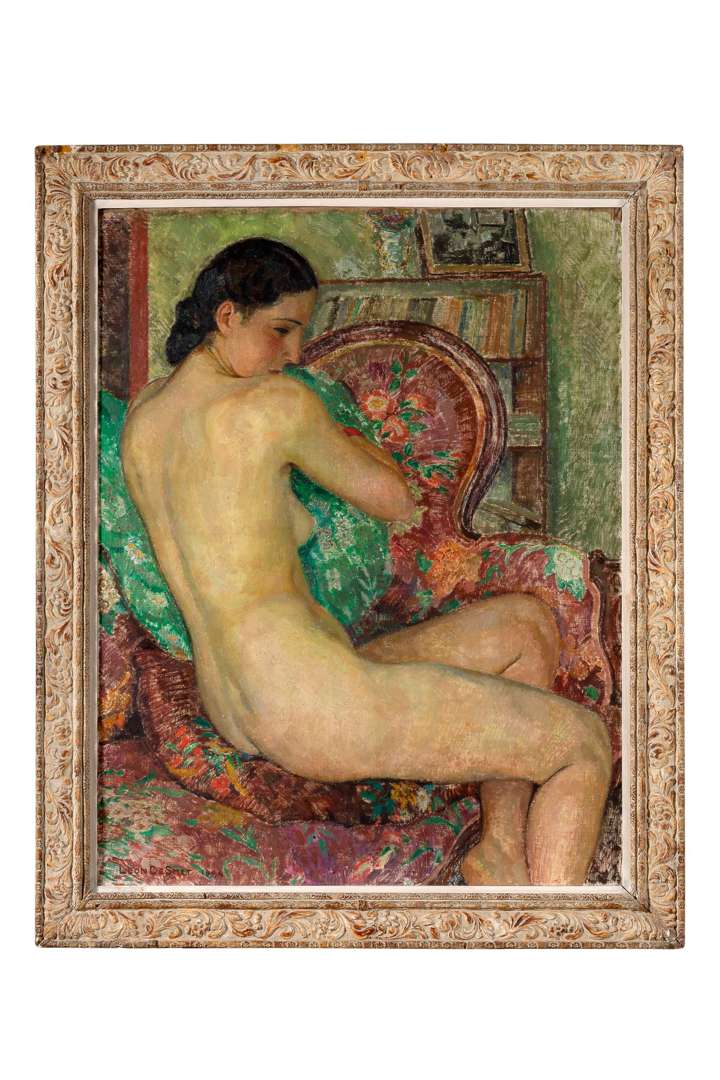
LÉON DE SMET (1881-1966)
Female nude on a sofa, 1944
Oil on canvas
Signed and dated '1944' lower left
Annotated 'Le Caire' on the stretcher
Oil on canvas, signed and dated '1944' lower left, inscribed 'Le Caire' on the stretcher
103,5 x 80,5 cm - 40 3/4 x 31 3/4 in.
Provenance
Private collection, Belgium (by descent)
Related works
- Léon De Smet (1881-1966), Seated Nude, circa 1940, oil on canvas, 101 x 81 cm, in. Sale, Contemporary, Modern and Antique Art, De Vuyst, Lokeren, May 19, 2018, lot 276
- Léon De Smet (1881-1966), Nude on a sofa, oil on canvas, 105 x 119.5 cm, in. Sale, Oude en Moderne Kunst, De Vuyst, Lokeren, October 10, 2019, lot 554
Note
"Léon De Smet belonged to the second generation of the Laethem School, along with his brother Gustave and friends Permeke and Van den Berghe. The first generation, which included Van de Woestijne, De Saedeleer and Minne, tended towards mysticism and interiority. At this time, the young painters who joined them were above all sensitive to the outside world, passionate about colorist research. The studios were bustling with activity. A valiantly accepted precariousness stimulated all these young people. The time was ripe for a kind of lyrical optimism| the big thing was the pictorial evocation of the surrounding landscapes. [...] Almost immediately, well before 1914 at any rate, Léon De Smet was in possession of a solid craft and a very sure technique. And it is precisely this that will help establish his poetics. Partly the offspring of a relaxed Europe and a faith in a happy future, this sunny poetic style would have a lasting influence on the artist's sensibility and set the pace for his work. The young painter was already enjoying success. At international exhibitions, his works were brilliantly acclaimed. His elders, a Claus, a Buysse, a Baertsoen applauded and encouraged him. Vibrant, blond landscapes appeal to him, as do figures and nudes. This is remarkable. The draftsman's sure-footedness immediately shielded him from the deliquescence and evanescence that generally plague Impressionist production. [...] This precious quality earned him, as soon as he took refuge in London in 1914, the deserved renown of an eminent portraitist in the only country in Europe that has preserved a portrait tradition. [...] Back home, he found Expressionism in full bloom. The paintings of his friends and his brother were transformed. This awareness of a new world, reflected in the adoption of a new aesthetic, could not leave a painter as sensitive as Léon De Smet indifferent. His production at this time is singular and appealing. The artist incorporates his mastery of high, clear scales into a strongly written plasticity, even framed by deliberate strokes. His landscapes take on a powerfully emphasized aspect, his figures acquire an impressive firmness and almost rigidity. Voluntary compositions, nudes and still lifes also bear witness to this successful effort towards style and expressiveness. Remarkably, however, the figures remain mostly portraits, while the landscapes, still lifes and nudes are fine pieces of happy painting.
The bitter anxiety of Expressionism did not bite our painter. This is the measure of the artist. Beneath his prim and proper exterior, he remained perfectly aware of his possibilities, his goals and his preferences. [...]
Now master of a language of the richest diversity, the artist gives his work a beautiful plenitude. Firmness, but also lightness| spontaneity, but supported by a science without pedantry| ease that is never negligent. In truth, this is an authentic and complete artist. His portraits, landscapes and still lifes possess a quiet authority. A style without stylization, an accurate sense of arabesque, a captivating interest. Look at the portraits. Resemblance is achieved without apparent effort, without the material becoming tired or the craft weighed down. Look at the hands, that "painter's despair". They are individualized with a sure and charming artistry, irreproachably alive. Surrounded by shimmering interiors or standing in a sober, silvery ambience, the young women evoked by the painter come alive with a delicate life."
Philippe Morel de Boucle Saint-Denis, Léon de Smet, Antwerp: Sikkel, 1949, pp. 5-8
Female nude on a sofa, 1944
Oil on canvas
Signed and dated '1944' lower left
Annotated 'Le Caire' on the stretcher
Oil on canvas, signed and dated '1944' lower left, inscribed 'Le Caire' on the stretcher
103,5 x 80,5 cm - 40 3/4 x 31 3/4 in.
Provenance
Private collection, Belgium (by descent)
Related works
- Léon De Smet (1881-1966), Seated Nude, circa 1940, oil on canvas, 101 x 81 cm, in. Sale, Contemporary, Modern and Antique Art, De Vuyst, Lokeren, May 19, 2018, lot 276
- Léon De Smet (1881-1966), Nude on a sofa, oil on canvas, 105 x 119.5 cm, in. Sale, Oude en Moderne Kunst, De Vuyst, Lokeren, October 10, 2019, lot 554
Note
"Léon De Smet belonged to the second generation of the Laethem School, along with his brother Gustave and friends Permeke and Van den Berghe. The first generation, which included Van de Woestijne, De Saedeleer and Minne, tended towards mysticism and interiority. At this time, the young painters who joined them were above all sensitive to the outside world, passionate about colorist research. The studios were bustling with activity. A valiantly accepted precariousness stimulated all these young people. The time was ripe for a kind of lyrical optimism| the big thing was the pictorial evocation of the surrounding landscapes. [...] Almost immediately, well before 1914 at any rate, Léon De Smet was in possession of a solid craft and a very sure technique. And it is precisely this that will help establish his poetics. Partly the offspring of a relaxed Europe and a faith in a happy future, this sunny poetic style would have a lasting influence on the artist's sensibility and set the pace for his work. The young painter was already enjoying success. At international exhibitions, his works were brilliantly acclaimed. His elders, a Claus, a Buysse, a Baertsoen applauded and encouraged him. Vibrant, blond landscapes appeal to him, as do figures and nudes. This is remarkable. The draftsman's sure-footedness immediately shielded him from the deliquescence and evanescence that generally plague Impressionist production. [...] This precious quality earned him, as soon as he took refuge in London in 1914, the deserved renown of an eminent portraitist in the only country in Europe that has preserved a portrait tradition. [...] Back home, he found Expressionism in full bloom. The paintings of his friends and his brother were transformed. This awareness of a new world, reflected in the adoption of a new aesthetic, could not leave a painter as sensitive as Léon De Smet indifferent. His production at this time is singular and appealing. The artist incorporates his mastery of high, clear scales into a strongly written plasticity, even framed by deliberate strokes. His landscapes take on a powerfully emphasized aspect, his figures acquire an impressive firmness and almost rigidity. Voluntary compositions, nudes and still lifes also bear witness to this successful effort towards style and expressiveness. Remarkably, however, the figures remain mostly portraits, while the landscapes, still lifes and nudes are fine pieces of happy painting.
The bitter anxiety of Expressionism did not bite our painter. This is the measure of the artist. Beneath his prim and proper exterior, he remained perfectly aware of his possibilities, his goals and his preferences. [...]
Now master of a language of the richest diversity, the artist gives his work a beautiful plenitude. Firmness, but also lightness| spontaneity, but supported by a science without pedantry| ease that is never negligent. In truth, this is an authentic and complete artist. His portraits, landscapes and still lifes possess a quiet authority. A style without stylization, an accurate sense of arabesque, a captivating interest. Look at the portraits. Resemblance is achieved without apparent effort, without the material becoming tired or the craft weighed down. Look at the hands, that "painter's despair". They are individualized with a sure and charming artistry, irreproachably alive. Surrounded by shimmering interiors or standing in a sober, silvery ambience, the young women evoked by the painter come alive with a delicate life."
Philippe Morel de Boucle Saint-Denis, Léon de Smet, Antwerp: Sikkel, 1949, pp. 5-8