
&w=3840&q=75)
&w=3840&q=75)
&w=3840&q=75)
&w=3840&q=75)
&w=3840&q=75)
&w=3840&q=75)
&w=3840&q=75)
&w=3840&q=75)


76
LOUIS LAGUERRE VERSAILLES, 1663 - 1721, LONDRES
The item was sold for 3 640 €
Fees include commission and taxes.
LOUIS LAGUERRE VERSAILLES, 1663 - 1721, LONDON
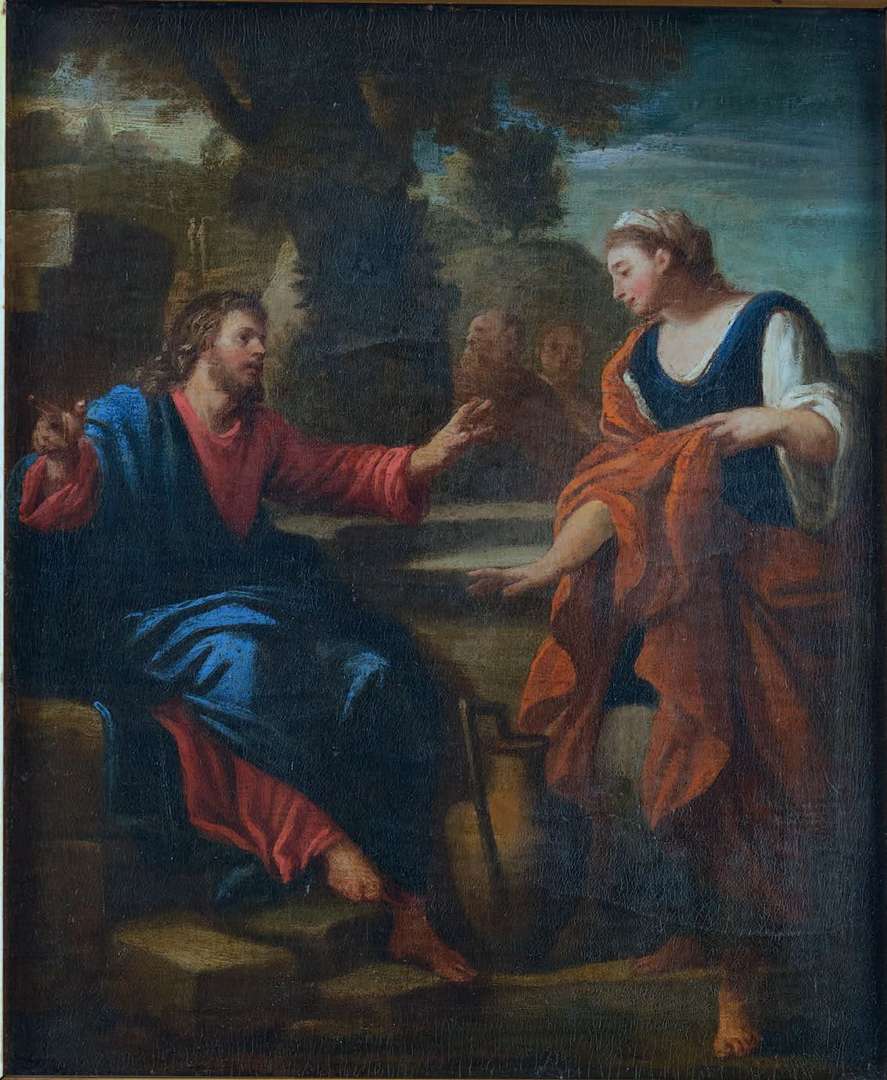
Jesus and the Samaritan woman
Canvas
36 x 31 cm - 14 3/16 x 12 3/16 in.
Jesus and the Samaritan woman, canvas
Along with Louis Chéron (1655-1725) and James Thornhill (1674 -1735), Louis Laguerre is known as one of the top three decorators of British homes for thirty years. Born in Versailles in 1663, Laguerre was initially educated at a Jesuit college and was probably trained by the famous history painter Louis de Boullogne (1654-1733) (see François Marandet, "A modello by Louis Laguerre and the program of the Painted Hall at Chatsworth", Bulington Magazine, August 2022, pp. 760-767). Unlike Jean-Baptiste Monnoyer, Jacques Rousseau and Louis Chéron, who were all "Huguenots", Louis Laguerre did not flee the kingdom of France for religious reasons. According to George Vertue, Laguerre went to London with the architectural painter Ricard around 1684 to assist Antonio Verrio, who was then decorating Windsor Castle. Within a few years, Louis Laguerre had won over the high aristocracy and was commissioned to decorate some of Britain's most famous country houses: Chatsworth (c. 1689-93), Burghley (c. 1698), Marlborough House (c. 1713), Canons (c. 1715), Petworth (c. 1719) and Blentheim (c. 1720), to name but a few. In the early 17th century, there was a demand for "local contemporary painting". Artists such as Orazio Gentileschi (1563-1639), Antoon Van Dyck (1599-1641) and Peter Lely (1618-1680) produced easel paintings for British collectors. Lely's death seems to mark a pause. Strikingly, for thirty years, Louis Laguerre and his contemporaries were employed almost exclusively to decorate ceilings, staircases and walls inside palaces. The market for "local contemporary painting" was extremely limited, as collectors were only interested in old master paintings by foreign artists. However, there is evidence that someone like Louis Chéron occasionally produced "easel paintings". Indeed, he was the author of mythological and religious compositions that he must have tried to sell as "collectors' items". One strategy seems to have been to print some of them, in order to publicize their compositions.
Louis Laguerre, who found himself in the same situation as Louis Chéron, made a few attempts in this direction. Again, the number of Laguerre paintings that do not fall into the category of sketches or modelli was close to zero until recently, but a very small number of examples have recently been identified (see François Marandet, op. cit., 2021, p. 760). These attempts may have been motivated by the "Bible au vinaigre" venture in 1716-1717| this two-volume publication comprising the Old and New Testaments was indeed enriched by an important set of illustrations in which Louis Chéron and Louis Laguerre were the main players. Our painting was certainly conceived in these circumstances. First of all, the painting's style is entirely in keeping with that of Laguerre. The roundness and sobriety of the forms are typical of the artist. There is even a correspondence between the tendency to summarize forms and the subject itself, which, according to tradition, is simply a dialogue between Jesus Christ and a woman by a well (with the apostles appearing discreetly in the background). It is interesting to note that Laguerre's former master, Louis de Boullogne, had been commissioned in 1694-1695 to depict Jesus and the woman of Samaria for Notre-Dame Cathedral's annual May (which, ironically, is now preserved in England at Wardour Castle: Fig. 1). Laguerre seems to have known the look of Louis de Boullogne's composition, perhaps through a small reduction. This would explain certain similarities, such as the general pose of Jesus, the treatment of the Samaritan woman, or simply the idea of the prominent tree above the well. The engraving by Jean Simon (Fig. 2) confirms that our painting is by Laguerre. The British Museum's Department of Prints and Drawings holds two copies of this engraving (inv. 1954,0520.2 and inv. 2010,7081.3444). It is in fact one of the very few compositions by Laguerre to have been engraved, along with the Resurrection of Lazarus and Jesus Heals the Blind Man. This makes our painting all the more important (these last two compositions have not resurfaced). Laguerre seems to have known the look of Louis de Boullogne's composition, perhaps through a small reduction. This would explain certain similarities, such as the
Jesus and the Samaritan woman
Canvas
36 x 31 cm - 14 3/16 x 12 3/16 in.
Jesus and the Samaritan woman, canvas
Along with Louis Chéron (1655-1725) and James Thornhill (1674 -1735), Louis Laguerre is known as one of the top three decorators of British homes for thirty years. Born in Versailles in 1663, Laguerre was initially educated at a Jesuit college and was probably trained by the famous history painter Louis de Boullogne (1654-1733) (see François Marandet, "A modello by Louis Laguerre and the program of the Painted Hall at Chatsworth", Bulington Magazine, August 2022, pp. 760-767). Unlike Jean-Baptiste Monnoyer, Jacques Rousseau and Louis Chéron, who were all "Huguenots", Louis Laguerre did not flee the kingdom of France for religious reasons. According to George Vertue, Laguerre went to London with the architectural painter Ricard around 1684 to assist Antonio Verrio, who was then decorating Windsor Castle. Within a few years, Louis Laguerre had won over the high aristocracy and was commissioned to decorate some of Britain's most famous country houses: Chatsworth (c. 1689-93), Burghley (c. 1698), Marlborough House (c. 1713), Canons (c. 1715), Petworth (c. 1719) and Blentheim (c. 1720), to name but a few. In the early 17th century, there was a demand for "local contemporary painting". Artists such as Orazio Gentileschi (1563-1639), Antoon Van Dyck (1599-1641) and Peter Lely (1618-1680) produced easel paintings for British collectors. Lely's death seems to mark a pause. Strikingly, for thirty years, Louis Laguerre and his contemporaries were employed almost exclusively to decorate ceilings, staircases and walls inside palaces. The market for "local contemporary painting" was extremely limited, as collectors were only interested in old master paintings by foreign artists. However, there is evidence that someone like Louis Chéron occasionally produced "easel paintings". Indeed, he was the author of mythological and religious compositions that he must have tried to sell as "collectors' items". One strategy seems to have been to print some of them, in order to publicize their compositions.
Louis Laguerre, who found himself in the same situation as Louis Chéron, made a few attempts in this direction. Again, the number of Laguerre paintings that do not fall into the category of sketches or modelli was close to zero until recently, but a very small number of examples have recently been identified (see François Marandet, op. cit., 2021, p. 760). These attempts may have been motivated by the "Bible au vinaigre" venture in 1716-1717| this two-volume publication comprising the Old and New Testaments was indeed enriched by an important set of illustrations in which Louis Chéron and Louis Laguerre were the main players. Our painting was certainly conceived in these circumstances. First of all, the painting's style is entirely in keeping with that of Laguerre. The roundness and sobriety of the forms are typical of the artist. There is even a correspondence between the tendency to summarize forms and the subject itself, which, according to tradition, is simply a dialogue between Jesus Christ and a woman by a well (with the apostles appearing discreetly in the background). It is interesting to note that Laguerre's former master, Louis de Boullogne, had been commissioned in 1694-1695 to depict Jesus and the woman of Samaria for Notre-Dame Cathedral's annual May (which, ironically, is now preserved in England at Wardour Castle: Fig. 1). Laguerre seems to have known the look of Louis de Boullogne's composition, perhaps through a small reduction. This would explain certain similarities, such as the general pose of Jesus, the treatment of the Samaritan woman, or simply the idea of the prominent tree above the well. The engraving by Jean Simon (Fig. 2) confirms that our painting is by Laguerre. The British Museum's Department of Prints and Drawings holds two copies of this engraving (inv. 1954,0520.2 and inv. 2010,7081.3444). It is in fact one of the very few compositions by Laguerre to have been engraved, along with the Resurrection of Lazarus and Jesus Heals the Blind Man. This makes our painting all the more important (these last two compositions have not resurfaced). Laguerre seems to have known the look of Louis de Boullogne's composition, perhaps through a small reduction. This would explain certain similarities, such as the