
&w=3840&q=75)
&w=3840&q=75)
&w=3840&q=75)
&w=3840&q=75)
&w=3840&q=75)
&w=3840&q=75)
&w=3840&q=75)
&w=3840&q=75)


22
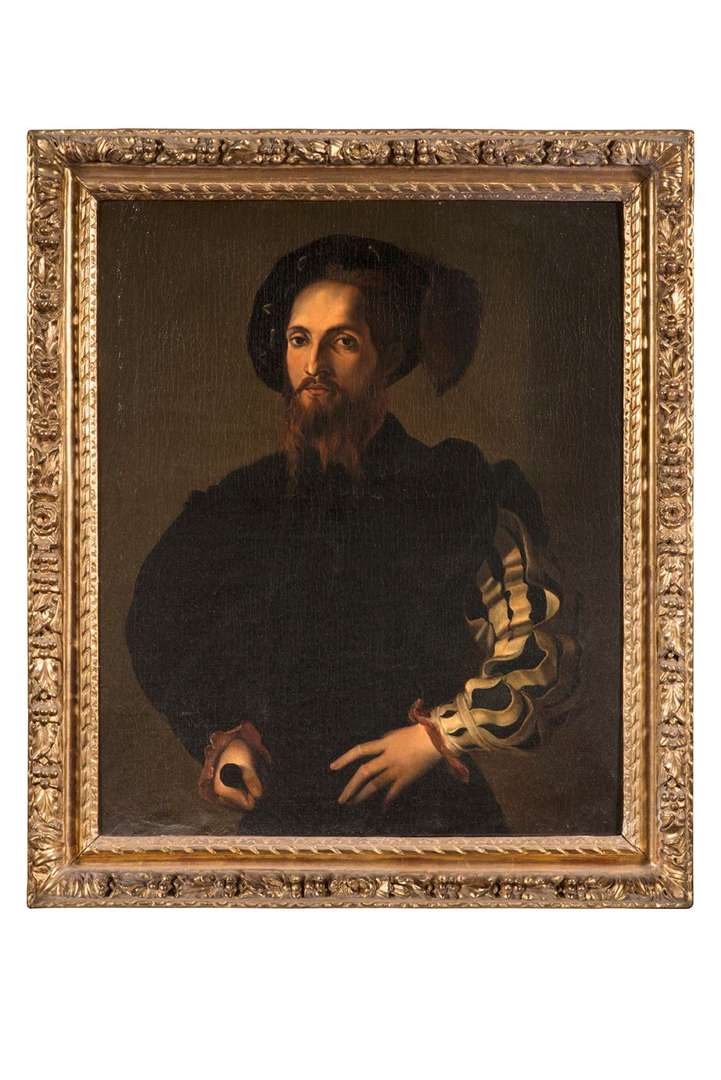
ÉCOLE ITALIENNE DU XVIIe SIÈCLE D'après Sebastiano del Piombo
The item was sold for 7 800 €
Fees include commission and taxes.
ÉCOLE ITALIENNE DU XVIIe SIÈCLE D'après Sebastiano del Piombo
Portrait of Cesare Borgia (1475 - 1507)
Oil on canvas.
Height: 98 cm - Width: 80 cm
RELATED BIBLIOGRAPHY
Claudio Strinati, Les Borgia et leur temps : de Léonard de Vinci à Michel-Ange, cat. exp., Paris, musée Maillol, 2014 - 2015, p. 187
If there's one Italian Renaissance family whose fame has spanned the centuries, it's the Borgias. Initiated by Alfonso de Borja (1378 - 1458), a Spanish jurist who won the throne of St. Peter, their rise was meteoric. Despite the hostility of the nomenclatura of Roman families, in the space of half a century, two popes and a saint came from this dynasty of Spanish petty nobility. Their decline and legends of intrigue, poisoning, crime and incest contributed to their reputation, and even the detestation of their contemporaries and successors. While Calixtus III (1678 - 1458) reigned for just three years, his nephew Rodrigo Borgia (1431 - 1503), later Alexander VI, dominated the game of political alliances in Italy from 1492 until his death in 1503. Born of adultery with Vannozza Cattanei (1442 - 1518), some of his nine children suffered brief and tragic fates, reinforcing the family's black legend: Juan (1474 - 1497), Cesare (1475 - 1507) and Lucrezia (1480-1519).
The physiognomy of Cesare Borgia, one of the most illustrious members of the dynasty, is paradoxically little-known. The identity of the famous late portrait (circa 1515) of a gentleman preserved at the Accademia Carrara in Bergamo and attributed to Altobello Melone (ca. 1491 - 1543) remains uncertain. Considered by some authors to be by Sebastiano del Piombo (1485 - 1547), but previously also by Raphael (1483 - 1520) himself1 , the Half-body Portrait of Cesare (Paris, Rothschild Collection) is perhaps the most likely evidence of the pope's son's physical identity. Although there are several variants or versions of this portrait, including those in the Castello di Miramare and the Palazzo Reale in Turin, the present painting, which has never been seen before, is one of the finest. In 1851, Gustave Flaubert (1821 - 1880) harshly described the composition of the Miramare version: "The left hand resting on the flank (badly done), the right holds the handle of a dagger which is at the belt - the left arm is covered with white crevices, or rather long alternating white stripes, applied to the sleeve (black as is the rest of the costume). A small yellow feather falls from the black cap on the left shoulder. Very high, energetic forehead - full red beard, unkempt and bushy, in three points - prominent cheekbones - round, dark-brown eyes| the mouth is small and red, the nose slightly arched and with dilated nostrils. Expression of violence and boldness - a frenzied air - the complete opposite of Alexander VI of Naples, so calm and restrained. Around the wrists, small white cuffs with red embroidery". Less evocative, but typical of the taste of the period, are several representations of the Valentinois in profile: such as the copy after Bartolomeo Veneto (1502 - 1555) preserved at Palazzo Venezia in Rome and the one by Cristofano dell'Altissimo (1525 - 1605) preserved at the Uffizi after a lost model commissioned by Paolo Giovio (1483 - 1552).
Appointed Archbishop of Valencia in 1492, just twenty days after his father's election, Cesare was made Cardinal in 1493. In 1498, he abandoned the purple and left for France, where he found support in Louis XII (1462 - 1515), who appointed him Duke of Valentinois and had him marry Charlotte d'Albret (1480-1514), sister of the King of Navarre. A role model for Nicolas Machiavelli (1469 - 1527), who dedicated his Prince (1532) to him, Cesare sought to create an empire in Romagna, knocking down one stronghold after another. When his father died, Cesare was in Rome, and power immediately slipped out of his hands as he was arrested and exiled to Castile. In 1507, at the age of 31, he died in battle, fighting on behalf of his brother-in-law, the King of Navarre. In the 19th century, Alexandre Dumas (1802 - 1870) helped make his story legendary ("Les Borgia", in Crimes célèbres, 1839).
1. Catalogo generale dei Beni Culturali, 2005, 2016. [Available online: RITRATTO DI CESARE BORGIA DIPINTO, 1840-1860 (beniculturali.it)].
Portrait of Cesare Borgia (1475 - 1507)
Oil on canvas.
Height: 98 cm - Width: 80 cm
RELATED BIBLIOGRAPHY
Claudio Strinati, Les Borgia et leur temps : de Léonard de Vinci à Michel-Ange, cat. exp., Paris, musée Maillol, 2014 - 2015, p. 187
If there's one Italian Renaissance family whose fame has spanned the centuries, it's the Borgias. Initiated by Alfonso de Borja (1378 - 1458), a Spanish jurist who won the throne of St. Peter, their rise was meteoric. Despite the hostility of the nomenclatura of Roman families, in the space of half a century, two popes and a saint came from this dynasty of Spanish petty nobility. Their decline and legends of intrigue, poisoning, crime and incest contributed to their reputation, and even the detestation of their contemporaries and successors. While Calixtus III (1678 - 1458) reigned for just three years, his nephew Rodrigo Borgia (1431 - 1503), later Alexander VI, dominated the game of political alliances in Italy from 1492 until his death in 1503. Born of adultery with Vannozza Cattanei (1442 - 1518), some of his nine children suffered brief and tragic fates, reinforcing the family's black legend: Juan (1474 - 1497), Cesare (1475 - 1507) and Lucrezia (1480-1519).
The physiognomy of Cesare Borgia, one of the most illustrious members of the dynasty, is paradoxically little-known. The identity of the famous late portrait (circa 1515) of a gentleman preserved at the Accademia Carrara in Bergamo and attributed to Altobello Melone (ca. 1491 - 1543) remains uncertain. Considered by some authors to be by Sebastiano del Piombo (1485 - 1547), but previously also by Raphael (1483 - 1520) himself1 , the Half-body Portrait of Cesare (Paris, Rothschild Collection) is perhaps the most likely evidence of the pope's son's physical identity. Although there are several variants or versions of this portrait, including those in the Castello di Miramare and the Palazzo Reale in Turin, the present painting, which has never been seen before, is one of the finest. In 1851, Gustave Flaubert (1821 - 1880) harshly described the composition of the Miramare version: "The left hand resting on the flank (badly done), the right holds the handle of a dagger which is at the belt - the left arm is covered with white crevices, or rather long alternating white stripes, applied to the sleeve (black as is the rest of the costume). A small yellow feather falls from the black cap on the left shoulder. Very high, energetic forehead - full red beard, unkempt and bushy, in three points - prominent cheekbones - round, dark-brown eyes| the mouth is small and red, the nose slightly arched and with dilated nostrils. Expression of violence and boldness - a frenzied air - the complete opposite of Alexander VI of Naples, so calm and restrained. Around the wrists, small white cuffs with red embroidery". Less evocative, but typical of the taste of the period, are several representations of the Valentinois in profile: such as the copy after Bartolomeo Veneto (1502 - 1555) preserved at Palazzo Venezia in Rome and the one by Cristofano dell'Altissimo (1525 - 1605) preserved at the Uffizi after a lost model commissioned by Paolo Giovio (1483 - 1552).
Appointed Archbishop of Valencia in 1492, just twenty days after his father's election, Cesare was made Cardinal in 1493. In 1498, he abandoned the purple and left for France, where he found support in Louis XII (1462 - 1515), who appointed him Duke of Valentinois and had him marry Charlotte d'Albret (1480-1514), sister of the King of Navarre. A role model for Nicolas Machiavelli (1469 - 1527), who dedicated his Prince (1532) to him, Cesare sought to create an empire in Romagna, knocking down one stronghold after another. When his father died, Cesare was in Rome, and power immediately slipped out of his hands as he was arrested and exiled to Castile. In 1507, at the age of 31, he died in battle, fighting on behalf of his brother-in-law, the King of Navarre. In the 19th century, Alexandre Dumas (1802 - 1870) helped make his story legendary ("Les Borgia", in Crimes célèbres, 1839).
1. Catalogo generale dei Beni Culturali, 2005, 2016. [Available online: RITRATTO DI CESARE BORGIA DIPINTO, 1840-1860 (beniculturali.it)].