
&w=3840&q=75)
&w=3840&q=75)
&w=3840&q=75)
&w=3840&q=75)
&w=3840&q=75)
&w=3840&q=75)
&w=3840&q=75)
&w=3840&q=75)


73
ATTRIBUÉ À LÉONARD LIMOSIN (CA. 1505 - CA. 1576)
The item was sold for 65 000 €
Fees include commission and taxes.
ATTRIBUÉ À LÉONARD LIMOSIN (CA. 1505 - CA. 1576)
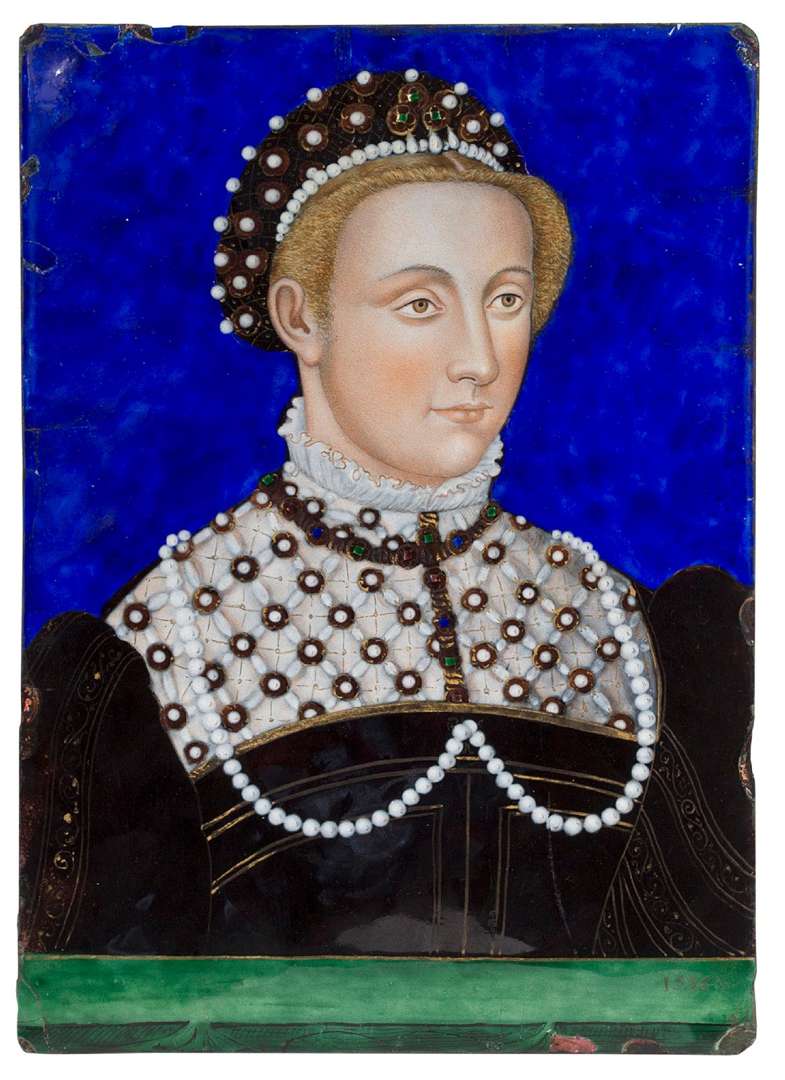
Large polychrome painted enamel plaque on deep-drawn rectangular copper plate with gold highlights. It features a bust of the presumed portrait of Mary Stuart (1542 - 1587) on a plain cobalt blue background. Gold (red), silver (green) and cobalt (blue) enameled straw cabochons on the dress and headdress. Green entablature. Colorless fondant counter-enamel on copper (salmon). Dated lower right on entablature 1556.
Limoges, 16th century, circa 1556.
Height: 30.2 cm - Width: 21.6 cm
(Wear, small chips and restorations)
We have found the drawing that Limosin used as a model for our large plaque. It was given to Jean Clouet and is currently kept at the Musée Condé in Chantilly [MN 342| B 297]. This drawing bears a later handwritten reference to "Mademoiselle de Guise", but is more generally considered to be a portrait of Marie Stuart in her capacity as young Queen of Scots, then exiled in France.
The exceptional format of this hitherto unpublished plate exceeds the ordinary size of Léonard Limosin's productions, which clearly reflects the importance of its subject: Marie Stuart, the young queen of Scotland in exile at the age of 14, just two years before her marriage to the future king of France, François II.
BIBLIOGRAPHY
- Louis Bourdery and Émile Lachenaud, "Léonard Limosin, peintre de portraits", Paris, 1893.
- Stéphanie Deprouw-Augustin, "Léonard Limosin: l'apogée de l'émail peint (2)", Blog Apprendre à voir, December 28, 2013, https://deprouw. fr/blog/leonard-limosin-le-bref-apogee-de-lemail-peint-2/.
Léonard Limosin was an eminent French painter and enameller who was born around 1505 in Limoges and died between 1575 and 1577. Noted for his perfect mastery of his art, he became painter to King François I at the age of 25. In his capacity as "enameller and ordinary painter of the king's chamber", he was called upon to produce portraits of the most eminent members of the court and, more generally, of the kingdom of France. Between 1532 and 1574, he produced an estimated 1,840 enamels.
To produce these sumptuous portraits, it is now proven that Limosin had access to drawings by Jean or François Clouet, as Stéphanie Deprouw-Augustin explains in her reference publication "Léonard Limosin : l'apogée de l'émail peint". It would even seem that Limosin made copies of Clouet's drawings that could be transferred to the enamel plate using the poncif method.
Large polychrome painted enamel plaque on deep-drawn rectangular copper plate with gold highlights. It features a bust of the presumed portrait of Mary Stuart (1542 - 1587) on a plain cobalt blue background. Gold (red), silver (green) and cobalt (blue) enameled straw cabochons on the dress and headdress. Green entablature. Colorless fondant counter-enamel on copper (salmon). Dated lower right on entablature 1556.
Limoges, 16th century, circa 1556.
Height: 30.2 cm - Width: 21.6 cm
(Wear, small chips and restorations)
We have found the drawing that Limosin used as a model for our large plaque. It was given to Jean Clouet and is currently kept at the Musée Condé in Chantilly [MN 342| B 297]. This drawing bears a later handwritten reference to "Mademoiselle de Guise", but is more generally considered to be a portrait of Marie Stuart in her capacity as young Queen of Scots, then exiled in France.
The exceptional format of this hitherto unpublished plate exceeds the ordinary size of Léonard Limosin's productions, which clearly reflects the importance of its subject: Marie Stuart, the young queen of Scotland in exile at the age of 14, just two years before her marriage to the future king of France, François II.
BIBLIOGRAPHY
- Louis Bourdery and Émile Lachenaud, "Léonard Limosin, peintre de portraits", Paris, 1893.
- Stéphanie Deprouw-Augustin, "Léonard Limosin: l'apogée de l'émail peint (2)", Blog Apprendre à voir, December 28, 2013, https://deprouw. fr/blog/leonard-limosin-le-bref-apogee-de-lemail-peint-2/.
Léonard Limosin was an eminent French painter and enameller who was born around 1505 in Limoges and died between 1575 and 1577. Noted for his perfect mastery of his art, he became painter to King François I at the age of 25. In his capacity as "enameller and ordinary painter of the king's chamber", he was called upon to produce portraits of the most eminent members of the court and, more generally, of the kingdom of France. Between 1532 and 1574, he produced an estimated 1,840 enamels.
To produce these sumptuous portraits, it is now proven that Limosin had access to drawings by Jean or François Clouet, as Stéphanie Deprouw-Augustin explains in her reference publication "Léonard Limosin : l'apogée de l'émail peint". It would even seem that Limosin made copies of Clouet's drawings that could be transferred to the enamel plate using the poncif method.