
&w=3840&q=75)
&w=3840&q=75)
&w=3840&q=75)
&w=3840&q=75)
&w=3840&q=75)
&w=3840&q=75)
&w=3840&q=75)
&w=3840&q=75)

161
JAPON ÉPOQUE EDO, XVIIIe SIÈCLE
The item was sold for 6 500 €
Fees include commission and taxes.
JAPON ÉPOQUE EDO, XVIIIe SIÈCLE
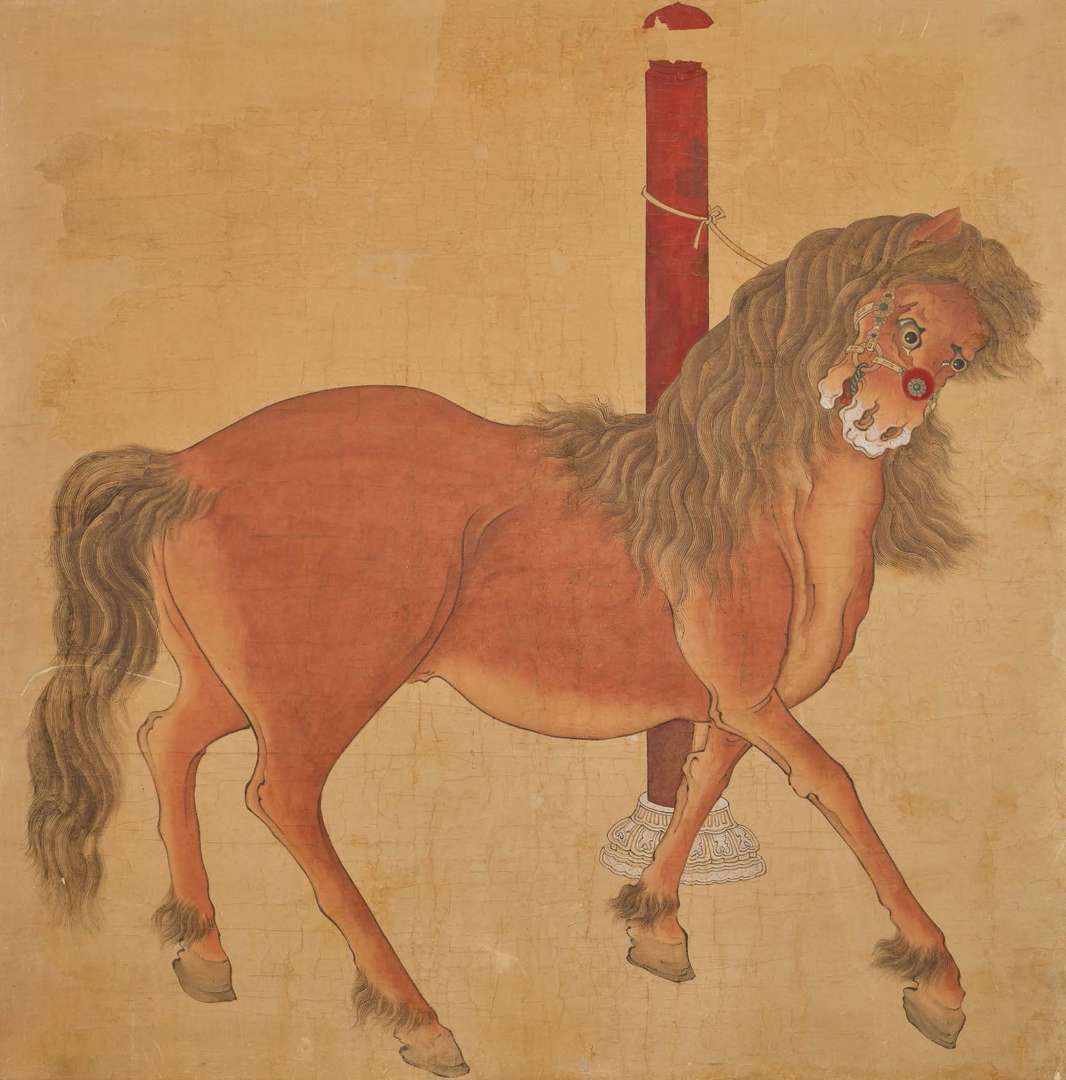
= Important ink and color painting on paper depicting a horse in a halter tied to a post. The animal is turned to the right, the coat worked in brown-fauve shades, represented in a dynamic posture, the mane and tail finely detailed, the eye bright and the gaze powerful, with a mannerist expression. He is wearing a rich harness, and is held by a lanyard to a red post with a base carved with lotus petals. Mounted on a frame.
Dim. 149 x 147 cm
PROVENANCE
Acquired in the 1930s from the decorator Robert Carlhian, then by descent.
NOTE
Since its introduction to the archipelago in the 4th century, the horse has played an important role in Japanese culture. It is considered sacred in the Shinto tradition, the mount of the kami, but also an indispensable animal in warfare.
Until the introduction of firearms in the late 16th century, horses were widely used by the warrior class, and the samurai code of honor was called Kyuba no Michi (literally "The Way of the Bow and the Horse"). There is a tradition of horse representation in Japan, notably through umaya-zu, screens showing representations of horses in the stable. The horses are presented to the public as a symbol of the power and wealth of their owner, a member of the warrior elite.
The same is true of the horse portrait we are presenting. The artist has depicted the animal's ardor and power as an echo of its owner.
CONDITION REPORT
Big restorations, creases, small lacks, scratches, traces of water, painting remounted on a canvas
= Important ink and color painting on paper depicting a horse in a halter tied to a post. The animal is turned to the right, the coat worked in brown-fauve shades, represented in a dynamic posture, the mane and tail finely detailed, the eye bright and the gaze powerful, with a mannerist expression. He is wearing a rich harness, and is held by a lanyard to a red post with a base carved with lotus petals. Mounted on a frame.
Dim. 149 x 147 cm
PROVENANCE
Acquired in the 1930s from the decorator Robert Carlhian, then by descent.
NOTE
Since its introduction to the archipelago in the 4th century, the horse has played an important role in Japanese culture. It is considered sacred in the Shinto tradition, the mount of the kami, but also an indispensable animal in warfare.
Until the introduction of firearms in the late 16th century, horses were widely used by the warrior class, and the samurai code of honor was called Kyuba no Michi (literally "The Way of the Bow and the Horse"). There is a tradition of horse representation in Japan, notably through umaya-zu, screens showing representations of horses in the stable. The horses are presented to the public as a symbol of the power and wealth of their owner, a member of the warrior elite.
The same is true of the horse portrait we are presenting. The artist has depicted the animal's ardor and power as an echo of its owner.
CONDITION REPORT
Big restorations, creases, small lacks, scratches, traces of water, painting remounted on a canvas