
&w=3840&q=75)
&w=3840&q=75)
&w=3840&q=75)
&w=3840&q=75)
&w=3840&q=75)
&w=3840&q=75)
&w=3840&q=75)
&w=3840&q=75)


154
WRIGHT ORVILLE (1871-1948). Aviateur américain.
The item was sold for 4 550 €
Fees include commission and taxes.
WRIGHT ORVILLE (1871-1948)
L.S., Dayton, Ohio October 19, 1937, to Fred. L. Black, at the Edison Institute, Dearborn(Michigan)| 1 1/2 in-4 typed pages, on his letterhead| in English.
Controversy over the anteriority of the Wright brothers' flights.
[Gustave WHITEHEAD (1874-1927) claimed to have been the first to fly a powered airplane on August 14, 1901].
Wright had not seen the book, Lost Flights of Gustave Whitehead, but he had seen the article about it in the January 1935 issue of Popular Aviation by Stella Randolph and Harvey Phillips. He knew from a friend that Miss Randolph works in a medical practice in Washington, D.C., and is not particularly interested in aviation| and that Harvey Phillips, whom she did not know, persuaded her to collaborate with him. Wright suspects that the idea for the book originated in the mind of A.F. Zahm, who had been quite active in this field. The book is a testament to how easy it is, 35 years later, to obtain attestations of untruths. Neither he nor Wilbur were ever in Bridgeport before 1909, and then only to travel through town by train.
He points to eyewitness statements obtained by A.V. ROE to support his claim to have been the first Englishman to fly. Wright had letters from Roe at the time, which proved the statements to be false. Moore-Brabazon told him that he would have been unable to refute these statements, produced 25 years after the event, without the evidence Wright provided. In Whitehead's case, the drawing of the machine is sufficient to refute the claims that it was flying. Wright points to the December 1936 N.A.A. Magazine article by Professor John B. Crane, who investigated the Randolph story and interviewed some of the alleged eyewitnesses...
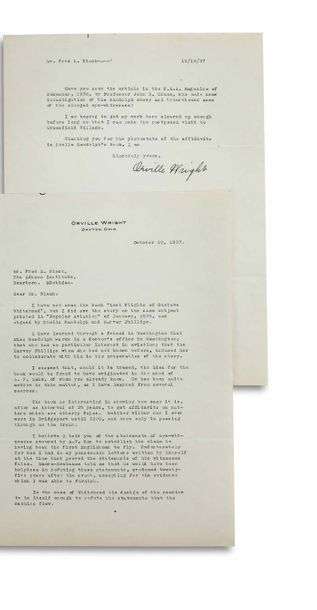
"I have not seen the book 'Lost Flights of Gustave Whitehead', but I did see the story on the same subject printed in 'Popular Aviation' of January, 1935, and signed by Stella Randolph and Harvey Phillips. I have learned through a friend in Washington that Miss Randolph works in a doctor's office in Washington| that she has no particular interest in aviation| that the Harvey Phillips whom she had not known before, induced her to collaborate with him in the preparation of the story. I suspect that, could it be traced, the idea for the book would be found to have originated in the mind of A. F. Zahm, of whom you already know. He has been quite active in this matter, as I have learned from several sources. The book is interesting in showing how easy it is, after an interval of 35 years, to get affidavits on matters which are utterly false. Neither Wilbur nor I ever were in Bridgeport until 1909, and then only in passing through on the train.
I believe I told you of the statements of eye-witnesses secured by A. V. Roe to establish his claim to having been the first Englishman to fly. Unfortunately for Roe I had in my possession letters written by himself at the time that proved the statements of the witnesses false. MooreBrabazon told me that he would have been helpless in refuting these statements, produced twenty-five years after the event, except for the evidence which I was able to furnish. In the case of Whitehead the design of the machine is in itself enough to refute the statements that the machine flew. Have you seen the article in the N. A. A. Magazine of December, 1936, by Professor John B. Crane, who made some investigation of the Randolph story and interviewed some of the alleged eye-witnesses?
I am hoping to get my work here cleared up enough before long so that I can make the postponed visit to Greenfield Village. Thanking you for the photostats of the affidavits in Stella Randolph's book "....
L.S., Dayton, Ohio October 19, 1937, to Fred. L. Black, at the Edison Institute, Dearborn(Michigan)| 1 1/2 in-4 typed pages, on his letterhead| in English.
Controversy over the anteriority of the Wright brothers' flights.
[Gustave WHITEHEAD (1874-1927) claimed to have been the first to fly a powered airplane on August 14, 1901].
Wright had not seen the book, Lost Flights of Gustave Whitehead, but he had seen the article about it in the January 1935 issue of Popular Aviation by Stella Randolph and Harvey Phillips. He knew from a friend that Miss Randolph works in a medical practice in Washington, D.C., and is not particularly interested in aviation| and that Harvey Phillips, whom she did not know, persuaded her to collaborate with him. Wright suspects that the idea for the book originated in the mind of A.F. Zahm, who had been quite active in this field. The book is a testament to how easy it is, 35 years later, to obtain attestations of untruths. Neither he nor Wilbur were ever in Bridgeport before 1909, and then only to travel through town by train.
He points to eyewitness statements obtained by A.V. ROE to support his claim to have been the first Englishman to fly. Wright had letters from Roe at the time, which proved the statements to be false. Moore-Brabazon told him that he would have been unable to refute these statements, produced 25 years after the event, without the evidence Wright provided. In Whitehead's case, the drawing of the machine is sufficient to refute the claims that it was flying. Wright points to the December 1936 N.A.A. Magazine article by Professor John B. Crane, who investigated the Randolph story and interviewed some of the alleged eyewitnesses...
"I have not seen the book 'Lost Flights of Gustave Whitehead', but I did see the story on the same subject printed in 'Popular Aviation' of January, 1935, and signed by Stella Randolph and Harvey Phillips. I have learned through a friend in Washington that Miss Randolph works in a doctor's office in Washington| that she has no particular interest in aviation| that the Harvey Phillips whom she had not known before, induced her to collaborate with him in the preparation of the story. I suspect that, could it be traced, the idea for the book would be found to have originated in the mind of A. F. Zahm, of whom you already know. He has been quite active in this matter, as I have learned from several sources. The book is interesting in showing how easy it is, after an interval of 35 years, to get affidavits on matters which are utterly false. Neither Wilbur nor I ever were in Bridgeport until 1909, and then only in passing through on the train.
I believe I told you of the statements of eye-witnesses secured by A. V. Roe to establish his claim to having been the first Englishman to fly. Unfortunately for Roe I had in my possession letters written by himself at the time that proved the statements of the witnesses false. MooreBrabazon told me that he would have been helpless in refuting these statements, produced twenty-five years after the event, except for the evidence which I was able to furnish. In the case of Whitehead the design of the machine is in itself enough to refute the statements that the machine flew. Have you seen the article in the N. A. A. Magazine of December, 1936, by Professor John B. Crane, who made some investigation of the Randolph story and interviewed some of the alleged eye-witnesses?
I am hoping to get my work here cleared up enough before long so that I can make the postponed visit to Greenfield Village. Thanking you for the photostats of the affidavits in Stella Randolph's book "....