
&w=3840&q=75)
&w=3840&q=75)
&w=3840&q=75)
&w=3840&q=75)
&w=3840&q=75)
&w=3840&q=75)
&w=3840&q=75)
&w=3840&q=75)

HISTOIRE.
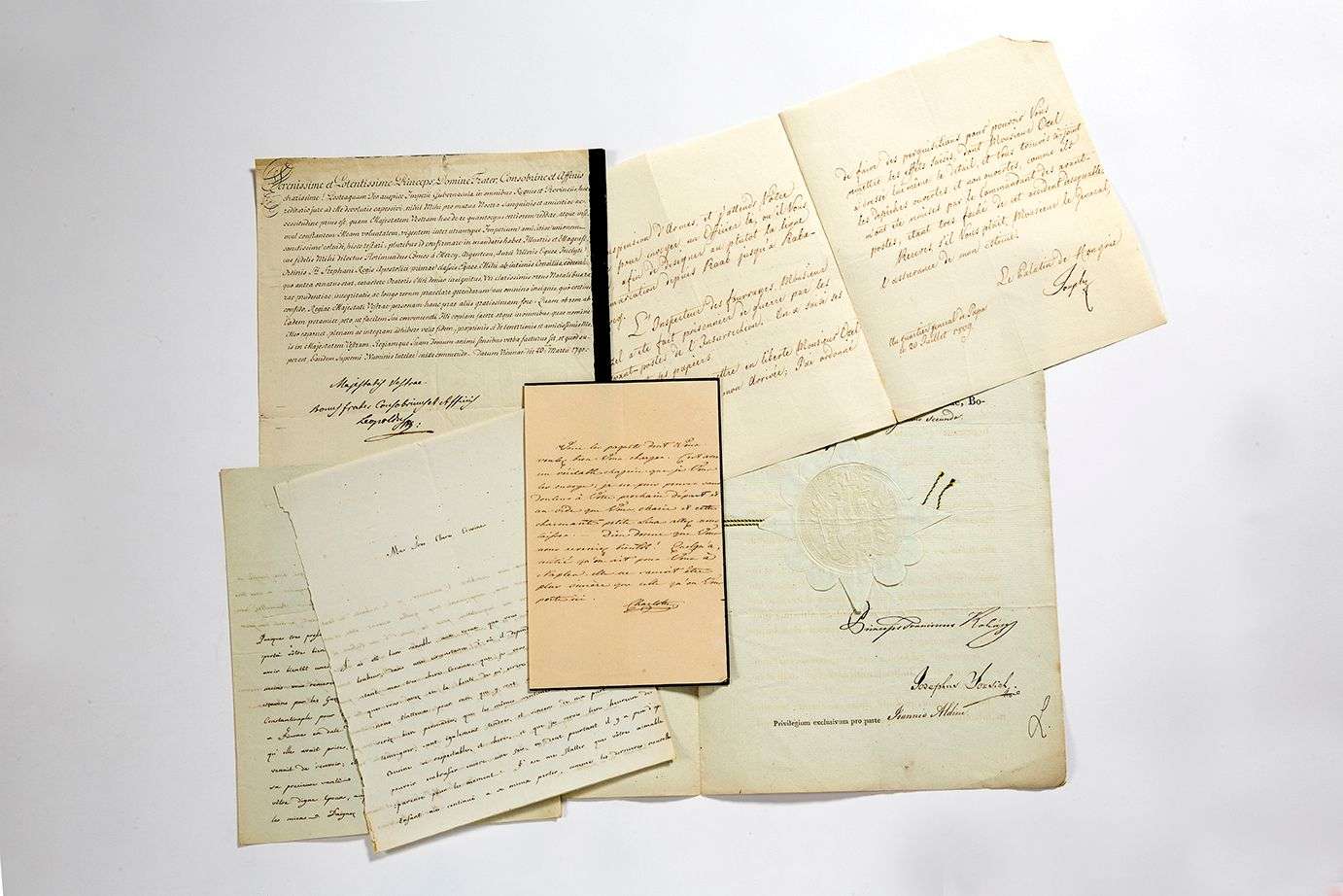
Set of autograph letters signed by the emperors and empresses of the House of Habsburg-Lorraine, archdukes and dukes of Lorraine, 1665-1823.
Included are letters from the archdukes JOSEPH (1809), JEAN (1809), FERDINAND (1822) AND HIS WIFE MARIE BÉATRICE (1801), FRANÇOIS IV (1817), MAXIMILIEN (1830), CHARLES (1835 AND 1841), AND BY AMALIA (WIFE OF JOSEPH II), MARIA JOSEPHA (WIFE OF JOSEPH II), MARIE THÉRÈSE (SECOND WIFE OF FRANCIS II) | MARIA BEATRICE (THIRD WIFE OF FRANZ II), CHARLOTTE OF BAVARIA (FOURTH WIFE OF FRANZ II).
Joseph II: an autograph bill and a letter signed to the count Esterhazy. 1767 and 1789. Leopold II: a letter signed to Louis XVI, letter of recommendation for the count of Mercy-Argenteau. Vienna, March 20, 1790| an autograph letter signed, letter of condolences to a count. S.d.| an autograph letter signed, in French, to count Colloredo. François II: a signed letter to Napoleon, whom he congratulates on the birth of the king of Rome. Vienna, March 27, 1811| a signed letter. Schönbrunn, August 9, 1816| a signed document. Czernowitz, October 4, 1823. Charles III of Lorraine: a signed letter with autograph subscription to Louise de Vaudémont, widow of Henri III. He recommends to the queen and to his brother Philippe-Emmanuel, duke of Mercoeur, his marquisate of Chaussin (Jura), as well as the redemption of La Mure and Bourg d'Oisans (Dauphiné). Nancy, March 15, 1596. (1 page, folio, damaged signature, address with stamp). Charles IV duke of Lorraine: an autograph letter signed, giving orders to the captain of his horse-lighters. 1665. Leopold, duke of Lorraine: a signed letter to Mr. Southwell, about the mother of one of his squires, Mr. Ogara. Lunéville, November 23, 1724. Cartel : Autograph letter signed, addressed to Henri IV, dated November 20, 1602, Nancy. Charles of Lorraine evokes here the situation in Strasbourg during the "war of the bishops", religious conflict having opposed catholics and protestants following the death of Jean de Manderscheid, bishop of Strasbourg, in 1592. Two potential successors clashed: John George of Brandenburg, a Lutheran, and Charles of Lorraine, a Catholic. The cardinal of Lorraine assured Henri IV that he was his "very humble servant" and that he would try "for the respect of [His] Majesty" to moderate the "violences that [his] adversaries continue incessantly, who will not have failed to try to put it in suspicion of [his] very humble devotion. The treaty of Haguenau (November 22, 1604) put an end to the conflict in favor of the house of Lorraine, the Republic of Strasbourg however remaining Lutheran until its annexation to France in 1681.
Set of autograph letters signed by the emperors and empresses of the House of Habsburg-Lorraine, archdukes and dukes of Lorraine, 1665-1823.
Included are letters from the archdukes JOSEPH (1809), JEAN (1809), FERDINAND (1822) AND HIS WIFE MARIE BÉATRICE (1801), FRANÇOIS IV (1817), MAXIMILIEN (1830), CHARLES (1835 AND 1841), AND BY AMALIA (WIFE OF JOSEPH II), MARIA JOSEPHA (WIFE OF JOSEPH II), MARIE THÉRÈSE (SECOND WIFE OF FRANCIS II) | MARIA BEATRICE (THIRD WIFE OF FRANZ II), CHARLOTTE OF BAVARIA (FOURTH WIFE OF FRANZ II).
Joseph II: an autograph bill and a letter signed to the count Esterhazy. 1767 and 1789. Leopold II: a letter signed to Louis XVI, letter of recommendation for the count of Mercy-Argenteau. Vienna, March 20, 1790| an autograph letter signed, letter of condolences to a count. S.d.| an autograph letter signed, in French, to count Colloredo. François II: a signed letter to Napoleon, whom he congratulates on the birth of the king of Rome. Vienna, March 27, 1811| a signed letter. Schönbrunn, August 9, 1816| a signed document. Czernowitz, October 4, 1823. Charles III of Lorraine: a signed letter with autograph subscription to Louise de Vaudémont, widow of Henri III. He recommends to the queen and to his brother Philippe-Emmanuel, duke of Mercoeur, his marquisate of Chaussin (Jura), as well as the redemption of La Mure and Bourg d'Oisans (Dauphiné). Nancy, March 15, 1596. (1 page, folio, damaged signature, address with stamp). Charles IV duke of Lorraine: an autograph letter signed, giving orders to the captain of his horse-lighters. 1665. Leopold, duke of Lorraine: a signed letter to Mr. Southwell, about the mother of one of his squires, Mr. Ogara. Lunéville, November 23, 1724. Cartel : Autograph letter signed, addressed to Henri IV, dated November 20, 1602, Nancy. Charles of Lorraine evokes here the situation in Strasbourg during the "war of the bishops", religious conflict having opposed catholics and protestants following the death of Jean de Manderscheid, bishop of Strasbourg, in 1592. Two potential successors clashed: John George of Brandenburg, a Lutheran, and Charles of Lorraine, a Catholic. The cardinal of Lorraine assured Henri IV that he was his "very humble servant" and that he would try "for the respect of [His] Majesty" to moderate the "violences that [his] adversaries continue incessantly, who will not have failed to try to put it in suspicion of [his] very humble devotion. The treaty of Haguenau (November 22, 1604) put an end to the conflict in favor of the house of Lorraine, the Republic of Strasbourg however remaining Lutheran until its annexation to France in 1681.