
&w=3840&q=75)
&w=3840&q=75)
&w=3840&q=75)
&w=3840&q=75)
&w=3840&q=75)
&w=3840&q=75)
&w=3840&q=75)
&w=3840&q=75)


46
PHILIPPE-AUGUSTE HENNEQUIN
The item was sold for 7 908 €
Fees include commission and taxes.
PHILIPPE-AUGUSTE HENNEQUIN
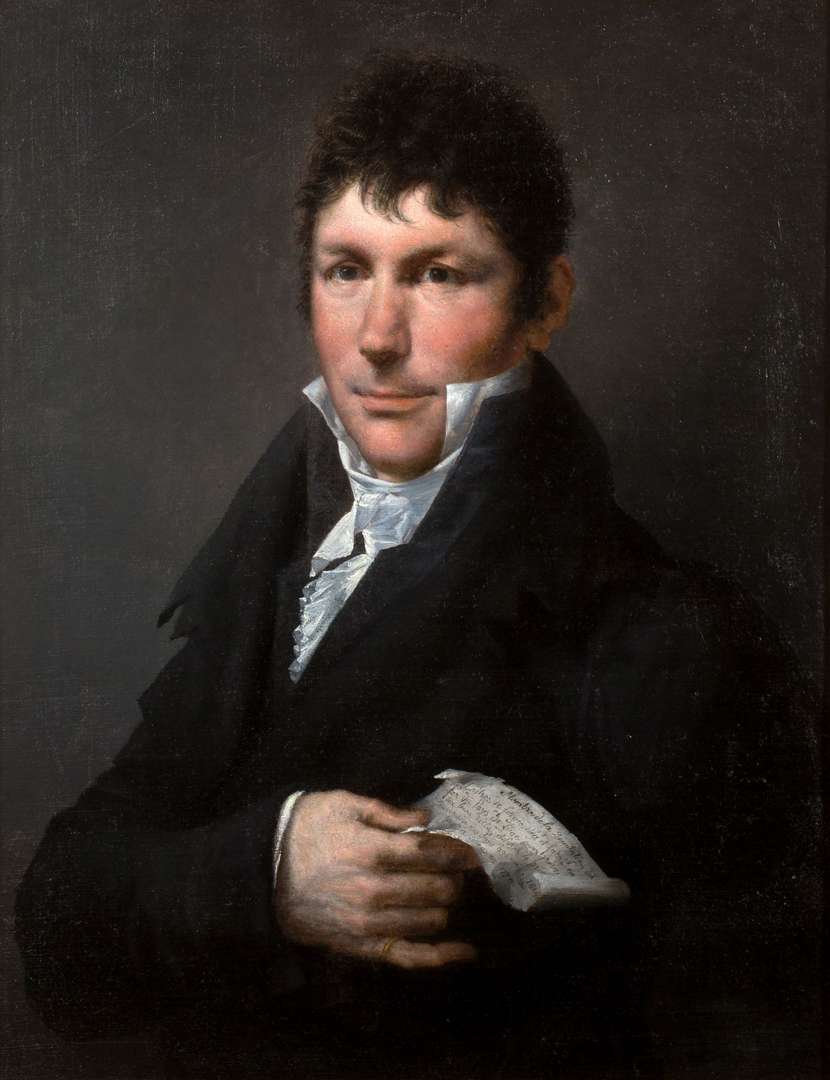
Portrait of a man
Oil on canvas
Signed and localized lower right hennequin / Liège
56 x 72 cm
An artist who did not accept the strong revolutionary ideas, Philippe-Auguste
Hennequin is a painter from Lyon who had a tumultuous career in a period rich in upheaval.
After having followed at first, against the wishes of his parents, the teaching of Per Eberhard Cogell (1734 - 1812) in his native city, he entered in 1779, the studio of Jacques-Louis David (1748 - 1825) in Paris. However, he was expelled a year later because he was accused of stealing colours. Hennequin then stayed for a while in Italy, which he also had to leave because of his Masonic activities. On his return to France, he took an active part in the Revolution on the side of the Jacobins, and was sentenced to life imprisonment before being released in 1797.
In 1812, Hennequin moved with his family to Liège to be closer to the town of Spa where his daughter was being treated. Penniless and unsuited to the ceremonial paintings sought after under the Empire, he settled in Tournai in 1821 and remained in Belgium, his adopted country, until his death. During his period in Liège, the painter executed the largest number of portraits known in his entire oeuvre. In this new genre for him, which allowed him to have resources easily, Philippe-Auguste Hennequin emancipated himself from neo-classicism to approach the first romanticism. Our portrait, especially for the depth of the model's gaze, bears witness to the painter's great ability to explore the psychology of his subjects, to a real finesse of execution and to a strong capacity to imitate nature.
The figure is holding a manuscript indicating that he was a representative of the iron industry in Liege in 1814.
Portrait of a man
Oil on canvas
Signed and localized lower right hennequin / Liège
56 x 72 cm
An artist who did not accept the strong revolutionary ideas, Philippe-Auguste
Hennequin is a painter from Lyon who had a tumultuous career in a period rich in upheaval.
After having followed at first, against the wishes of his parents, the teaching of Per Eberhard Cogell (1734 - 1812) in his native city, he entered in 1779, the studio of Jacques-Louis David (1748 - 1825) in Paris. However, he was expelled a year later because he was accused of stealing colours. Hennequin then stayed for a while in Italy, which he also had to leave because of his Masonic activities. On his return to France, he took an active part in the Revolution on the side of the Jacobins, and was sentenced to life imprisonment before being released in 1797.
In 1812, Hennequin moved with his family to Liège to be closer to the town of Spa where his daughter was being treated. Penniless and unsuited to the ceremonial paintings sought after under the Empire, he settled in Tournai in 1821 and remained in Belgium, his adopted country, until his death. During his period in Liège, the painter executed the largest number of portraits known in his entire oeuvre. In this new genre for him, which allowed him to have resources easily, Philippe-Auguste Hennequin emancipated himself from neo-classicism to approach the first romanticism. Our portrait, especially for the depth of the model's gaze, bears witness to the painter's great ability to explore the psychology of his subjects, to a real finesse of execution and to a strong capacity to imitate nature.
The figure is holding a manuscript indicating that he was a representative of the iron industry in Liege in 1814.